
Topps Card Value Checker: A Fan's Complete Buyer Guide
Not every card in your collection is worth what you paid — and the gap can be significant.
Upload a photo of your player, pet or team, choose an available template, and preview your design before ordering a printed card.
Fans searching for a Topps card value checker often discover two frustrating realities at once: prices swing wildly depending on condition, edition, and timing, and free tools rarely explain why a card jumped from $4 to $40 overnight. You're left refreshing eBay sold listings, cross-referencing PSA population reports, and still not feeling confident about what you actually own. For memorabilia collectors, that uncertainty is more than inconvenience — it affects display decisions, insurance, and resale strategy. The market doesn't slow down while you figure it out.
This guide walks you through how to use a Topps card value checker correctly, what the numbers actually mean for memorabilia fans, and how collectors are pairing that research with custom cards from Snapshot to build displays that carry real personal value. Snapshot lets you upload any photo, choose from professional sports-card templates, and get premium cards printed and shipped in 2-3 days — straight from Des Moines, Iowa. Free US shipping over $30 across the USA.
Start with the research, then build something worth displaying alongside it.
We ship custom cards to collectors, fans, coaches, and families in all 50 states every week from our production facility in Des Moines, Iowa.
Frequently Asked Questions
What is a Topps card value checker and how reliable is it?
A Topps card value checker is any tool — website, app, or database — that aggregates recent sales data for Topps trading cards to estimate current market value. Reliability depends entirely on the data source. Tools pulling from actual sold eBay listings and graded auction results are far more accurate than those using listed-but-unsold prices. For serious memorabilia decisions, cross-reference at least two platforms and filter results to the most recent 60-90 days. Older sales may reflect market conditions that no longer apply, especially for players who've had significant performance changes or retirement announcements.
Which Topps card value checker tools are most commonly used by serious collectors?
The most widely used tools among serious collectors include eBay's sold listings filter, which is free and updated in real time, along with CardLadder for tracking graded card price trends over time. PWCC Marketplace publishes auction results that serve as reliable comparables for higher-value cards. PSA's own website shows population data alongside dealer pricing, which adds useful context. 130point.com compiles eBay sold data in a cleaner format for quick lookups. Most experienced collectors use two or three of these in combination rather than relying on any single source for definitive values.
Does card condition really affect Topps card value that dramatically?
Yes — and the gap is often larger than new collectors expect. A Topps rookie card in raw near-mint condition might sell for $15. The same card graded PSA 10 could fetch $80-$300 depending on the player and set. That's not an exaggeration. Grading companies evaluate centering, corners, edges, and surface condition on a 10-point scale, and the difference between a PSA 9 and PSA 10 can represent 200-400% in price for high-demand cards. Before submitting anything for grading, run a value check on both tiers to determine whether the grading fee makes financial sense for your specific card.
Can I use a Topps card value checker for non-sports Topps cards?
Most value checker platforms focus primarily on sports cards, but Topps has produced non-sports sets — entertainment, Star Wars, Garbage Pail Kids, and others — that have active secondary markets. eBay sold listings work for any category since you're searching by product rather than sport. For GPK specifically, there are dedicated community forums and price guides that track values more precisely than general sports tools. Non-sports Topps cards often follow different value drivers: nostalgia cycles, franchise news, and generational collecting trends matter more than athletic performance. The research process is the same; the variables that move prices are different.
How does Snapshot differ from buying or collecting Topps cards?
Topps cards are mass-produced commercial products with established market values — their worth is determined by scarcity, player performance, and collector demand. Snapshot creates fully custom cards using photos you provide, printed on professional card stock with sports-card templates. There's no secondary market value attached to a Snapshot card because it's personal memorabilia, not a commercial product. That's exactly the point. You can create a card of someone Topps never made a card for — a youth athlete, a local legend, a retired amateur — and the value is entirely personal. The two things serve different purposes and work well together in a display collection.
What makes a good Topps card worth keeping versus selling?
The decision to keep or sell often comes down to three factors: personal connection, long-term value trajectory, and replaceability. A card of your all-time favorite player, even at modest value, may be worth keeping simply because you'd struggle to replace it at the same emotional weight. Cards with strong population scarcity and a player entering their prime tend to hold or grow in value. Cards from overly large print runs with high PSA 10 populations are harder to resell profitably later. Use your value checker to track a card's price history over 12-24 months — that trend line often tells you more than a single current estimate.
How do I protect Topps cards I've identified as high-value?
Start with penny sleeves inside a rigid top-loader for raw cards you plan to keep. For higher-value raw cards, switch to semi-rigid card savers before submission for grading. Graded slabs from PSA or BGS are already well-protected in their plastic cases, but you should still store them away from direct sunlight and humidity. UV-blocking display frames protect against fading for any card displayed long-term. For your most valuable pieces, a fireproof safe or safety deposit box is worth considering. Every Snapshot card ships with a free magnetic case, which is the same style serious collectors use for premium display pieces.
How quickly can I get a custom Snapshot card made?
Production takes one business day; shipping time is quoted at checkout for your address. The process starts the moment you upload your photo and finalize your template choice. Cards are printed and finished on professional card stock at Snapshot's facility in Des Moines, Iowa, then shipped directly to your door. Every order includes a free magnetic case. For collectors building display pieces around a key date — a birthday, anniversary, retirement party, or hall of fame induction — ordering 5-7 days in advance gives comfortable buffer time without expedited shipping pressure.
Is there a way to display custom Snapshot cards alongside graded Topps cards?
Absolutely, and many collectors do exactly this. Shadow box frames with adjustable mounting work well for mixing graded slabs with custom cards and memorabilia photos. Wall-mounted acrylic display cases designed for trading cards accommodate both standard card dimensions and graded slab dimensions. The MEGA 11×15 Snapshot poster card serves as an anchor piece — large enough to command a wall display — while standard Snapshot cards and graded Topps cards can be arranged around it thematically. Grouping by player, era, or team creates a cohesive display that tells a story no single card can tell on its own.
What sports and athletes can I create cards for with Snapshot?
Snapshot works for any sport and any athlete at any level — professional, college, high school, youth league, recreational, or retired. There's no restriction on sport type or level of play. You upload your own photo, which means the subject is entirely your choice. Customers have created cards for football players, soccer athletes, gymnasts, track and field competitors, martial artists, skaters, and more. If you have a photo and a story worth telling, Snapshot's professional templates and premium card stock turn it into memorabilia that stands alongside anything from a commercial card company.
Free to design, instant preview. Free US standard shipping on orders $30+. Review delivery options at checkout.
How a Topps Card Value Checker Actually Works
A Topps card value checker pulls recent sales data, grading population reports, and auction histories to give you a market estimate — but knowing which inputs matter most changes everything about how you read the output.
Identify Your Card's Exact Variant
Topps releases dozens of parallels, short prints, and autograph variations for a single player. Before you enter anything into a value checker, nail down the set name, year, card number, and parallel color. A base Topps Series 1 card and a Gold parallel from the same set can differ in value by $200 or more. Condition grade matters here too — raw cards and PSA 10s live in completely different price brackets.
Read Sold Listings, Not Active Ones
Active eBay listings are wishful thinking. Sold listings — filtered to the last 90 days — show you what buyers actually paid. Platforms like PWCC Marketplace, CardLadder, and Comc also aggregate graded sales data. Cross-reference at least two sources before settling on a number. A single outlier sale, high or low, can skew your estimate by 30 percent if you're not careful.
Factor in Condition and Population
PSA and BGS population reports tell you how many copies of a specific card have been graded at each tier. High population in PSA 10 typically suppresses value — scarcity drives premiums. A card with only 12 PSA 10 copies graded commands very different money than one with 4,000. Use the grading company's population search alongside your value checker to build a complete picture before any memorabilia decision.
Do that research once correctly, and every future lookup takes five minutes instead of forty-five.
Before You Use Any Topps Card Value Checker, Confirm These 7 Details
- Card year and exact set name (e.g., 2022 Topps Series 1, not just 'Topps')
- Card number as printed on the back
- Parallel color or variation (base, gold, chrome, refractor, etc.)
- Whether the card is raw or professionally graded — and at what grade
- Serial number if applicable (e.g., /50 or /99 print run)
- Autograph or relic presence (jersey swatch, patch, signature)
- Current condition assessment using corner, edge, surface, and centering criteria
Why Serious Memorabilia Fans Value This Research
Understanding card value isn't just about resale — it shapes how you protect, display, and insure what you've collected over years.
Smarter Display Decisions
Knowing a card is worth $300 means it belongs in a UV-protective frame, not a binder sleeve next to $2 commons. Accurate valuation helps you prioritize what gets premium display treatment and what's safe to handle freely. That distinction protects your investment without requiring you to lock everything away.
Insurance Documentation
Home insurance policies rarely cover collectibles adequately without a documented valuation. Running your collection through a Topps card value checker and logging the results gives you a timestamped record. Pair that with high-resolution photos for a file your insurer will actually accept when you need to file a claim.
Confident Buying at Shows
Card shows move fast. Dealers know their inventory; buyers who didn't do homework often don't. Walking into a show with recent comparable sales on your phone means you're negotiating from knowledge, not instinct. You'll spot overpriced cards quickly and recognize fair deals before someone else does.
Meaningful Gift Selection
Fans buying cards as gifts need to know whether a $25 card is genuinely special or just expensively packaged filler. A quick value check tells you whether the card has collector upside or is purely sentimental. Both are valid — but knowing the difference lets you set expectations and tell a better story with the gift.
How Memorabilia Collectors Are Using Card Research Right Now
The fans getting the most out of value tools aren't just flipping cards — they're combining market data with personal collection goals that go beyond resale.
Building a Curated Display Collection
Collectors focused on memorabilia use value data to set acquisition budgets for specific player collections. They'll identify a target card tier — say, rookie parallels graded PSA 9 or better — and track market fluctuations until the price fits. That disciplined approach turns a casual hobby into a structured collection with a coherent story. Many then add custom Snapshot cards of the same players to fill gaps no Topps set ever covered.
Honoring Players Who Never Got a Card
Not every athlete gets a Topps card. Youth league standouts, college stars, local legends, and amateur athletes played careers worth remembering. Snapshot fills that gap directly. Upload a game photo, pick a professional template, and get a premium custom card shipped in 2-3 days. It's the kind of memorabilia a Topps card value checker will never surface — because it's one of a kind.
Estate and Collection Transfers
When longtime collectors pass collections to family members, those recipients often have no idea what they've inherited. Running the collection through a value checker is step one. Step two is deciding what to keep, what to sell, and what to display. Snapshot custom cards have become a meaningful complement here — printing tribute cards of a collector's favorite players to honor the legacy of the collection itself.
Why Fans Trust Snapshot for Custom Card Memorabilia
Snapshot ships custom premium cards to collectors, families, coaches, and fans across all 50 states every week from its production facility in Des Moines, Iowa. Customers consistently return for pack orders and MEGA poster cards after seeing the print quality on their first single.
The combination of professional card stock, real sports-card templates, and fast 2-3 day shipping has made Snapshot a go-to for collectors who want something personal alongside their graded Topps pieces.
Snapshot Pricing for Every Type of Fan and Collector
Snapshot keeps pricing simple so you can focus on what the card means, not what it costs to make.
Single custom card starts at $17.99. Packs range up to $49.99 depending on quantity. The MEGA 11×15 poster card is $49.99 — a display centerpiece in its own right.
For less than the price of a mid-grade Topps rookie, you can create premium custom memorabilia that no value checker will ever depreciate.
Box Options
Simple, collectible pricing. No subscriptions, no hidden fees.
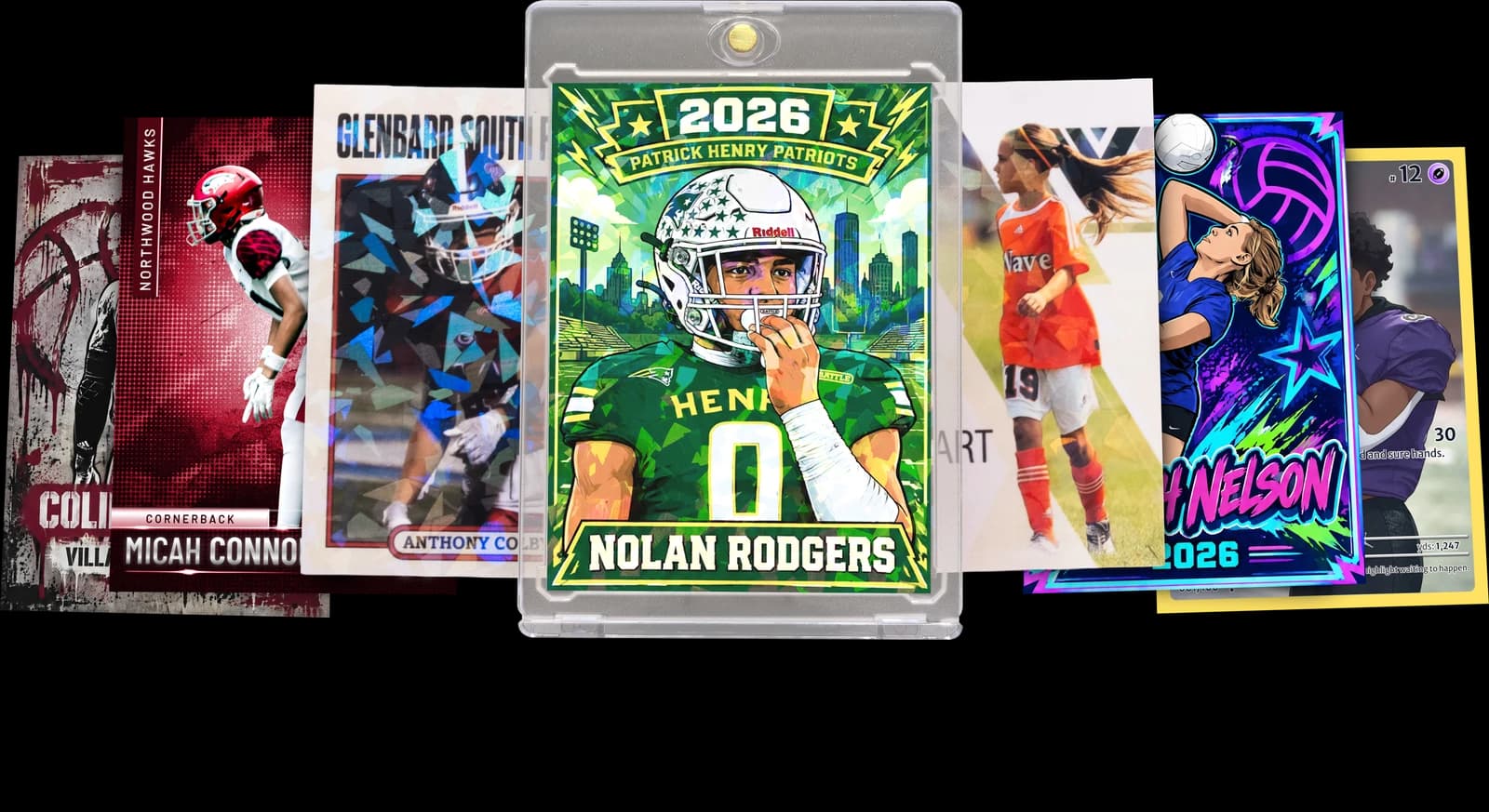
The Rookie Box
Perfect for those unforgettable moments
$17.99 - $49.99
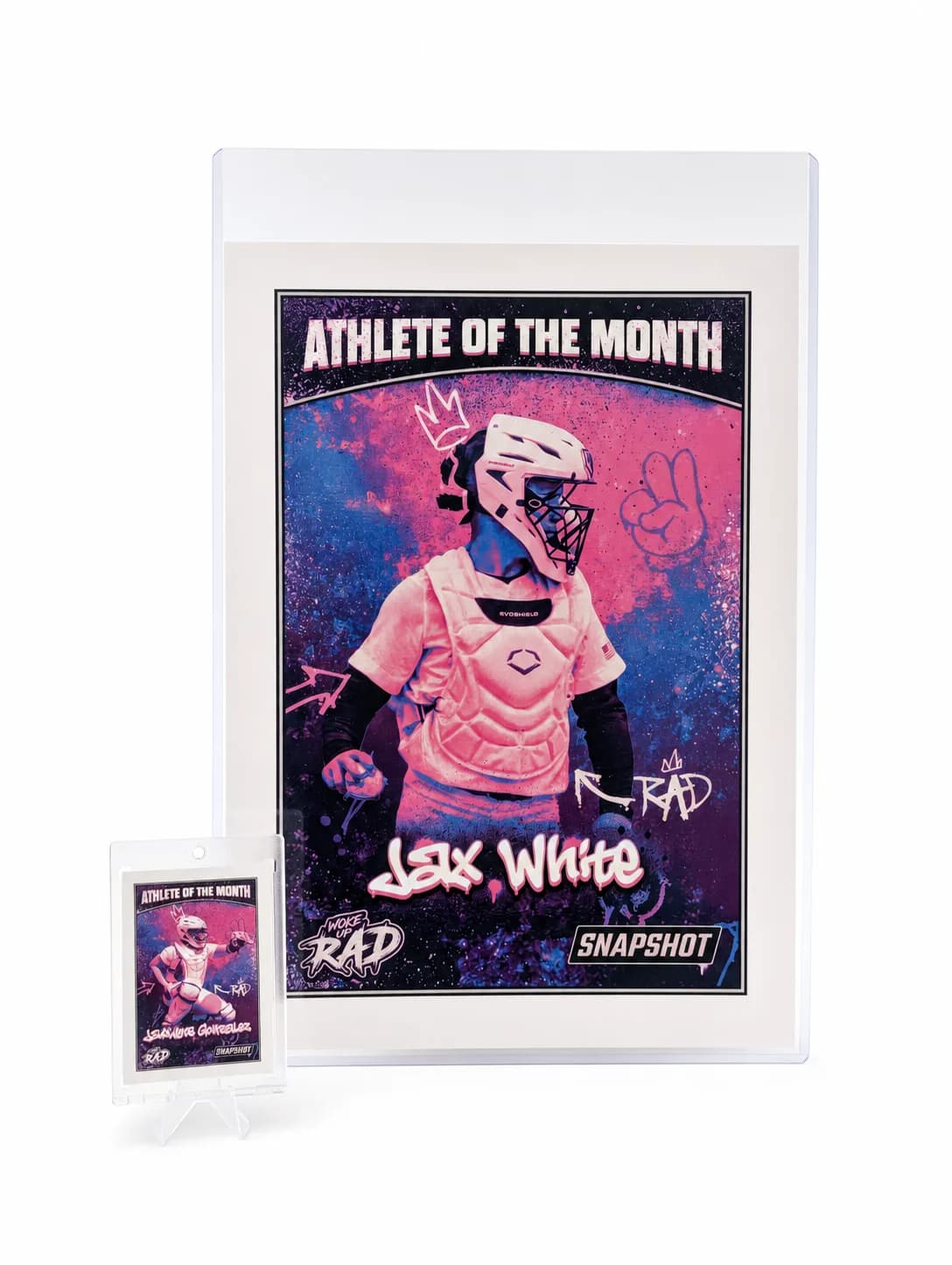
MEGA Card
Their moment, bigger than ever
$49.99
Create for free • Ships the next business day • Made in Des Moines, IA, USA
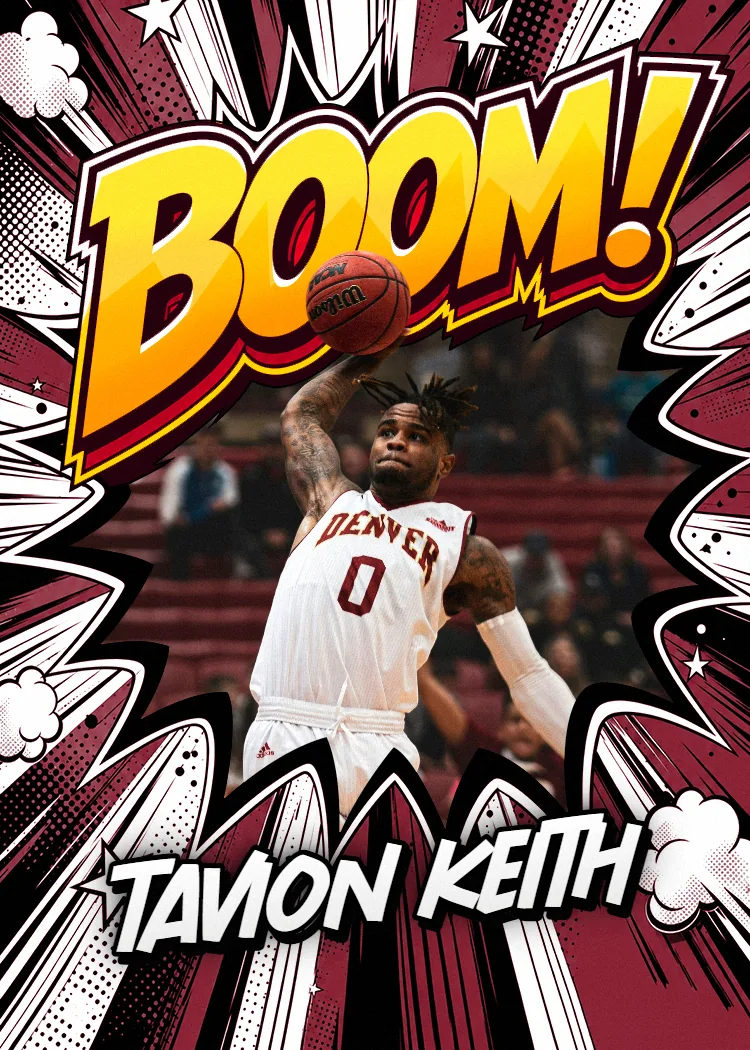
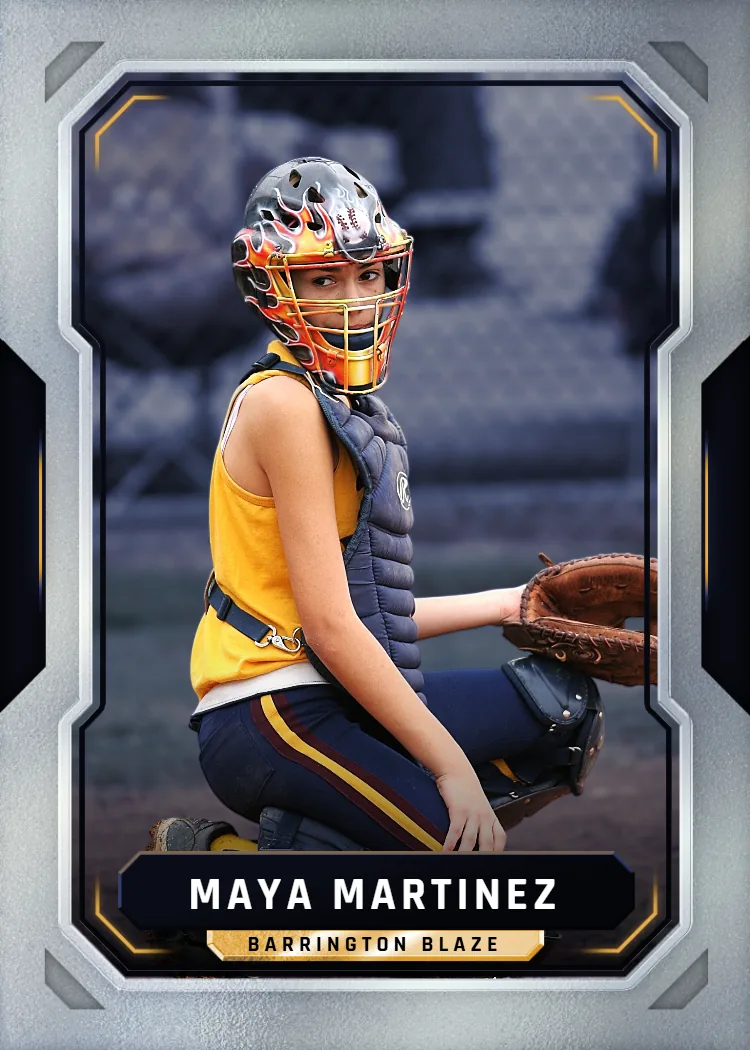
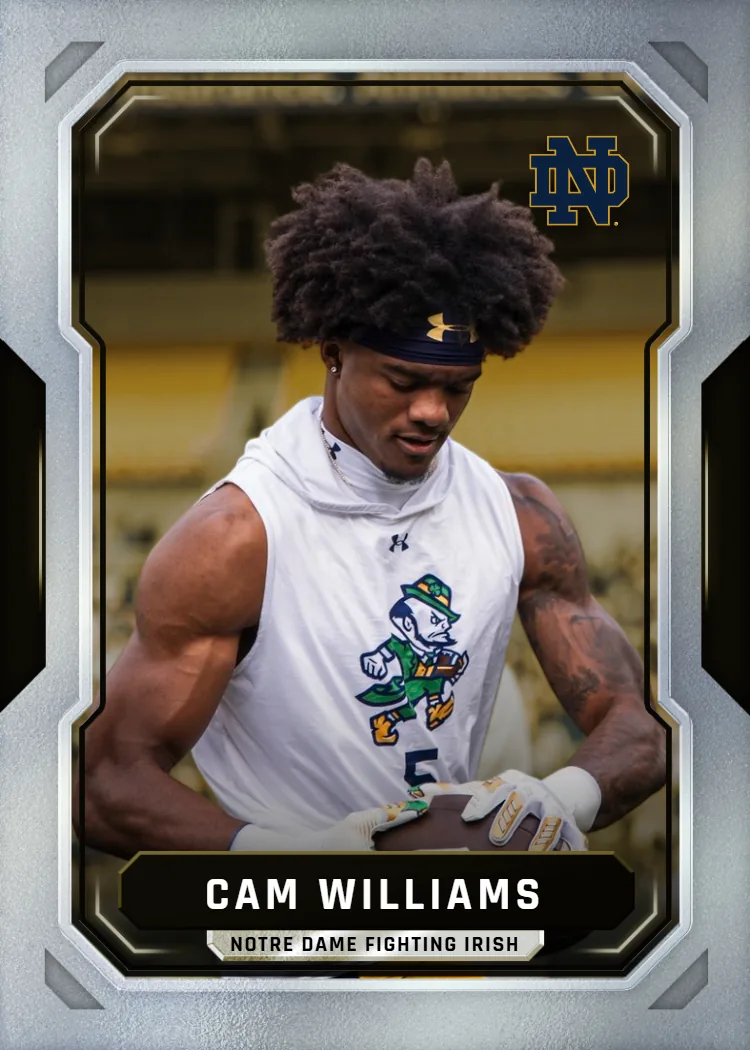



Done with the Topps Card Value Checker? Now Build Something Personal.
You've done the research. You know what your collection is worth. Now add the cards no value database will ever list — custom premium cards of the athletes and moments that matter most to you. Upload your photo, pick your template, and get it shipped in 2-3 days with free shipping over $30 and a magnetic case included.
Create Your Custom CardNo credit card required | Instant preview | Pro-quality designs
Explore More Card Options
Discover more custom trading card options for every sport and occasion
baseball cards
View card options →
buying baseball cards
View card options →
baseball card packs
View card options →
baseball card size
View card options →
rare topps baseball cards
View card options →
2025 baseball card release dates
View card options →