
Where to Grade Cards: Separating Myths From Facts
Search 'where to grade cards' and you'll get five different answers from five different forums, half of them outdated.
Upload any photo — your kid, your pet, your whole team — pick a pro template, and we print and ship a real, holdable card the next business day.
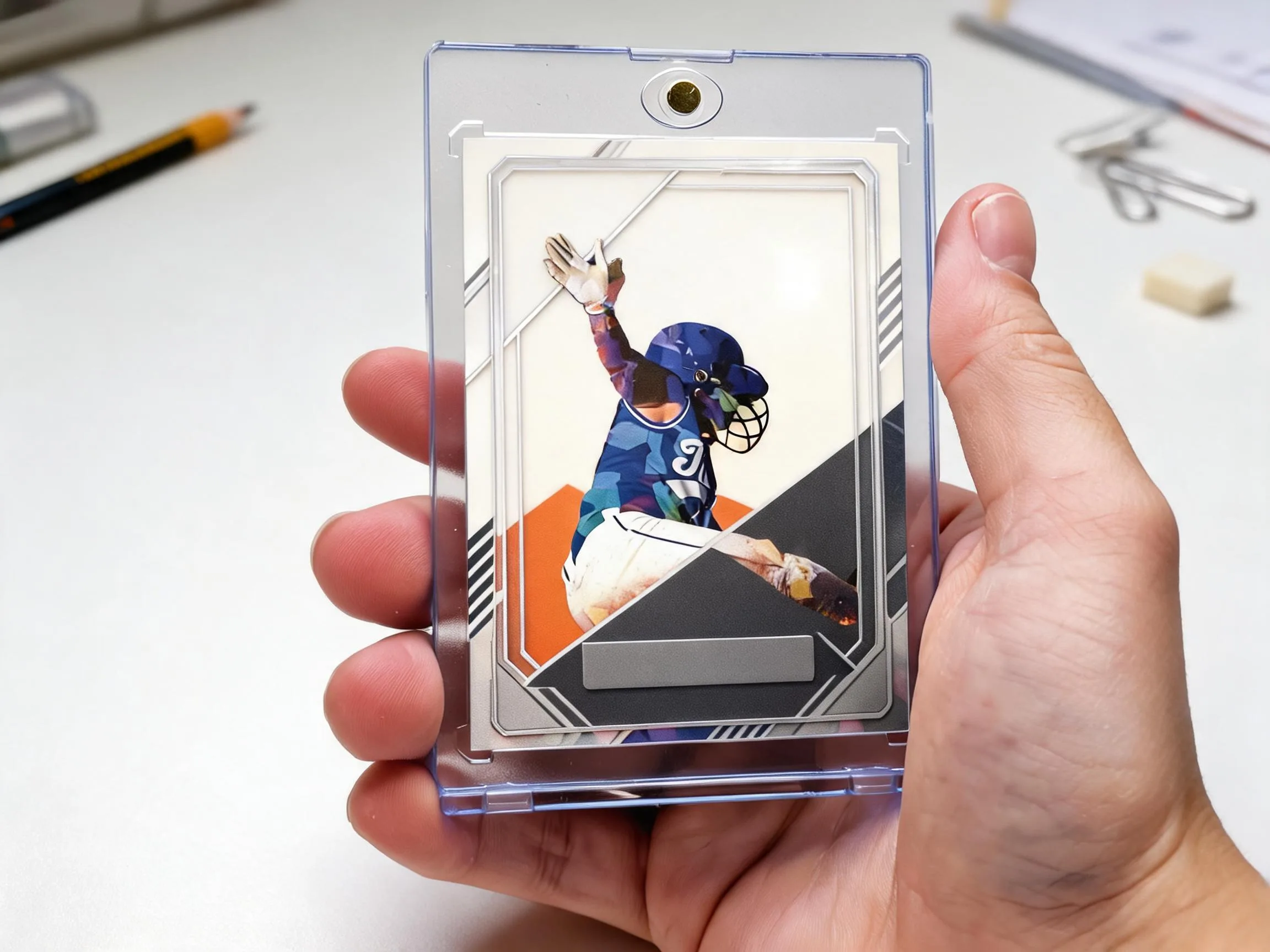
Here's the actual confusion: people conflate grading services (PSA, BGS, SGC) with printing or preservation services, and they end up paying $20-$50 per card to grade something that was never meant for a graded slab in the first place. A photo card, a memorial piece, a one-off memorabilia print — none of these belong in the same conversation as a 1986 rookie card. Grading exists to verify authenticity and condition on collectible cards with resale value. If your card is a custom memory piece, grading isn't protecting it. It's just adding cost and a waiting period that can stretch past 60 days.
This guide separates what's true about card grading from what's assumed. We'll walk through where legitimate grading companies operate, why most custom or memorabilia cards skip grading entirely, and what actually keeps a printed keepsake safe — premium card stock, a solid magnetic case, and printing that doesn't fade. You'll leave knowing exactly which path fits your card.
Let's separate the myths from what actually happens once you send a card in.
We ship custom cards to collectors and families in all 50 states every week, and grading questions come up constantly in customer messages.
Frequently Asked Questions
Where do I actually go to grade cards professionally?
The three companies that matter for resale-recognized grading are PSA, Beckett Grading Services (BGS), and SGC. Each operates independently, has its own submission portal, and charges based on turnaround speed and declared card value. PSA is generally considered the most recognized name among collectors, which often means higher resale value for graded cards but also longer wait times during peak submission seasons. BGS is known for its detailed subgrades — separate scores for centering, corners, edges, and surface — which some collectors prefer for transparency. SGC has gained ground recently, especially for vintage cards, and tends to have faster turnaround than PSA. You'll need to create an account, choose a service tier, and mail your card in with declared value for insurance purposes. If your card isn't a vintage or high-demand modern card, though, it's worth asking whether grading is the right move at all before spending the money.
Is it true that grading a card always increases its value?
That's actually a myth, and it trips up a lot of first-time submitters. Grading only increases value when the card already has established collector demand and the grade comes back high — typically a 9 or 10. A common card graded at a 6 or 7 often isn't worth more than it was raw, and after subtracting the grading fee, you can actually lose money on the transaction. Grading adds a documented, trusted condition assessment, but it doesn't create demand where none existed. Cards from unlicensed sets, common base cards, or cards with visible print defects rarely benefit from grading regardless of the score. It's also worth noting that grading fees aren't refundable if the card comes back with a lower grade than expected. So before submitting anything, it helps to research recent sold listings for graded versions of that exact card to see if the math works in your favor.
Can I grade a custom or personalized photo card?
Technically you could submit one, but grading companies won't assign it collector value the way they would an officially licensed card. Grading services are built around verifying authenticity against known factory-printed sets — a custom card made from a personal photo doesn't have a market database to compare against, so the grade wouldn't carry the same meaning to buyers or collectors. This is one of the biggest points of confusion we see: people assume grading is a universal quality stamp, when really it's a market-value tool tied to recognized card sets. If you want your custom card protected and displayed nicely, a magnetic case does that job without the wait or the fee. Save grading submissions for licensed, collectible cards where a numeric grade actually changes what someone will pay for it.
How long does professional grading actually take?
Turnaround varies a lot by company, tier, and time of year, so there's no single answer that holds true year-round. Economy tiers can take 45 to 90 days during normal periods, while express or premium tiers can bring that down to a couple of weeks for a significantly higher fee. Submission volume spikes around major releases and the holiday season, which stretches every tier's timeline further than usual. Some companies post estimated turnaround times on their websites, but those estimates shift constantly and aren't guarantees. If you're grading for a specific deadline — a sale, an auction, a gift — you need serious buffer time built in, because delays are common rather than rare. This is one of the sharpest contrasts with custom card printing, where a 2-3 day turnaround is the standard, not an upgraded tier you pay extra for.
What's the actual cost difference between grading and printing a custom card?
Grading fees typically start around $20-$25 per card for economy tiers and climb past $150 for express service on higher-value submissions, and that's before return shipping and insurance. A custom printed card, by comparison, runs $17.99 for a single card with a free magnetic case included and free shipping across the USA. Packs run up to $49.99, and the large-format MEGA card is a flat $49.99. There's no tiered pricing based on card value, no authentication surcharge, and no risk of paying a fee and getting a lower grade than expected. If your goal is preserving a memory rather than establishing resale value, the cost math favors printing every time. Grading fees make sense when there's a real market price bump on the other end — for memorabilia and gift cards, that math usually doesn't apply.
Do I need a magnetic case if I'm not grading my card?
Yes, and it matters more than people expect. A magnetic case keeps dust, moisture, and fingerprint oils off the card surface, which matters even more for photo-printed cards than for standard trading cards, since surface scratches show up clearly on glossy prints. Unlike a sealed graded slab, a magnetic case opens and closes, so you can swap the card out, clean the case, or reposition it on a shelf without damaging anything. It's also a more practical option for gifting — recipients can open the case, hold the actual card, and put it back without needing special tools. Cases included with custom card orders are built to the same standard size as pro trading card cases, so they stack and display consistently. If the card is meant to be handled, shown around at a family gathering, or displayed on a desk, a magnetic case protects it just as well as a slab without locking it away permanently.
Can grading companies grade a photo printed on premium card stock?
Most grading companies are set up to authenticate officially licensed trading cards, so a personally printed photo card typically falls outside what they evaluate for market grading purposes. Even if a company technically accepted the submission, the resulting grade wouldn't carry the same collector recognition, since there's no established checklist or set to verify it against. This surprises people who assume grading is purely about physical condition — corners, edges, surface, centering — when it's actually tied heavily to confirming the card matches a known, catalogued release. A custom memorabilia card doesn't have that catalog entry, so the authentication half of the process doesn't apply. What actually protects a custom card's condition is high-quality printing on premium card stock combined with a solid magnetic case, which addresses the physical preservation side without needing the market-authentication side at all.
What condition issues do grading companies actually look for?
Graders examine four main categories: centering (how evenly the image sits within the border), corners (sharpness versus wear or fraying), edges (smoothness versus chipping), and surface (scratches, print lines, or stains). Each category gets weighted differently depending on the company, and the final numeric grade reflects the weakest of these factors more than the average. A card can have perfect corners and edges but still score lower overall if centering is off by a noticeable margin. Surface issues, including print defects from the original manufacturing run, are especially penalized since they're the most visible under magnification. This is a big reason grading takes real expertise rather than a quick glance — subtle centering shifts of just a few millimeters can move a card from a 9 down to a 7. For custom-printed memorabilia cards, none of this scoring applies, but the same physical care — avoiding bent corners, keeping the surface scratch-free — still keeps the card looking sharp for years.
Is there a cheaper alternative to full professional grading?
Yes, some companies offer bulk or economy submission tiers specifically to lower the per-card cost, though turnaround times stretch out significantly in exchange. These tiers work best for collectors submitting large batches of cards at once, since the per-card savings add up but the wait can run several months. There are also lower-tier grading companies outside the big three, but their grades typically don't carry the same resale weight, so cheaper grading isn't always cheaper in the long run if it lowers what a buyer's willing to pay. For anyone not chasing resale value, though, the real cost-saving alternative is skipping grading entirely. A custom card printed on premium card stock with a magnetic case costs a fraction of even the lowest grading tier and doesn't require choosing between price and turnaround speed.
Does grading protect a card better than a magnetic case does?
In terms of physical protection, a graded slab and a good magnetic case both shield a card from moisture, dust, and handling damage reasonably well. The real difference is permanence — a graded slab is sealed and tamper-evident, meaning you can't remove the card without breaking the seal and voiding the grade, while a magnetic case can be opened and closed as needed. For collectible cards being sold or held as investments, that permanent seal is actually the point, since it locks in the verified condition. For memorabilia or custom cards meant to be displayed, handled, or occasionally swapped, that permanence becomes a downside rather than a benefit. Neither option is universally 'better' protection — it depends entirely on whether the card needs to prove its condition to a future buyer or just needs to look good on a shelf for years.
Why do some people confuse grading with card printing services entirely?
It happens because both processes involve mailing a card off, waiting, and getting something back that looks more official than what you sent in. Grading returns a sealed, labeled slab; custom card printing returns a finished card in a case — visually, to someone unfamiliar with either process, the end products can look similar at a glance. Search terms overlap too, since people typing 'where to grade cards' are sometimes actually looking for where to get a card made, not authenticated. The confusion tends to clear up once someone understands the purpose behind each service — grading verifies condition and authenticity for resale, printing creates a physical keepsake from a photo or memory. If you're not sure which you need, ask yourself whether you're trying to sell the card someday or trying to preserve a memory. That answer usually points you toward the right service immediately.
What happens if I grade a card and I'm unhappy with the result?
Once a card is graded and slabbed, the grade is final unless you pay for a separate re-grading submission, which means another fee and another wait period with no guaranteed improvement. Some companies offer a review process for suspected grading errors, but it's not the same as simply disagreeing with the score you received. This finality is part of why grading carries real risk — you're paying upfront without knowing what number you'll get back, and a lower-than-expected grade can actually reduce a card's perceived value compared to leaving it raw. There's no equivalent risk with custom card printing, since there's no subjective score attached to the finished product. You're paying for a print and a case, and what you get back is exactly what you ordered — same image, same layout, same protective case every time.
Free to design, instant preview. Ships the next business day.
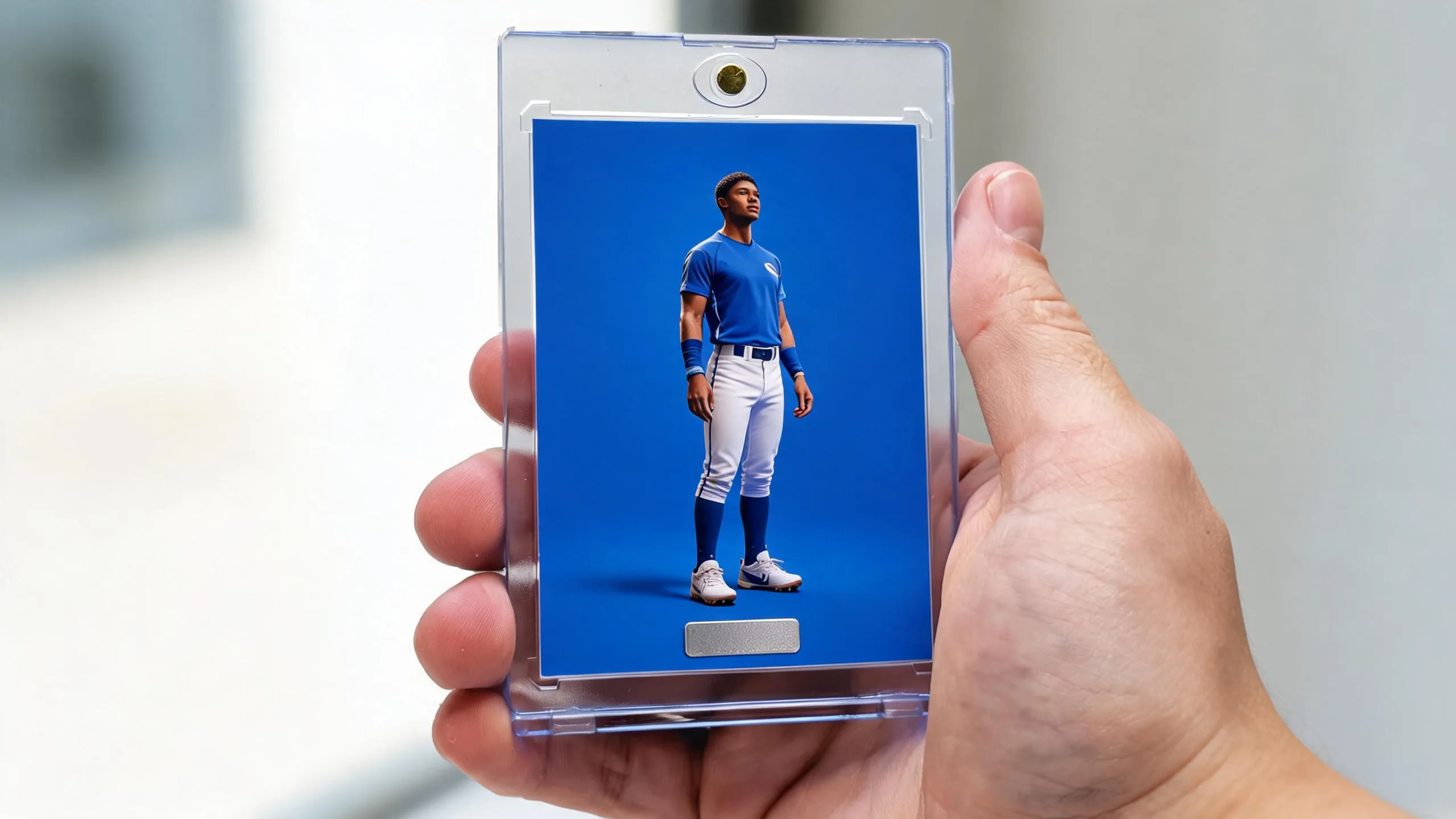
Where to Grade Cards — How the Process Actually Works
Grading a card involves three companies dominating the market, and the process looks the same no matter which one you choose.
Submit to a Recognized Grading Company
PSA, Beckett (BGS), and SGC are the three names that matter in resale value. You mail your card in, choose a service tier based on turnaround speed, and pay per card — prices range from $20 for economy tiers to $150+ for premium express service. Anything outside these three names typically won't hold resale weight with serious collectors.
Authentication and Condition Review
Graders examine centering, corners, edges, and surface under magnification, then assign a numeric grade from 1 to 10. This step takes anywhere from a few weeks to several months depending on submission volume. It's a slow, deliberate process — that's the tradeoff for a grade collectors trust.
Slabbing and Return Shipping
Once graded, your card gets sealed into a tamper-proof plastic holder with the grade printed on a label. It ships back insured, and from that point forward the card's value is tied to that slab and grade. This step is permanent — you can't un-slab a card without destroying the grading label.
That's the full loop — and it only makes sense for cards with real resale or collectible market value.
Why Skipping Grading Makes Sense for Custom and Memorabilia Cards
Not every card needs a slab. Here's what you gain by choosing preservation over grading for personal keepsakes.
You Get It Back in Days, Not Months
Grading turnaround can run 30-90 days depending on the company and season. A custom card printed and shipped with a magnetic case arrives in 2-3 days — no waiting, no anxiety about a lost submission.
No Per-Card Grading Fees
Grading costs $20-$150 per card depending on tier and speed. A custom memorabilia card runs $17.99 for a single print, protective case included, with no hidden authentication fee.
Magnetic Cases Protect Without Sealing Forever
Unlike a graded slab, a magnetic case can be opened. You can swap the card, reframe it, or display it differently later — flexibility a permanent slab never offers.
Built for Sentiment, Not Just Resale
Memorabilia cards commemorate a moment — a coach's last season, a family member's favorite hobby, a milestone game. Grading assumes future resale; preservation just assumes you want to keep it looking sharp.

Real Situations Where People Search for Where to Grade Cards
Most searches for grading fall into one of three buckets, and only one of them actually needs a grading company.
Vintage or Investment Cards
If you've got an original card with real market demand — a rare rookie, a limited print run, an error card — grading through PSA, BGS, or SGC adds documented value. This is the one case where sending it to a grading company genuinely makes financial sense, and it's worth the wait and the fee.
Custom Memorabilia and Tribute Cards
Someone printing a photo card of a retiring coach, a youth athlete's final season, or a family member who loved a sport doesn't need authentication — there's no market to authenticate against. What they need is a crisp print on premium card stock and a case sturdy enough to survive years on a shelf.
Gift and Display Cards
Cards made as gifts — for a birthday, a retirement, a team banquet — get handled, passed around, and displayed, not locked in a vault. A magnetic case that opens and closes easily beats a sealed slab for something meant to be shown off at a family gathering.
What People Actually Choose Once They Understand the Difference
Most custom card orders we see are for memorabilia and tribute pieces, not vintage resale cards, and once people understand that grading exists for authentication rather than presentation, the decision gets easier fast. Customers consistently choose premium printing and a magnetic case over a grading submission when the card commemorates a person or moment rather than a market value.
What It Costs Compared to Sending a Card Out for Grading
A single custom card costs less than the cheapest grading tier and arrives faster than any grading company can promise.
Single card: $17.99. Packs: up to $49.99. MEGA 11"×15" poster card: $49.99. Free shipping across the USA, printed and shipped from Des Moines, Iowa.
One flat price, no tiered fees, no authentication surcharge — just a premium printed card in a free magnetic case, shipped in 2-3 days.
Box Options
Simple, collectible pricing. No subscriptions, no hidden fees.
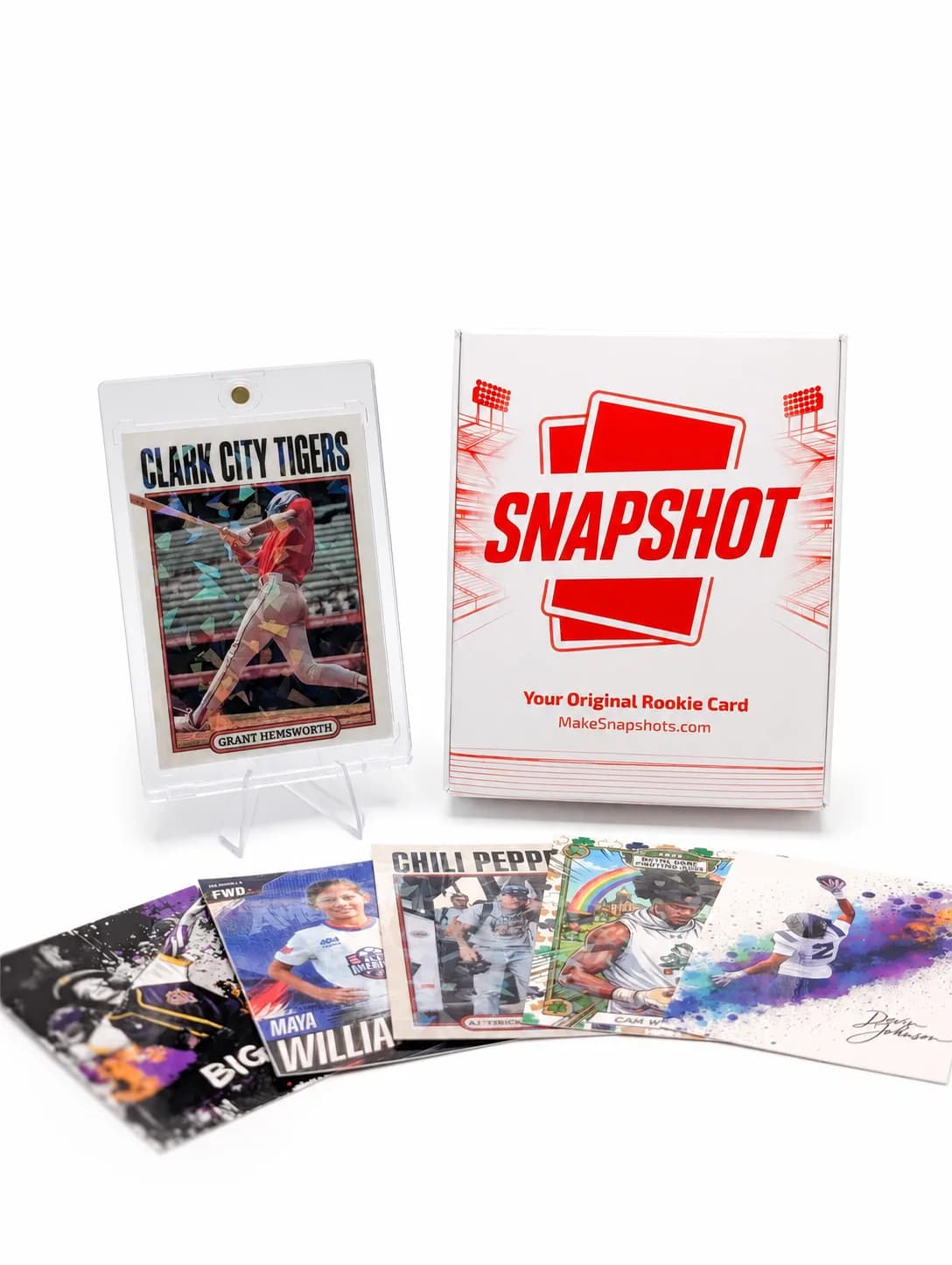
The Rookie Box
Perfect for those unforgettable moments
$17.99 - $49.99
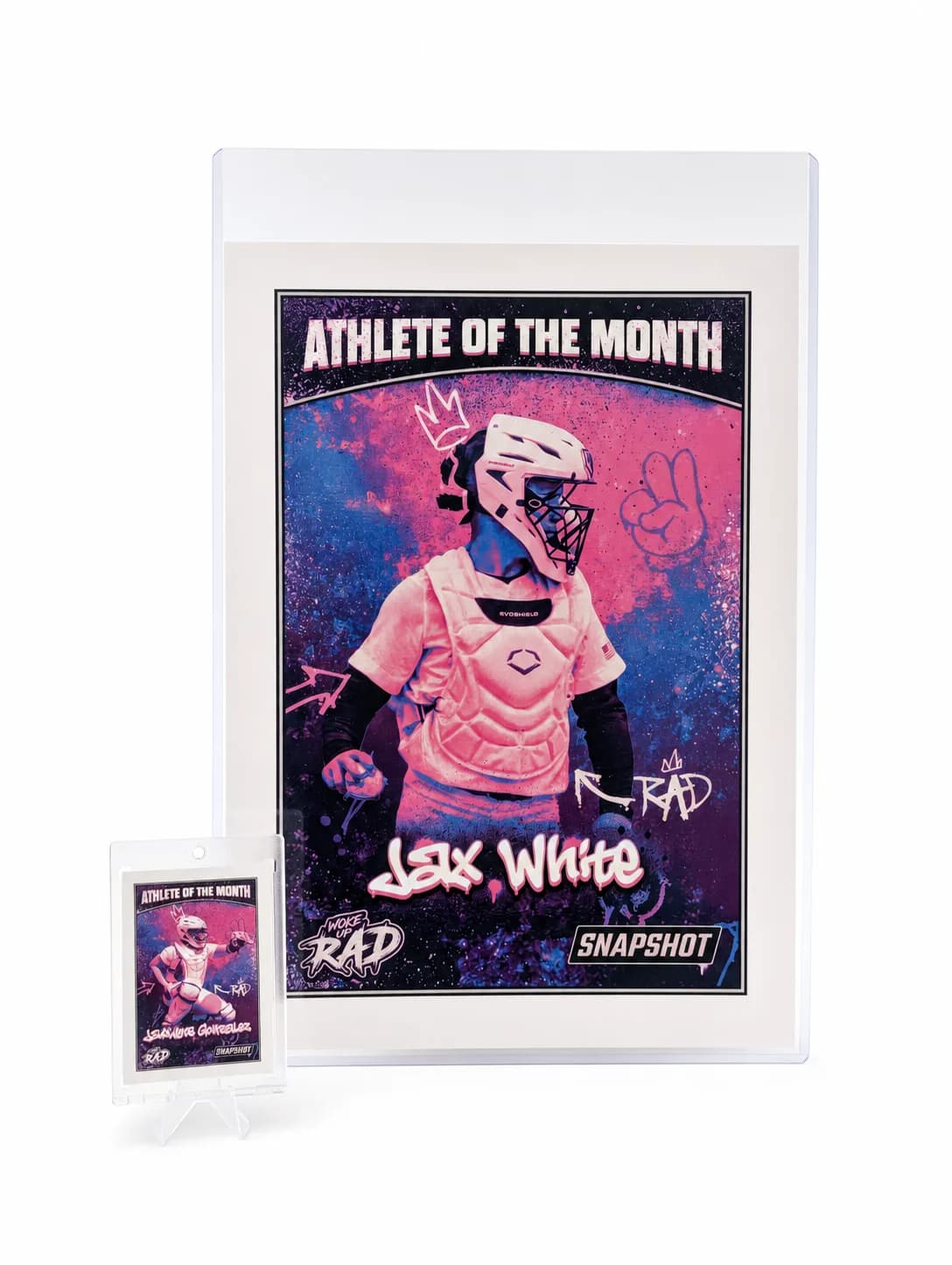
MEGA Card
Their moment, bigger than ever
$49.99
Create for free • Ships the next business day • Made in Des Moines, IA, USA






Skip the Wait — Where to Grade Cards Isn't Always the Right Question
If your card is a memory, not a market asset, you don't need a grading company. Upload your photo, pick a template, and get a premium printed card with a free magnetic case in 2-3 days.
Create Your Card NowNo credit card required | Instant preview | Pro-quality designs
Explore More Card Options
Discover more custom trading card options for every sport and occasion
card grading
View card options →
card grading companies
View card options →
sports cards graded
View card options →
card grading services
View card options →
sports card slabs
View card options →
custom graded cards
View card options →