
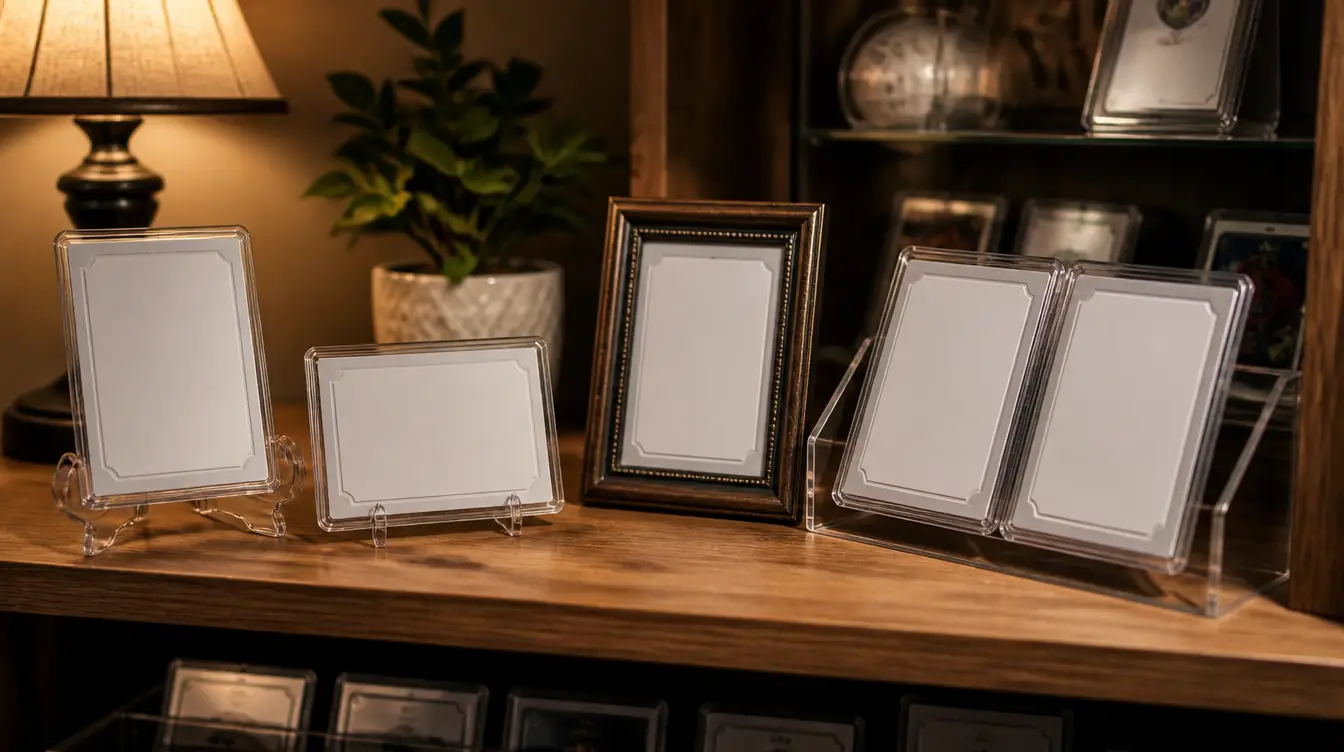
Shelf displays: cases and stands
The magnetic one-touch case - two acrylic halves held by magnets - is what card shops and collectors use for their best cards. It shows both sides, seals out dust, and stands upright alone or in a small easel stand. A row of cased cards on a floating shelf reads like a trophy case.
Graded slabs display the same way - upright in stands - and their labels add the museum-placard effect. Mixing cased raw cards and slabs on one shelf works fine visually; keep spacing generous so each card reads.
Wall displays: frames and grids
Single-card frames turn one special card into wall art; multi-card frames hold a team set or a season series in one piece. Look for frames with UV-filtering acrylic - a framed card in a sunny room fades noticeably within a year without it.
For bigger statements, print bigger: an 11 x 15.4 inch MEGA card of the same design hangs like a poster and reads from across the room - the go-to for kids bedrooms and senior night walls.
Big collections: binders and boxes
Nine-pocket binder pages remain the best browseable display - side-loading pages hold cards securely, and a good binder protects hundreds of cards while staying fun to flip through. Card boxes store more but display nothing; they are archives, not displays.
Whatever the format, the two rules are constant: sleeve everything you care about, and keep displays out of direct sun. Dust wipes off; UV damage is forever.