
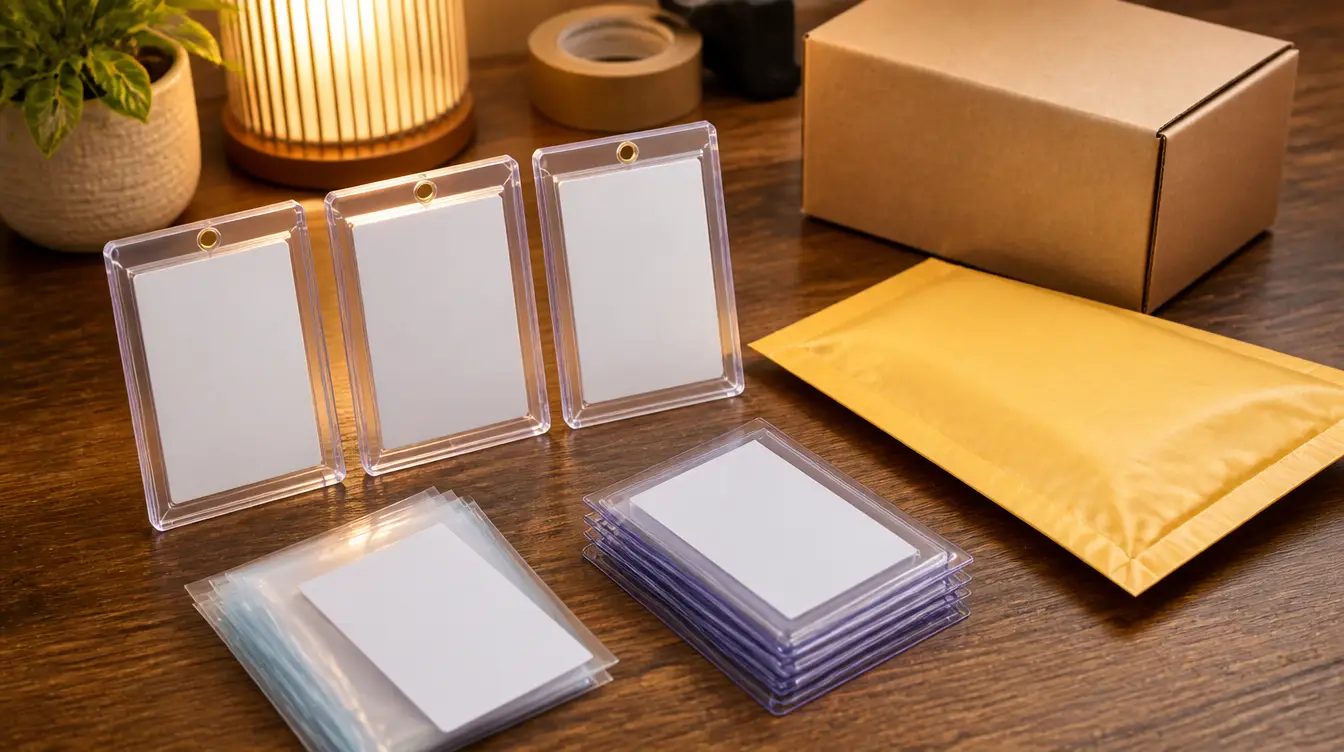
The protection stack, layer by layer
Start with a penny sleeve - the thin soft sleeve that stops surface scratches. Slide the sleeved card into a rigid holder: a top loader (hard plastic sleeve) or a card saver (semi-rigid, preferred for grading submissions). The rigid layer is what stops bends, which are the number one shipping injury.
Wrap the holder in a team bag (a resealable plastic bag) or secure the opening with painter tape - never regular tape on the holder itself, because removing it can crease the card or scratch the plastic. Then sandwich everything between two pieces of cardboard slightly larger than the holder, and tape that sandwich shut.
Envelope or box: matching cost to value
For low-value cards, a padded bubble mailer with the cardboard sandwich inside ships safely for a few dollars with tracking. The plain white envelope - just a card in a sleeve inside a letter envelope - saves a dollar and risks everything: no tracking, no rigidity, and letter-sorting machines apply real pressure.
For valuable cards, use a small box, fill empty space so nothing shifts, add tracking and insurance, and consider signature confirmation. The rule of thumb: shipping protection should cost about 1-2% of card value - a $500 card deserves more than a $4 mailer.
How professional printers ship cards
Print services solve this at scale: Snapshot ships every custom card in a magnetic display case - a rigid acrylic holder far stronger than a top loader - inside protective packaging, with US shipping free over $30 on card orders. Team sets ship together in one protected box. If you are mailing cards you had printed as gifts, the case they arrive in doubles as the shipping protection: keep the card in it, wrap the case, and it is effectively crush-proof.