
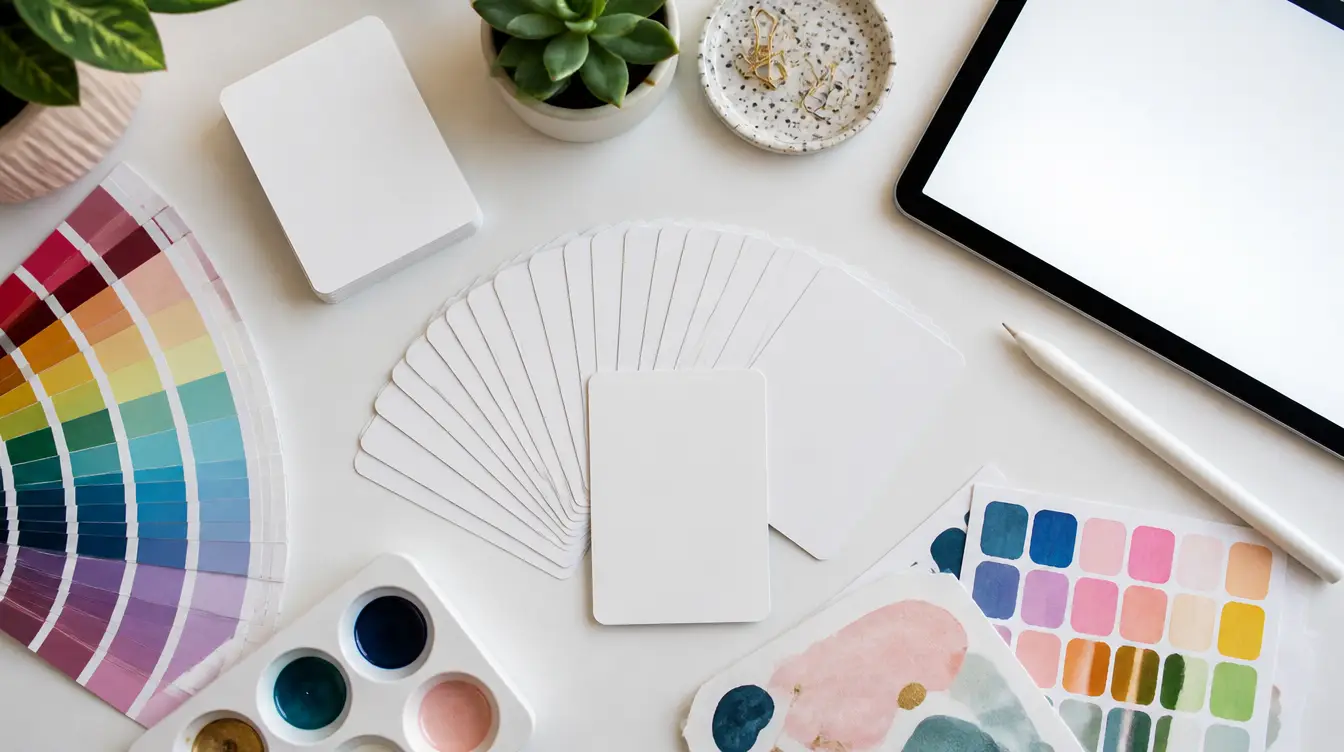
Decide what kind of deck you are making
Photo decks put a different picture on every card - the classic anniversary and wedding gift, 52 memories in a box. Keepsake singles star one subject with a name plate, like a trading card. Game decks need consistent layouts and readable text more than photography.
The design load differs wildly: a keepsake single is one image and a minute of work; a full photo deck means collecting 50+ photos worth printing. Most people start with singles or a court-card set and grow into full decks.
Design the faces and the back
For faces, upload each photo into the template - keep faces and subjects centered, since edges trim slightly in cutting. For text (names, captions, suit marks), stay inside the safe zone away from the edge.
The back is what makes a deck feel real: one design repeated identically on every card. Symmetrical patterns hide wear and orientation; a centered monogram or logo reads elegantly. Avoid photos with obvious direction on backs - a right-side-up-only back annoys every card player who ever shuffles.
Print on real card stock
Playing cards live in hands - they get shuffled, bent, and dealt. Home printer paper fails immediately: too thin, no snap, ink rubs off. Professional card stock is coated 14-16pt with a smooth or linen finish, which is what gives cards their glide and spring.
Snapshot prints custom cards on premium 16pt stock at standard 2.5 x 3.5 inch size, shipped in 2-3 days with a magnetic display case. Singles run $17.99 with free US shipping over $30; additional cards about $2 each up to 18 per box - a court-card photo set or game prototype in one order.