
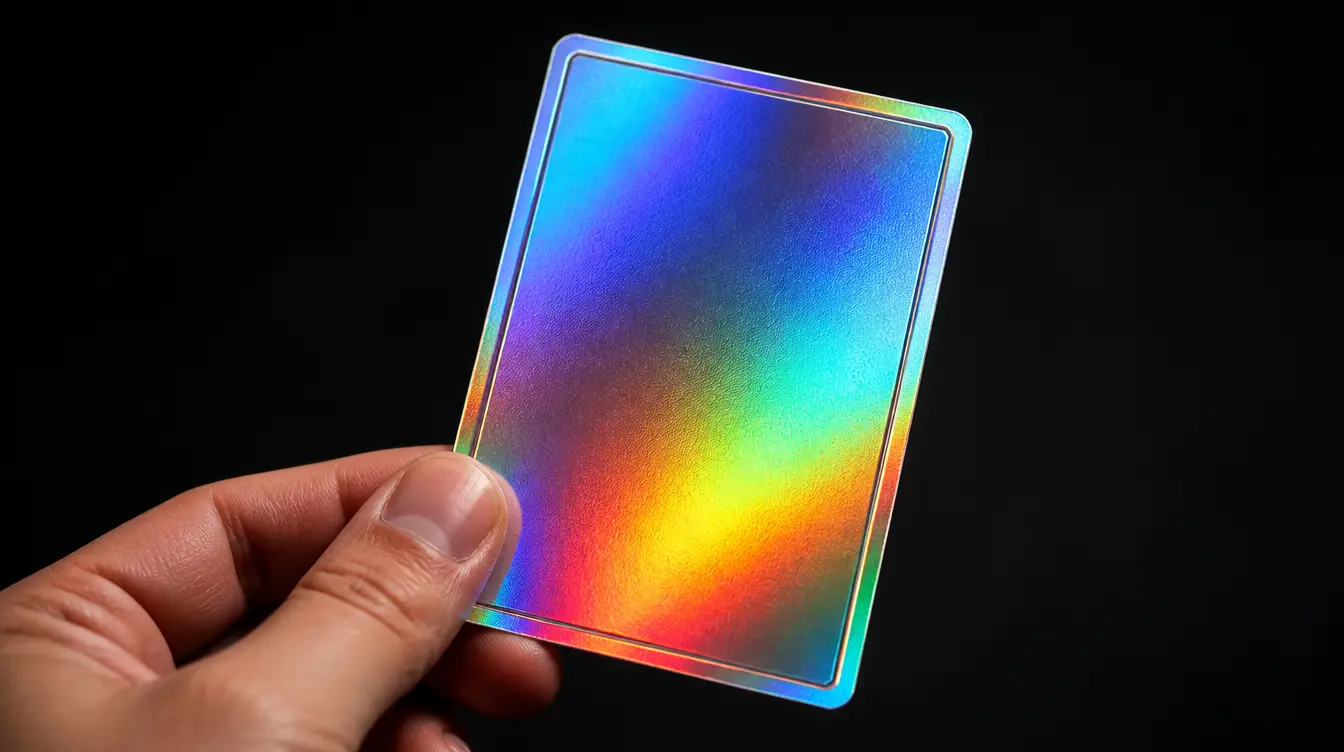
What actually makes a card holographic
The rainbow shimmer on a holo card is physics, not printing: a foil layer embossed with microscopic ridges splits white light into its colors as the card tilts. Card makers apply ink over the foil, letting the shine come through wherever the design allows.
That is why you cannot print a hologram with a home inkjet - no ink produces the effect. The foil has to be in the card's construction, which is production equipment territory.
DIY holo vs printed holo
The craft approach - adhesive holographic laminate smoothed over a printed card - works for one-off fun but shows every bubble and fingerprint, peels at the corners, and adds thickness that ruins the card feel. If the card matters, it is the wrong tool.
Printed holo means the foil layer is part of the card: even shine, durable surface, real card thickness. Snapshot offers holographic finishes on custom cards - upload the photo, design normally, and pick holo at ordering. The result is the pack-pulled shimmer, starring whoever you want.
Designing for the shine
Holo rewards contrast. Darker backgrounds let the rainbow sheen dominate; bright white areas mute it. A sharp subject over a dramatic background - stadium lights, dark studio, night sky - produces that premium chase-card look. Metallic borders and bold name plates amplify the effect further, which is why holo templates lean into them.