
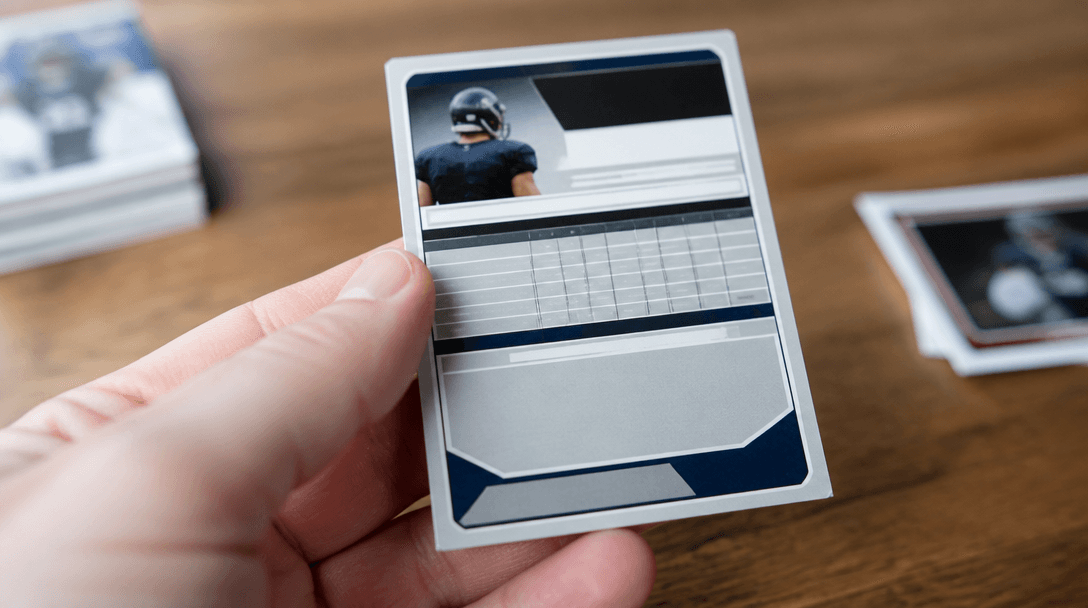
Stats live on the card back
On a real trading card, the front is the photo and the back is the story — stats, bio, career highlights. Custom cards work the same way. The first step is choosing a template that includes a card back, since not every design has one.
Once you have a back, you get fields to fill in. You type the numbers, and they print in the layout the template provides.
What stats to include by sport
The right stats depend on the sport and the position. The goal is to capture the season honestly, not to fill every inch of space.
- ✓Baseball / softball — batting average, home runs, RBIs, or for pitchers, ERA and strikeouts
- ✓Basketball — points, rebounds, and assists per game
- ✓Football — yards, touchdowns, tackles, or interceptions depending on position
- ✓Soccer — goals, assists, and games played
- ✓Any sport — games played, team record, and season awards
Keep it readable
It is tempting to list every number from the season. Resist that. A card back crammed with tiny text is harder to read and looks less professional than a focused selection.
Pick the four to six stats that best tell the story, then use the remaining space for a short bio or a standout moment. White space is part of good card design.
Add a bio and a personal touch
The card back is not only for numbers. A short bio — a sentence or two about the player, the team, or the season — gives the card a voice.
For a card that is a gift, a personal note from a parent or coach on the back is what makes people keep it for years. Stats record the season; the note records what it meant.