
Best Lenses for Sports Photography Sony Shooters Actually Use
Blurry sideline shots ruin great moments. The right glass fixes that before you ever touch an edit button.
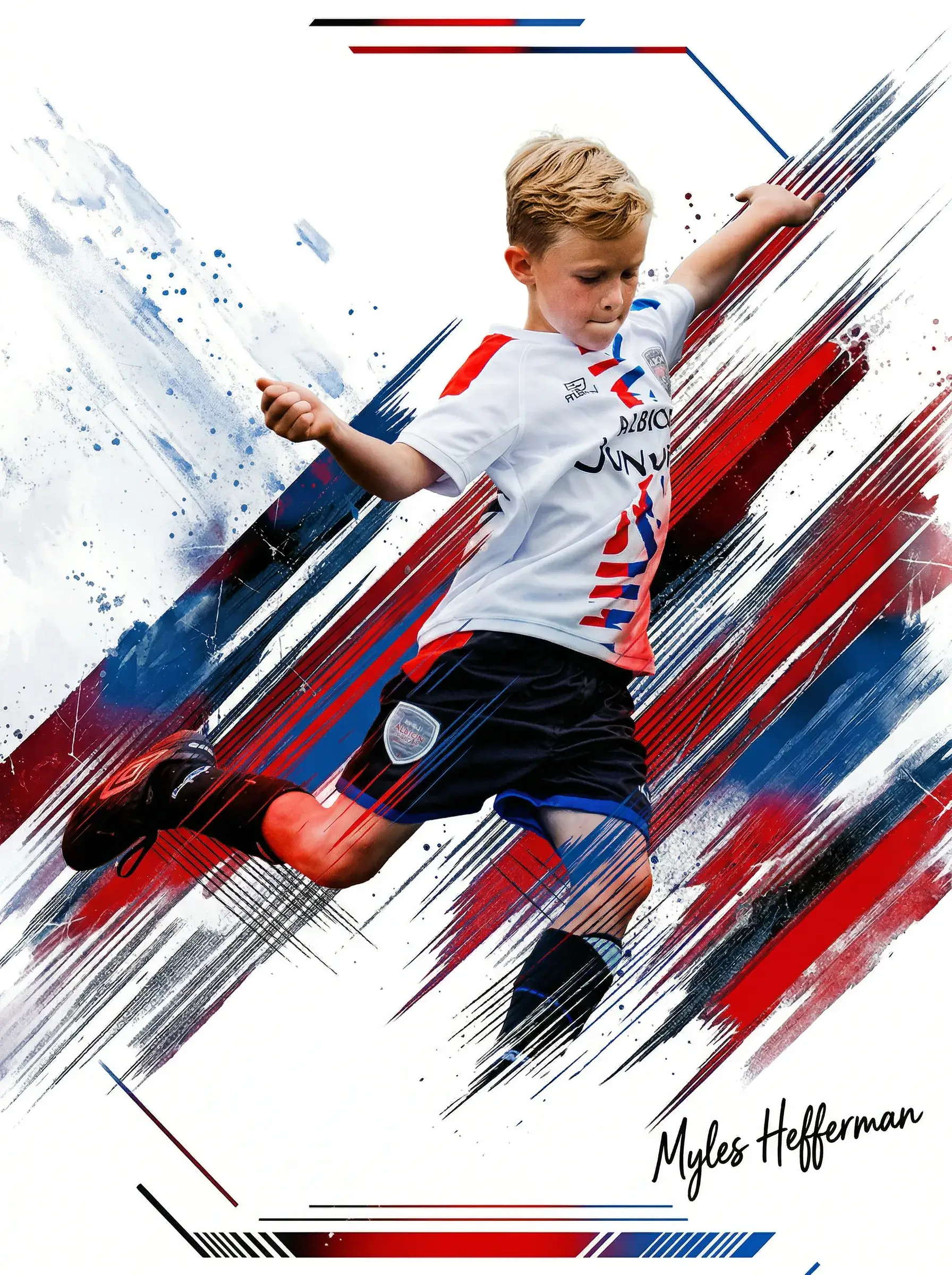
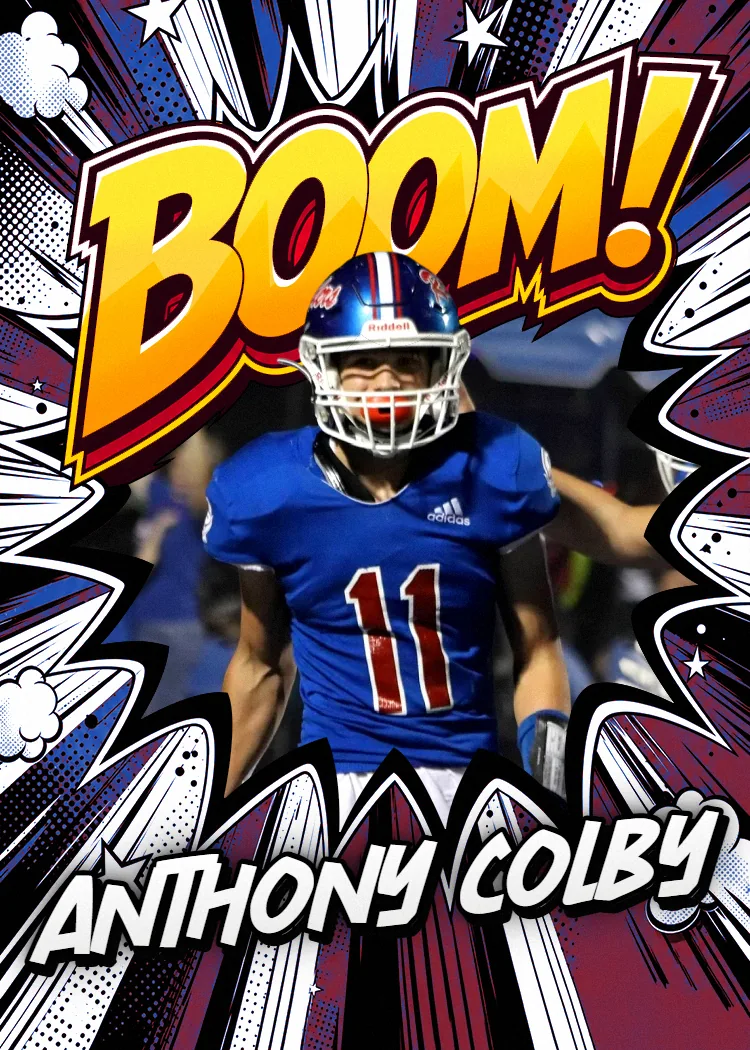
Upload any photo — your kid, your pet, your whole team — pick a pro template, and we print and ship a real, holdable card the next business day.
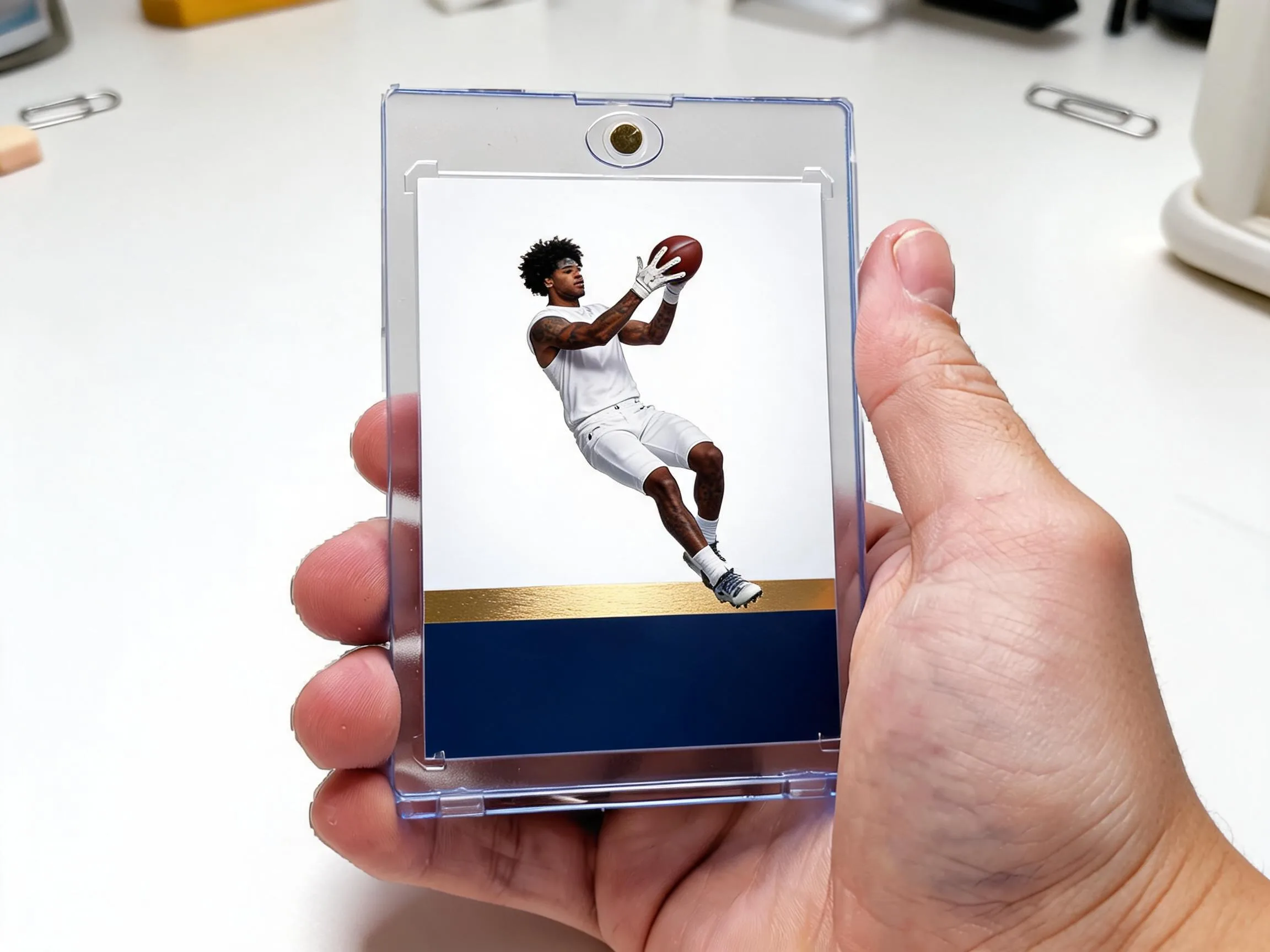
Sports move fast, and cheap kit lenses just can't keep up with a kid sprinting to first base or a wide receiver cutting across the middle. Slow autofocus, soft edges, and dim apertures turn what should be a frozen highlight into a mushy blur you'll never want to print. Parents, coaches, and weekend photographers searching for the best lenses for sports photography Sony bodies pair well with often end up overwhelmed by spec sheets and price tags that don't explain what actually matters on game day.
This guide breaks down which Sony-compatible lenses actually earn their keep on the field, court, or track — no marketing fluff, just focal lengths, apertures, and autofocus performance that matter for real action. We'll walk through how to pick one for your budget and skill level, then show you what to do with those crisp, sharp shots once you've got them. Spoiler: they make incredible custom trading cards.
Let's get into what separates a lens that tracks a fastball from one that just looks good on paper.
We ship custom cards to team parents, coaches, and hobbyist photographers in all 50 states every week, and we see firsthand which action shots print the sharpest.
What Do You Actually Gain From the Right Sports Lens?
A good lens isn't just sharper — it changes what you're able to shoot in the first place.
Sharper Action, Every Time
Fast autofocus motors mean fewer blurry frames and more usable shots per game. That translates directly into better source images for anything you want to print later, including custom cards.
Better Low-Light Performance
Evening games and indoor gyms punish slow lenses. A wide-aperture lens lets you keep shutter speeds fast enough to freeze motion without cranking ISO into grainy territory.
Compression That Makes Backgrounds Pop
Telephoto lenses compress the background, blurring distracting bleachers or parking lots into a soft wash of color. That makes your athlete the clear subject, which matters a lot when you're picking a hero shot.
Fewer Wasted Shots, Less Editing Time
When your lens nails focus in-camera, you spend less time trying to salvage a soft image in post. That means more time enjoying the season and less time squinting at a screen.
Free to design, instant preview. Ships the next business day.
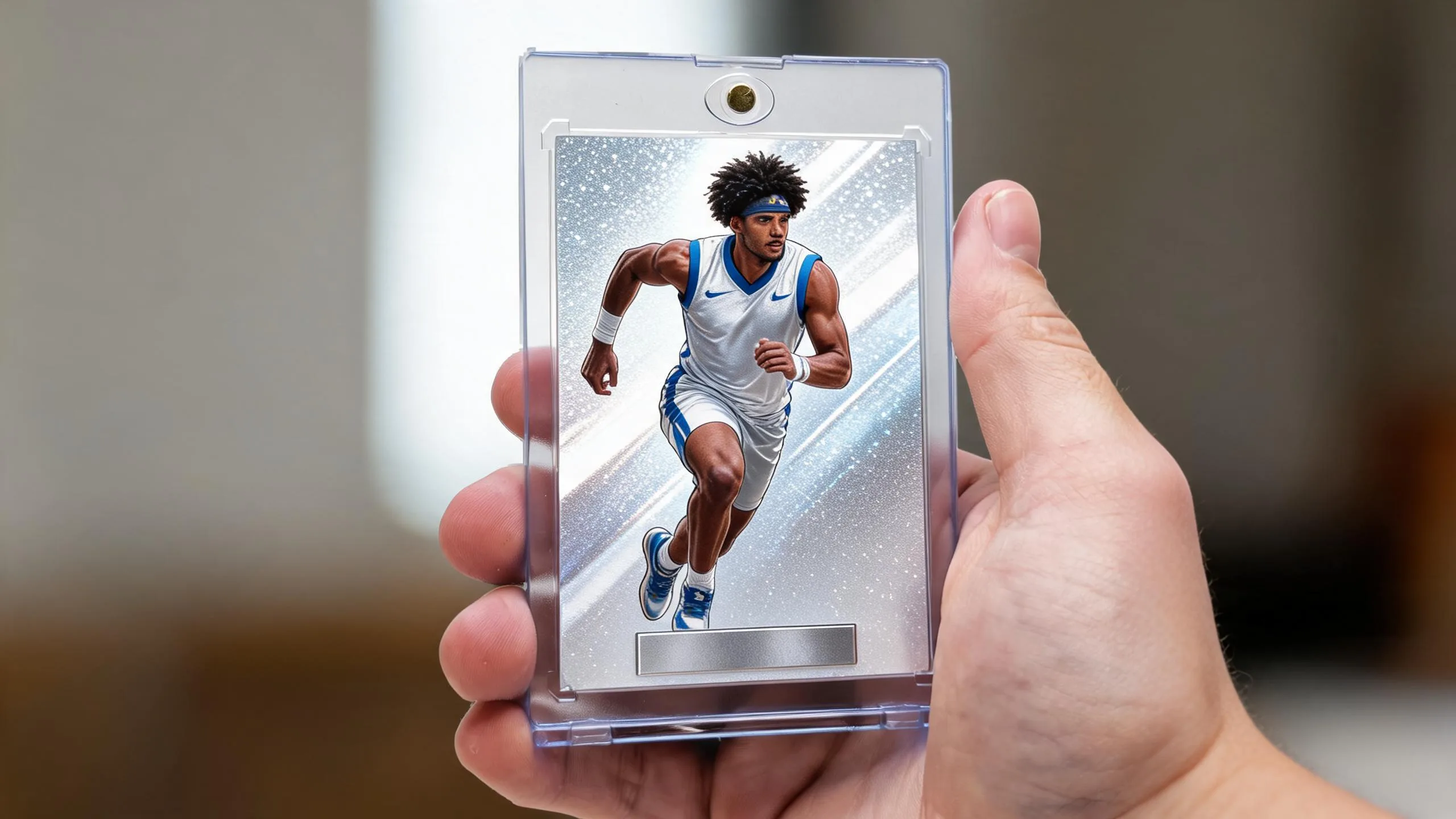
What Are Sony Shooters Saying About Their Sports Lens Setups?
Photography forums and local league Facebook groups are full of parents and hobbyists comparing notes on which Sony lens actually kept up with their sport. The consistent theme: autofocus speed and aperture matter more than brand loyalty or price alone.
Once people get shots they're proud of, the next question is almost always what to do with them — and that's where turning a great action shot into a printed keepsake comes in.
How Do You Choose the Best Lenses for Sports Photography Sony Cameras Support?
Picking a sports lens comes down to three things: reach, speed, and autofocus tracking. Here's how to work through the decision.
Match Focal Length to Your Sport and Distance
If you're shooting from the bleachers at a football game, you need 200mm or more. Courtside basketball or a backyard soccer match might only need 70-135mm. Sony's 70-200mm f/2.8 GM II is the go-to for most field sports because it covers sideline distance without forcing you to sprint for a better angle every play.
Prioritize Aperture Over Megapixels
A wide aperture like f/2.8 lets in more light, which means faster shutter speeds even under gym lighting or dusk game conditions. That faster shutter is what actually freezes motion — a swinging bat, a diving save, a sprinter's stride. Don't get distracted by camera body megapixel counts; the lens is doing the heavy lifting here.
Test Autofocus Tracking Before You Buy
Sony's newer G Master lenses pair with in-camera eye and subject tracking to lock onto a moving player and stay there. Cheaper third-party lenses sometimes hunt for focus mid-play, which means missed shots at the exact moment you needed one. Rent or borrow before committing if you can — autofocus speed is the one spec you can't fully judge from a review alone.
Once you've nailed down the right lens, the real fun starts: capturing shots worth keeping forever.

Who Actually Needs the Best Lenses for Sports Photography Sony Systems Offer?
Not every shooter needs a $2,800 GM lens. Here's how the use case changes the recommendation.
The Team Parent With a Weekend Habit
If you're shooting your kid's rec league games on weekends, a Sony 70-200mm f/4 or even the budget-friendly 70-350mm superzoom gets you plenty of reach without breaking the bank. You don't need pro glass to get a shot worth printing on a custom card — you need consistency and decent light.
The Serious Hobbyist Building a Portfolio
If you're shooting multiple sports across seasons — football in fall, basketball in winter, track in spring — a versatile f/2.8 zoom like the 70-200mm GM II covers almost everything. It's an investment, but it pays off across years of games, not just one season.
The Coach or Team Manager Documenting a Season
Coaches often need speed over reach, especially shooting practices or indoor matches under artificial lighting. A fast prime like an 85mm f/1.4 or a mid-range zoom with wide aperture handles those dim gyms better than a longer, slower telephoto ever will.
What Does It Cost to Turn Your Best Shots Into Custom Cards?
Once you've captured that perfect frame with your Sony setup, printing it as a card costs far less than the lens did.
Rookie Box $17.99-$49.99, MEGA 11"x15" poster card $49.99, free shipping across the USA
A single custom card starts at $17.99, packs run up to $49.99, and every order ships free within 2-3 days on premium card stock.
Box Options
Simple, collectible pricing. No subscriptions, no hidden fees.
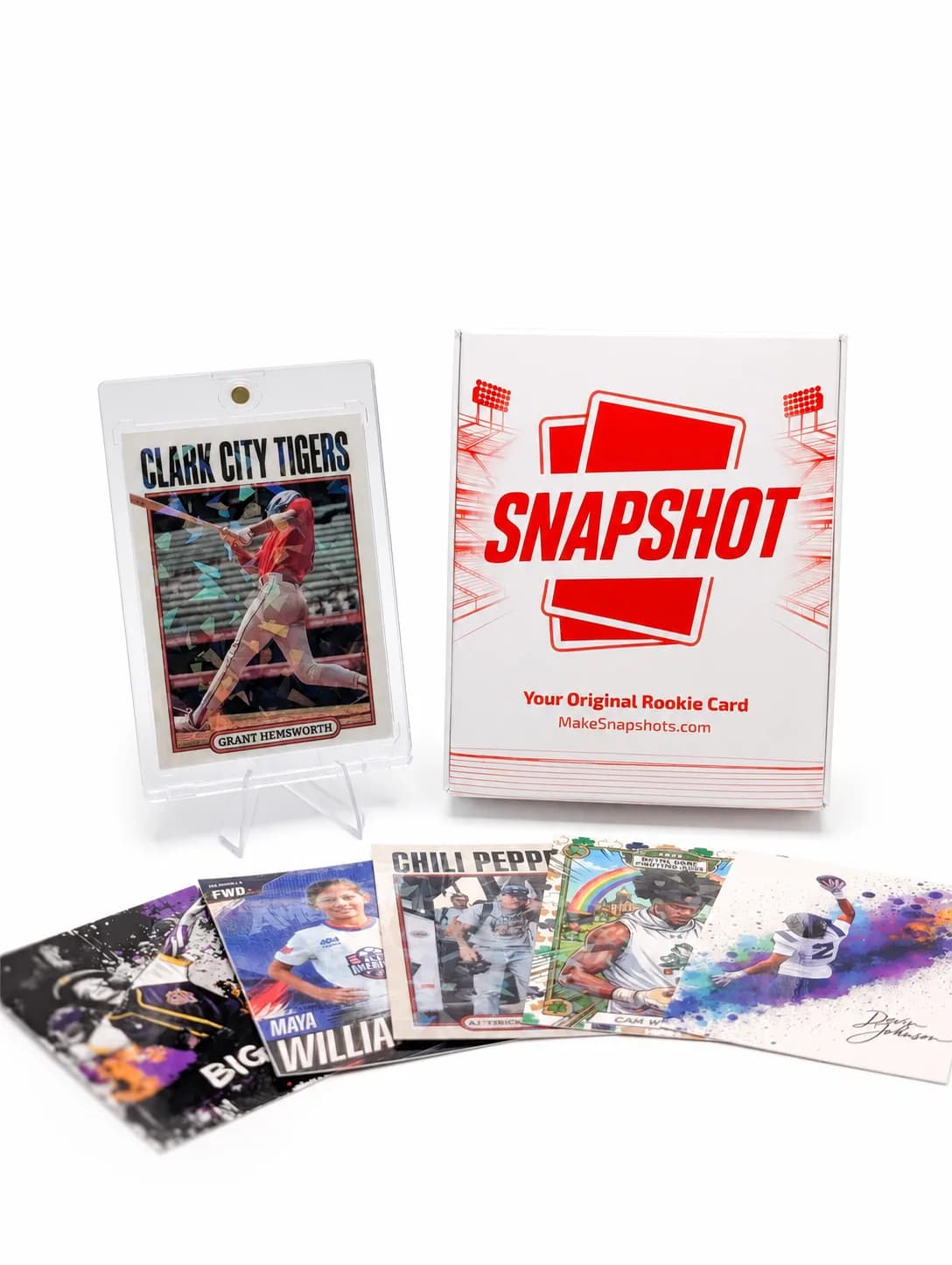
The Rookie Box
Perfect for those unforgettable moments
$17.99 - $49.99
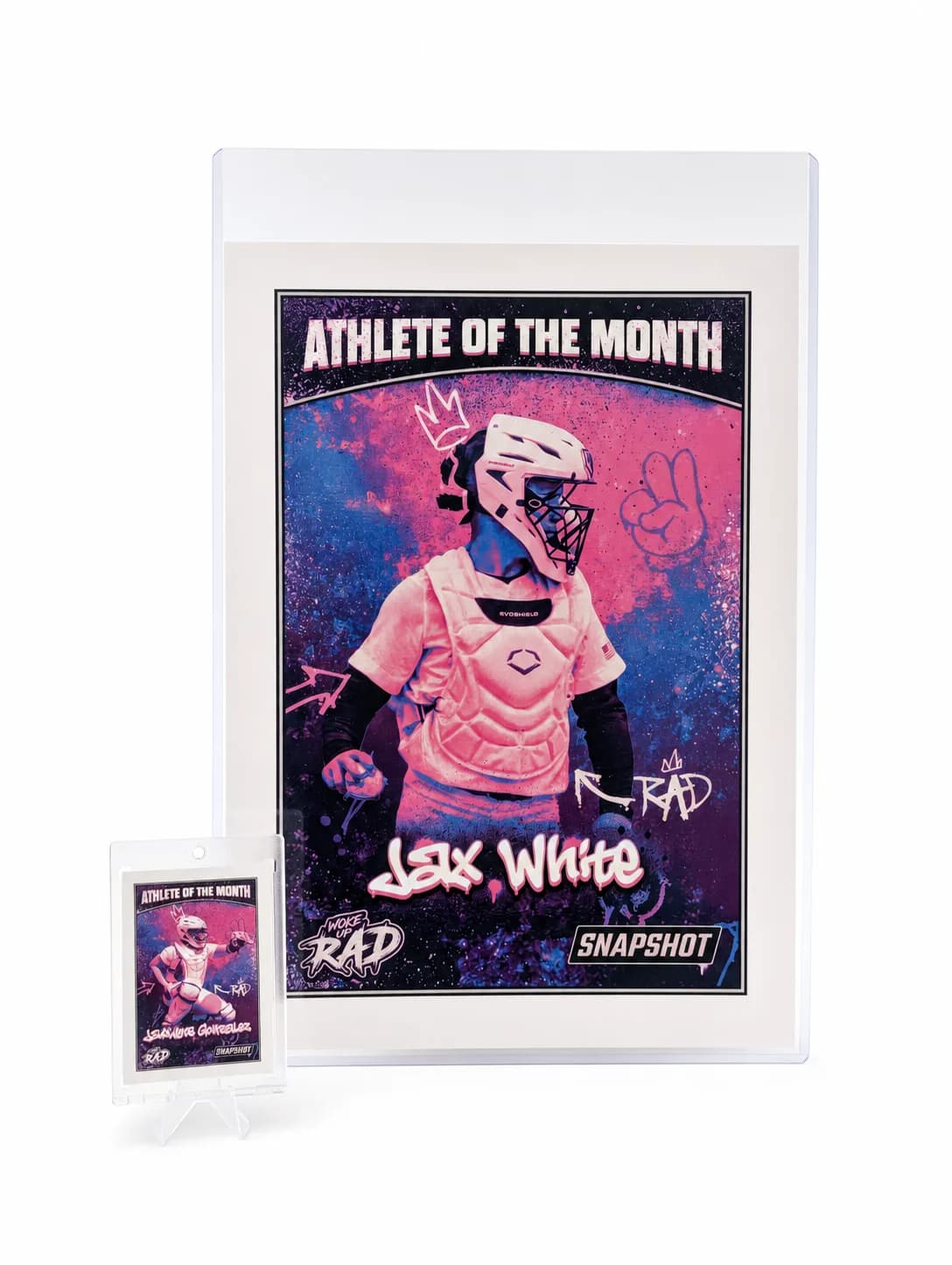
MEGA Card
Their moment, bigger than ever
$49.99
Create for free • Ships the next business day • Made in Des Moines, IA, USA
Frequently Asked Questions
Can I use third-party lenses like Sigma or Tamron for sports on Sony?
Yes, and many photographers do exactly that to save money without sacrificing much performance. Sigma's 100-400mm and Tamron's 70-180mm f/2.8 are both popular choices for Sony shooters who want professional-level results without paying Sony's premium GM pricing. Autofocus on recent third-party lenses has improved dramatically, and most work seamlessly with Sony's eye-tracking and subject-tracking autofocus systems. There can be occasional firmware compatibility hiccups when Sony releases new camera bodies, so it's worth checking recent reviews for your specific camera model before buying. Build quality is generally solid, though slightly less weather-sealed than Sony's own G Master lineup in some models. For hobbyists and team parents who don't need every last bit of speed, a third-party lens can save several hundred dollars while still producing shots sharp enough to print big. We've seen plenty of stunning action shots come from Tamron and Sigma glass that hold up just as well as pricier alternatives once printed on a card.
What focal length do I need for youth sports like soccer or baseball?
For most youth sports fields, something in the 100-300mm range covers the action comfortably from a sideline or bleacher position. Soccer fields are wide, so you'll want closer to 200-300mm to reach midfield action without walking the sideline constantly. Baseball and softball benefit from similar reach, especially if you're trying to capture a batter at the plate from behind the backstop. Basketball and volleyball, played in smaller indoor spaces, often only need 70-135mm since you're typically much closer to the action. If you're shooting multiple sports across seasons, a versatile 70-200mm or 70-300mm zoom flexes well between all of them without needing to own several separate lenses. Longer isn't always better either — too much reach in a small gym means you can't fit the whole play in frame. Think about the actual distance from where you'll stand to where the action happens, then choose focal length around that real-world number rather than guessing.
How important is image stabilization for sports lenses?
Image stabilization helps more than people expect, especially at longer focal lengths where even small hand movements get magnified into visible blur. Sony's OSS (Optical SteadyShot) technology in many of their sports-oriented lenses works alongside in-body stabilization on newer camera bodies for a combined effect. That said, stabilization mainly helps with camera shake, not subject motion — it won't freeze a running athlete on its own. For that, you still need a fast shutter speed, which comes back to aperture and available light. Where stabilization really shines is handheld shooting at 300mm or longer for extended periods, like tracking a runner around a track for several laps. It also helps when you're shooting in lower light and need to keep ISO down without motion blur creeping into your shots. If you're choosing between two similar lenses and one has stabilization, it's worth the extra cost, particularly if you shoot handheld rather than using a monopod.
Should I rent a lens before buying one for sports photography?
Renting is one of the smartest moves you can make before dropping serious money on a sports lens. Companies like LensRentals or local camera shops let you try a lens for a weekend tournament or a single big game to see how it performs in your actual shooting conditions. Autofocus speed, weight, and how a lens balances on your specific camera body are things no review can fully convey until you're holding it courtside. Renting also helps you figure out if you actually need the extra reach of a 400mm lens or if a 200mm covers your needs just fine. Many photographers rent a high-end GM lens once, realize it's overkill for their casual weekend shooting, and end up happier with a smaller, cheaper option. Others rent a budget lens, get frustrated with slow autofocus during a fast game, and confidently upgrade knowing exactly why. Either way, renting removes the guesswork and saves you from buyer's remorse on an expensive piece of gear.
What Sony camera bodies pair best with sports lenses?
The Sony A9 II and A1 are built specifically for fast action, with burst rates up to 20 frames per second and industry-leading autofocus tracking. For most hobbyists and team parents, though, the Sony A7 IV or even the more affordable A6600 pair perfectly well with sports lenses and deliver excellent results without the professional price tag. The camera body matters most for burst speed and autofocus sophistication, while the lens still determines your reach and light-gathering ability. A great lens on a mid-range body will usually outperform a mediocre lens on a flagship body. If you're building a kit from scratch, prioritize a solid lens first and consider upgrading the body later as your needs grow. Crop-sensor bodies like the A6000 series also extend your effective focal length, which can be a budget-friendly way to get more reach without buying a longer, pricier lens.
How do I get the sharpest possible sports photos with my Sony lens?
Start with shutter speed — anything faster than 1/1000th of a second freezes most fast sports action reliably. Use continuous autofocus (AF-C) mode combined with Sony's eye or subject tracking so the camera keeps refocusing as the athlete moves toward or away from you. Shoot in burst mode to capture a sequence of frames around the peak action moment, since even great autofocus occasionally misses by a fraction of a second. Position yourself at field level rather than shooting down from bleachers when possible — it creates a more dynamic, professional-looking angle. Clean your lens front element before every game; dust and fingerprints show up more than people expect, especially in bright outdoor light. Finally, review your shots on the camera's LCD periodically during breaks to check focus accuracy, not just exposure, so you can adjust before you miss an entire quarter of action.
What should I do with my best sports photos once I've captured them?
This is where a lot of great shots go to waste, sitting untouched in a phone or hard drive folder instead of being enjoyed. Once you've got a sharp, well-composed action shot, printing it as a custom trading card turns it into something an athlete or family member will actually hold onto and display. Snapshot lets you upload any photo, choose from pro-style sports card templates, and get premium cards printed and shipped within 2-3 days. A single card starts at $17.99, and packs go up to $49.99, with a large 11x15 MEGA poster card available for players who want a statement piece for their room. Every order ships free within the USA, and cards arrive with a free magnetic case for protection. It's a simple way to close the loop on all that gear and effort — you invested in the right lens, captured the moment, now give it a permanent home instead of letting it disappear into a camera roll.
Do I need a full-frame camera to use these sports lenses effectively?
Full-frame isn't required, though it does offer some advantages for sports shooting, particularly in low light where larger sensors handle high ISO more gracefully. Many Sony sports lenses are designed for full-frame E-mount bodies but work perfectly well on APS-C crop-sensor cameras too, often with a useful side effect: crop sensors extend your effective focal length, giving you extra reach for free. A 200mm lens on a crop body behaves more like a 300mm lens, which can be a real advantage for distant field sports on a budget. The tradeoff is typically slightly reduced low-light performance and dynamic range compared to full-frame bodies. For casual and even semi-serious sports photography, a crop-sensor body like the Sony A6600 paired with a good telephoto lens produces excellent, printable results. Don't feel pressured to jump straight to full-frame gear if your budget doesn't allow it — plenty of stunning sports shots have come from crop-sensor setups.
How much should I budget for a good sports photography lens setup?
Budget-conscious shooters can put together a capable setup for $600-900 using something like the Sony 70-350mm f/4.5-6.3 G lens, which covers most outdoor sports admirably. Mid-range shooters looking for better low-light performance and faster autofocus should expect to spend $1,200-1,800 on lenses like the Tamron 70-180mm f/2.8 or Sigma 100-400mm. Serious hobbyists and anyone shooting multiple sports across seasons often land on the Sony 70-200mm f/2.8 GM II, which runs upwards of $2,600 new, though used copies of the first-generation version can be found for considerably less. It helps to think about cost per season rather than upfront price alone — a durable, versatile lens used across years of games often ends up cheaper per shot than a budget lens replaced every year or two. Whatever you land on, remember the lens is only half the equation; good technique and positioning matter just as much as glass quality for getting shots worth printing.
Free to design, instant preview. Ships the next business day.
Found the Best Lenses for Sports Photography Sony Gear Can Handle? Now Print the Shot
You did the hard part — picking the right lens and nailing the shot. Upload that photo to Snapshot and turn it into a custom trading card on premium card stock, shipped free in 2-3 days.
Create Your Card NowNo credit card required | Instant preview | Pro-quality designs
Explore More Card Options
Discover more custom trading card options for every sport and occasion