
Best Nikon Lens Sports Photography: What Actually Matters
Everyone tells you which lens to buy. Almost nobody tells you what to do with the photos once you've got them.
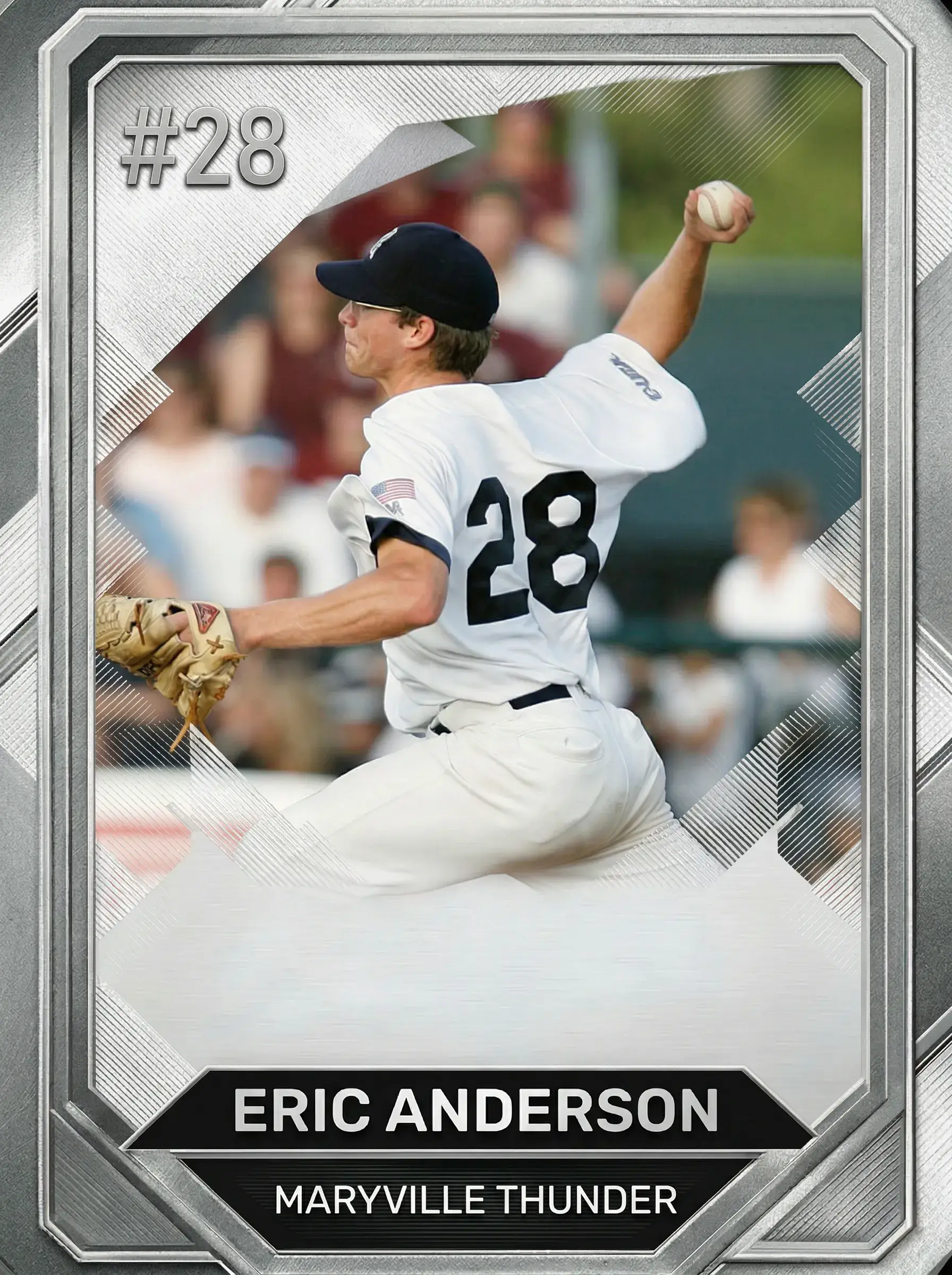
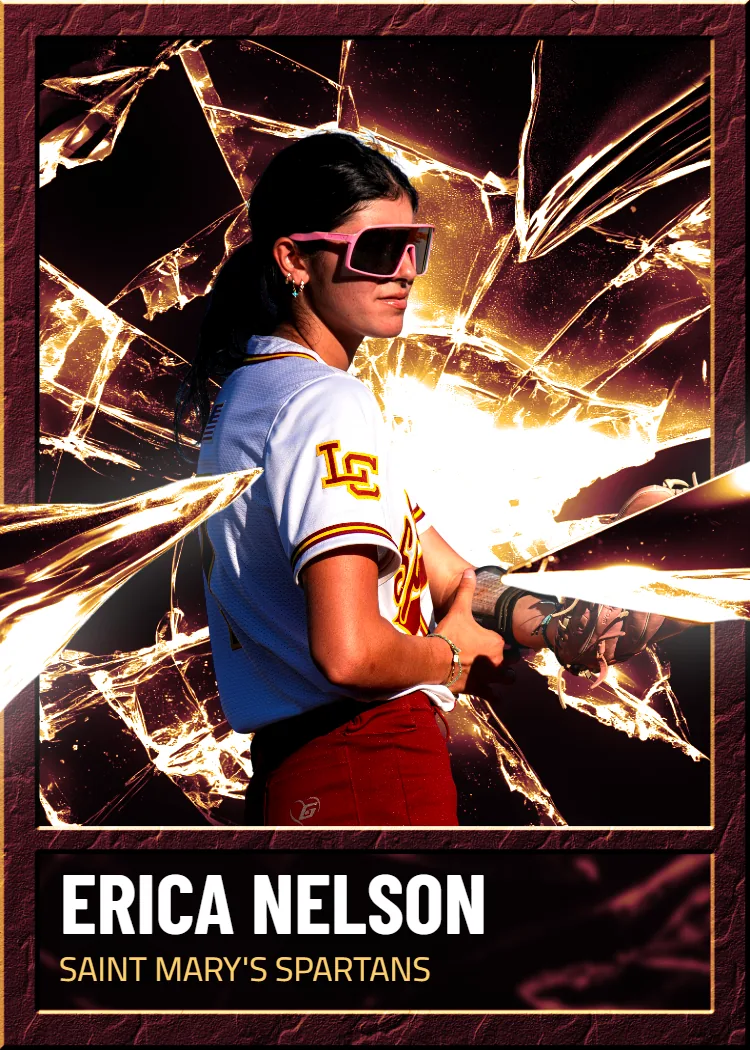
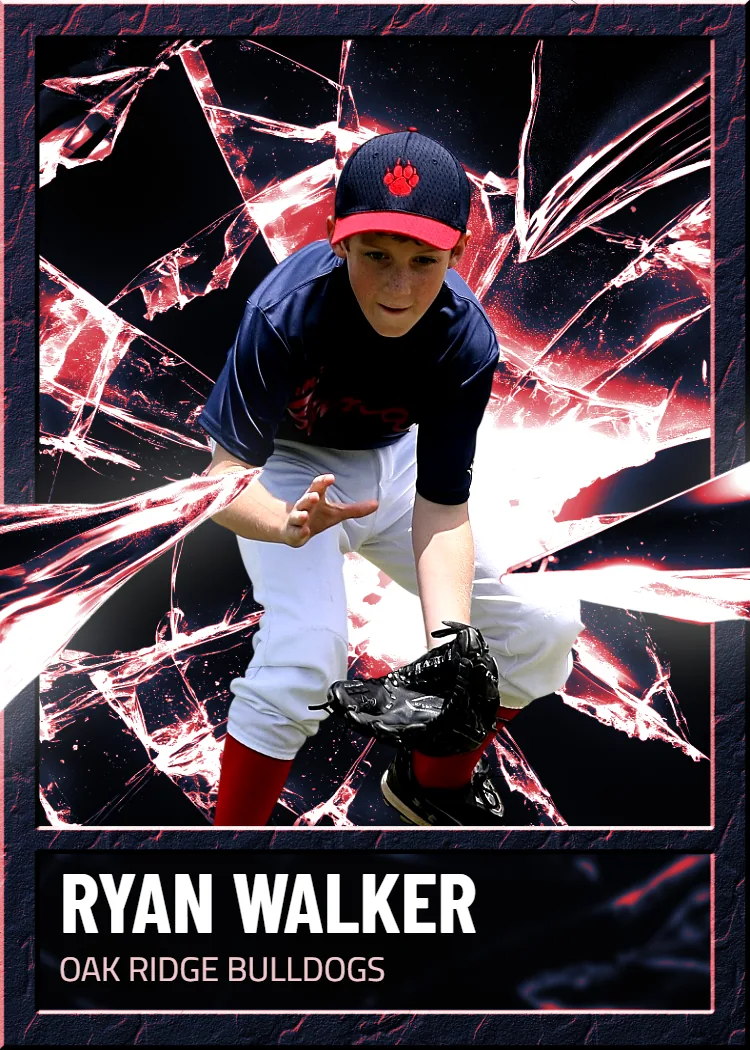
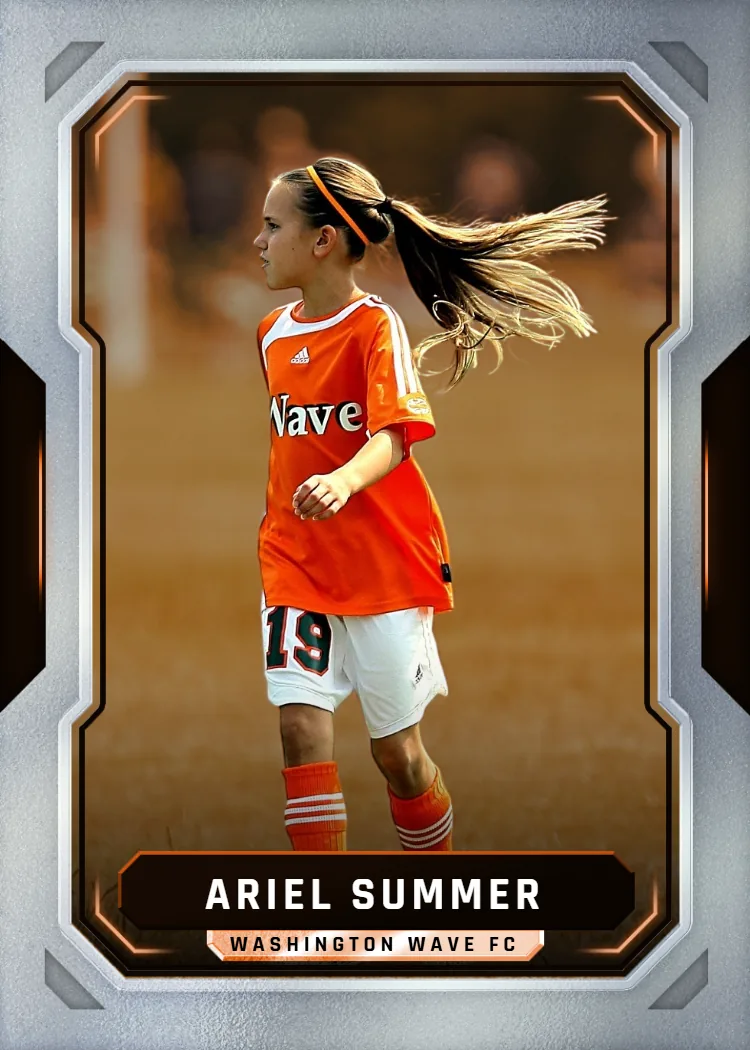
Upload any photo — your kid, your pet, your whole team — pick a pro template, and we print and ship a real, holdable card the next business day.
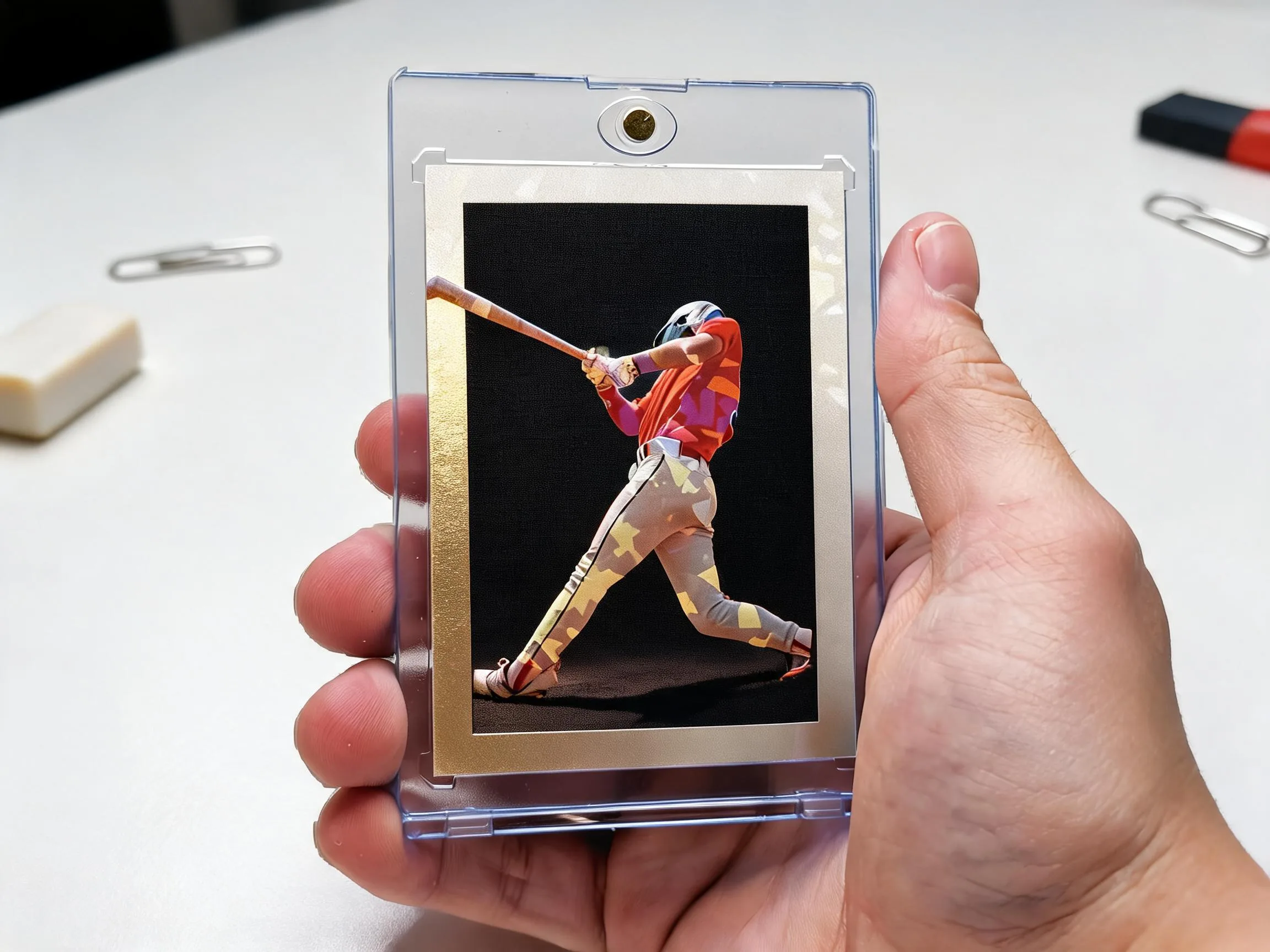
Search for the best Nikon lens sports photography and you'll get thirty articles recommending the same 70-200mm f/2.8, none of which explain why it works or when it doesn't. Parents on the sideline, weekend league photographers, and team managers end up buying glass that's overkill for a rec league game or underpowered for a dim gym. The myths pile up fast: bigger zoom is always better, you need f/2.8 or nothing, autofocus speed doesn't matter for kids' sports. None of that's quite true.
This page separates the myths from the facts, lens by lens, situation by situation. We'll also tell you what happens after the shutter clicks — because the best action shot in the world does nothing sitting in a camera roll. Turn it into a printed keepsake instead.
Let's clear up the confusion, then talk about what to do with your best frame.
We ship custom cards to teams and families in all 50 states every week, printed from photos shot on everything from phone cameras to professional Nikon rigs.
Frequently Asked Questions
What is the best Nikon lens for sports photography overall?
There isn't one single best Nikon lens for sports photography that fits every situation, and that's the myth worth killing first. For most shooters covering outdoor fields — soccer, football, baseball — the 70-200mm f/2.8 Z-mount lens is the most versatile choice because it balances reach, speed, and weight. If you're shooting from farther back, like at a track meet or a large football stadium, a 100-400mm or 200-500mm gives you the extra reach you need. Indoor sports like basketball and volleyball in dim gyms benefit more from the wide aperture of a 70-200mm f/2.8 than from extra zoom range, since light matters more than distance there. Budget shooters can get excellent results from an f/4 version of the same focal range, sacrificing a stop of light for a significantly lower price and lighter carry weight. The honest answer is: match the lens to your sport and venue, not to whatever list ranks highest on Google.
Do I really need an f/2.8 lens, or is f/4 good enough?
F/4 is good enough far more often than gear guides admit, and this is one of the biggest myths in sports photography. Outdoors, in daylight, an f/4 lens gathers plenty of light to keep your shutter speed above 1/1000s, which is fast enough to freeze most action. Where f/2.8 actually earns its higher price is indoors — gyms, rinks, and evening games under stadium lights, where every extra stop of light helps you avoid pushing ISO into noisy territory. If you mostly shoot daytime outdoor games, an f/4 zoom saves you money and several pounds of carrying weight over a season. If gym season is your primary focus, the wider aperture becomes worth the investment. Buying f/2.8 for outdoor-only shooting is paying for capability you'll rarely use, and that money is often better spent printing your season's best shots into keepsakes instead of sitting in unused lens capability.
Is a longer zoom always better for sports photography?
No, and this myth causes more wasted purchases than any other. A 200-500mm lens sounds impressive, but if you're shooting courtside basketball or from the dugout fence at a Little League game, you'll constantly be too close to use that focal length effectively. Longer lenses also mean more weight, slower minimum focus distances, and narrower depth of field that can make tracking fast, unpredictable movement harder. The right question isn't how long a lens is, but how far you'll typically be from the action at your specific venue. Sideline football shooters twenty-plus yards back genuinely benefit from 300-400mm reach. Courtside, baseline, or infield shooters are usually better served by a 70-200mm, which stays sharp, fast, and easier to swing between plays. Match the lens to your actual shooting distance, not to the biggest number on the spec sheet.
Which Nikon mount should I be buying lenses for — F-mount or Z-mount?
If you're buying new gear today, Z-mount is the better long-term investment, since Nikon has shifted almost all new lens development to its mirrorless system. Z-mount lenses generally autofocus faster and track moving subjects more reliably, which matters enormously in sports where a missed focus lock ruins the frame. That said, F-mount glass isn't obsolete — with the right adapter, older 70-200mm and 300mm F-mount lenses still perform well on Z-series bodies, and used prices on F-mount glass have dropped significantly. If you already own a DSLR and F-mount lenses, there's no urgent need to replace them just to chase a mount change. If you're starting from scratch or upgrading a camera body soon, buying Z-mount lenses now avoids a second purchase down the line. Either way, the lens matters less than showing up to enough games to catch the moments worth keeping.
How much should I expect to spend on a good sports lens?
Expect anywhere from $600 for a budget telephoto zoom to $2,600 or more for a professional f/2.8 700-200mm. Entry-level options like the Nikon 70-300mm AF-P sit around $500-700 and cover outdoor daytime sports respectably well for casual shooters. Mid-range f/4 zooms in the 70-200mm or 100-400mm range typically run $1,200-1,900 and offer a solid balance of speed, sharpness, and weight. Professional f/2.8 glass starts around $2,400 and climbs from there, justified mainly if you're shooting indoor sports regularly or selling your photography. It's worth remembering that lens cost has diminishing returns once you're printing images small, like on a trading card — a $700 lens and a $2,600 lens produce nearly indistinguishable results once cropped to a few inches. Spend based on your actual shooting conditions, not on what feels most impressive to own.
Can I get good sports photos with a kit lens?
Yes, within limits, and this deserves more credit than it usually gets. A standard 18-140mm or 24-120mm kit lens can absolutely capture usable, sharp images in good outdoor daylight, especially for sports where the action happens relatively close to you, like baseball infield plays or soccer near midfield. Where kit lenses struggle is reach at a distance and autofocus speed on fast, erratic subjects, so you'll miss more frames of things like a diving catch or a breakaway sprint. Indoor gyms are the hardest environment for a kit lens, since the narrower aperture range forces higher ISO and slower shutter speeds that introduce blur. If you're just starting out or photographing casually for a scrapbook or custom card project, a kit lens is a perfectly reasonable starting point. Upgrade later once you know specifically what limitation is actually holding your shots back.
What's the biggest myth about sports photography lenses?
The biggest myth is that gear determines the shot more than timing and positioning do. A $3,000 lens in the wrong spot on the field, aimed a half-second too late, produces a worse photo than a $700 lens held by someone who anticipated the play. Sports photography rewards reading the game — knowing when a receiver is about to cut, when a batter is about to swing, when a goalie is about to dive — far more than it rewards raw lens specifications. Professional sideline photographers will tell you the same thing: positioning and timing account for most of what makes a photo work. That's genuinely good news for anyone on a budget, because it means practice and instinct close the gap between amateur and professional results faster than money does. Buy a lens that fits your sport and light, then spend your energy learning to anticipate the action instead of upgrading gear.
Does image stabilization matter for sports photography?
It matters less than you'd think for freezing action, but more than you'd think for handheld comfort over a long game. Image stabilization, whether Nikon's VR or in-body stabilization on Z-series bodies, primarily helps with camera shake at slower shutter speeds, which isn't usually your main concern in sports since you're shooting fast to freeze motion anyway. Where it genuinely helps is reducing fatigue and micro-shake when you're holding a heavy telephoto lens for hours, which indirectly improves your keeper rate late in a game when your arms are tired. It also helps a lot when you're shooting handheld video alongside stills, like sideline highlight clips. If you're mounting your lens on a monopod, stabilization becomes less critical since the support handles most shake reduction already. It's a nice-to-have feature, not a dealbreaker, when weighing lens options.
How do I know if a lens will autofocus fast enough for my sport?
Test it on the fastest, most unpredictable movement your sport produces before you commit to buying. Hockey and volleyball demand the fastest tracking since direction changes happen in a fraction of a second, so you want a lens rated for quick, silent autofocus motors like Nikon's STM or SWM designs. Baseball and football have more predictable movement patterns, giving even moderately fast lenses a better chance to lock focus in time. Read reviews specifically mentioning autofocus performance in low light and on erratic subjects, since marketing specs alone won't tell you how a lens behaves in a real gym or rink. If possible, rent the lens for a weekend before buying and shoot an actual scrimmage rather than a controlled test. What looks fast in a camera store demo doesn't always hold up when a player cuts unexpectedly across your frame.
What lens do professional sports photographers actually use most?
On NFL and NBA sidelines, the most common lenses are the 400mm f/2.8 and 300mm f/2.8 for field sports, paired with a 70-200mm f/2.8 for closer action and reaction shots. These lenses cost $10,000-13,000 new, which is far beyond what any casual or even serious amateur photographer needs to own. What's useful to take from professional setups isn't the specific lens, but the pattern: they carry two lenses covering different distances rather than relying on one do-everything zoom. A practical version of that approach for amateur shooters is pairing a 70-200mm with a lighter 300mm f/4 for reach, at a fraction of professional pricing. Copying the professional's exact gear list is rarely the right move for a rec league parent or weekend shooter with a very different budget and use case.
Should I buy a prime lens instead of a zoom for sports?
Primes offer wider apertures and sharper optics at a lower price than equivalent zooms, but they cost you flexibility, which matters a lot in sports where you can't control your distance to the action. A 300mm f/4 prime is lighter, sharper, and cheaper than a 300mm-equivalent zoom, but if the play moves closer or farther from you, you're stuck cropping instead of zooming. Zooms make more sense for most amateur and semi-pro sports shooters because game action is unpredictable and you rarely get to choose your exact distance. Primes make more sense if you shoot from a fixed, known position repeatedly, like a regular seat at a home arena. For most parents, coaches, and hobbyists moving around a sideline or bleacher, a versatile zoom like the 70-200mm remains the more practical choice.
How does lens choice affect printing photos as custom cards later?
A sharper, well-exposed photo gives you more flexibility when cropping tight for a card template, since you're working with more usable detail per square inch of the final print. Lenses with faster autofocus reduce the number of slightly blurry near-misses in your camera roll, meaning you'll have more genuinely sharp options to choose from when picking a season's best shot. That said, once an image is cropped down to card size, differences between a $700 lens and a $2,500 lens become nearly invisible to the eye. What matters most for printing is that the original photo is in focus, well-lit, and captures a clear moment — the swing, the save, the finish line. Snapshot's templates work well with photos from a wide range of gear, from phone cameras to professional bodies, as long as the core moment is sharp and clearly framed.
Free to design, instant preview. Ships the next business day.
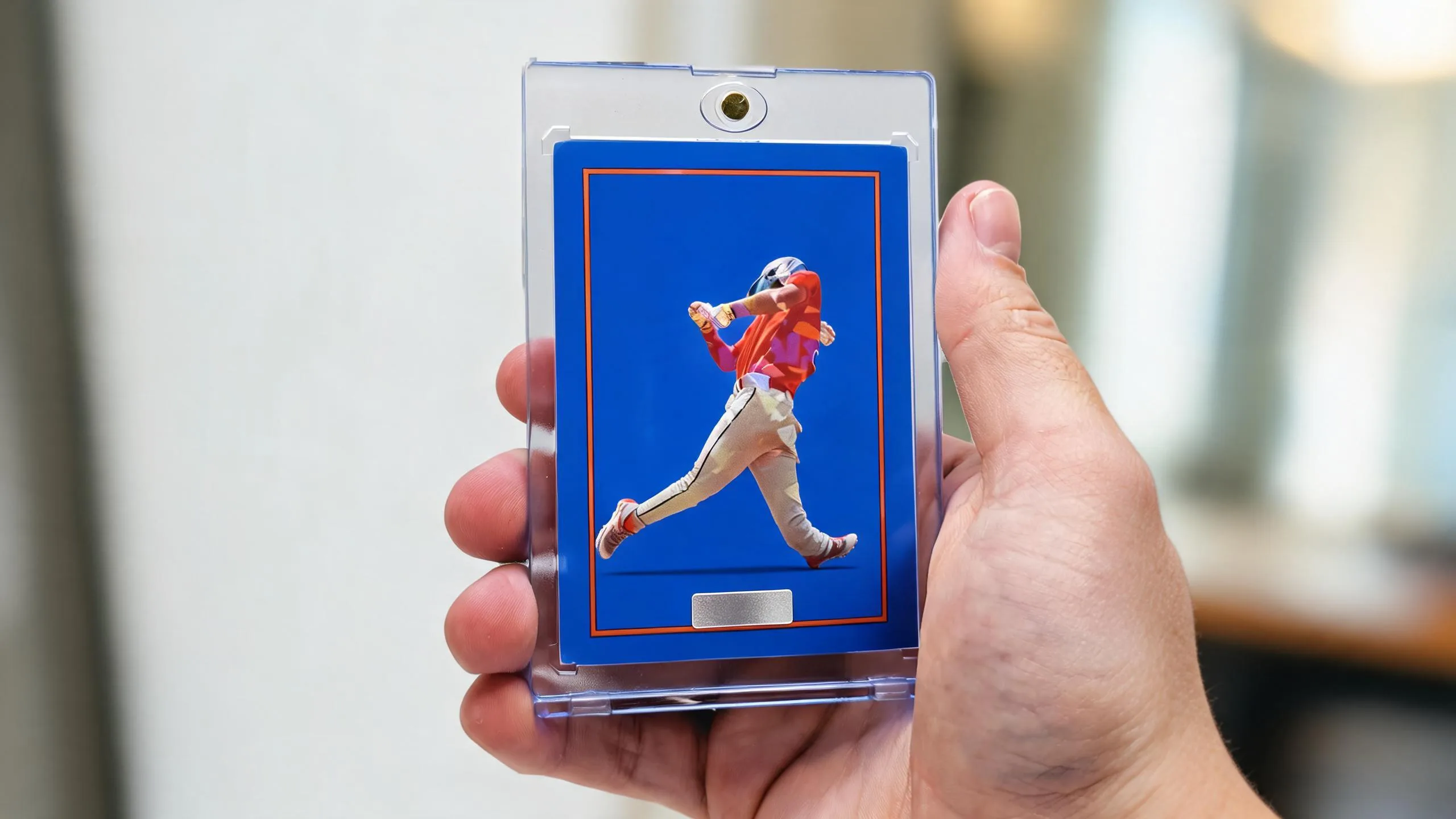
How Do You Actually Choose the Best Nikon Lens for Sports Photography?
It comes down to three factors: distance to action, available light, and how much weight you're willing to carry for four quarters.
Match Focal Length to Your Sideline Position
If you're courtside or on the baseline, a 70-200mm f/2.8 covers most youth and high school venues without needing a monopod. If you're shooting football or soccer from a fence line thirty yards back, you'll want 300mm or a 200-500mm to compress the distance. Buying too much reach for an indoor gym just means you can't back off enough.
Check the Light Before You Check the Price Tag
Gyms and rinks are notoriously dark, often 400-800 lux compared to 10,000+ outdoors on a sunny field. That's where f/2.8 glass earns its cost — it lets you keep shutter speeds above 1/1000s without pushing ISO into grainy territory. Outdoor day games are more forgiving, so an f/4 or f/5.6 zoom can save you money and weight.
Test Autofocus Tracking Before Game Day
Nikon's Z-mount lenses paired with modern tracking autofocus handle erratic movement — a hockey puck change of direction, a diving catch — far better than older screw-drive glass. Spend one practice session shooting scrimmages to see how the lens locks focus and recovers after a player crosses in front of your frame.
Once you've nailed the shot, the next step is making it last longer than your camera roll does.
Before You Buy: Sports Lens Checklist
- Know your typical shooting distance at your venue before choosing focal length
- Check whether your sport is mostly indoor (low light) or outdoor (bright light)
- Test autofocus tracking on a real scrimmage, not a store demo
- Weigh the lens with your camera body attached — you'll carry it for hours
- Confirm Z-mount vs F-mount compatibility with your specific camera body
- Budget separately for the lens and for printing your best shots afterward

Why Getting the Lens Right Actually Pays Off
A sharper, better-framed photo isn't just nicer to look at — it changes what you can do with it later.
Cleaner Backgrounds, No Editing Needed
Fast glass with wide apertures blurs distracting bleachers and fencing automatically, so the subject pops without hours of background removal in editing software.
Freezes Motion Other Lenses Blur
A lens capable of fast autofocus and wide apertures lets you shoot at 1/2000s or faster, freezing a bat mid-swing or a sprinter's stride instead of a smear.
Better Crop Flexibility for Card Layouts
Higher resolution captures from a sharp lens give you room to crop tight for a card template without losing detail, which matters when your final print is only a few inches wide.
Consistent Results Across Venues
A versatile zoom like a 70-200mm handles gym, field, and rink alike, so you're not scrambling to switch gear between your kid's basketball and soccer seasons.
Where This Actually Plays Out on the Sidelines
Different sports and settings call for different glass — here's how it breaks down in practice.
Weekend Rec League Photographer
A parent shooting their kid's soccer or baseball games doesn't need pro-grade f/2.8 glass. A 70-300mm f/4.5-6.3 covers most daytime fields fine, and the money saved can go toward printing the best shots as custom cards for teammates instead of sitting unused in a camera bag.
Indoor Gym and Volleyball Shooters
Fluorescent gym lighting is brutal on slower lenses. Photographers here lean toward 24-70mm f/2.8 or 70-200mm f/2.8 to keep shutter speeds fast enough to freeze a spike or a jump shot without cranking ISO past 6400 and losing detail to noise.
Team Managers Building a Season Archive
Coaches and managers collecting photos across a full season benefit from a lens that's forgiving in mixed light — early practices, evening games, tournament gyms. Consistency matters more than raw sharpness when you're compiling shots for a full roster of custom cards at season's end.
What We're Seeing From Photographers Nationwide
We print cards from photos taken on everything from decade-old Nikon D3300 kits to brand-new Z9 setups, and the lens matters less than most people assume once a photo's cropped down to card size. What consistently makes a great card isn't a $2,500 lens — it's a sharp, well-lit frame with the subject in focus and some breathing room around them.
What It Costs to Turn Your Best Shot Into a Card
Once you've captured the shot, printing it is simple and affordable no matter what gear you used.
Single custom cards start at $17.99, packs run up to $49.99, and the MEGA 11"×15" poster card is $49.99. Every order ships free within the USA.
You don't need studio-grade equipment to get a premium-looking card — you need one clean, well-composed frame and a couple of minutes to upload it.
Box Options
Simple, collectible pricing. No subscriptions, no hidden fees.
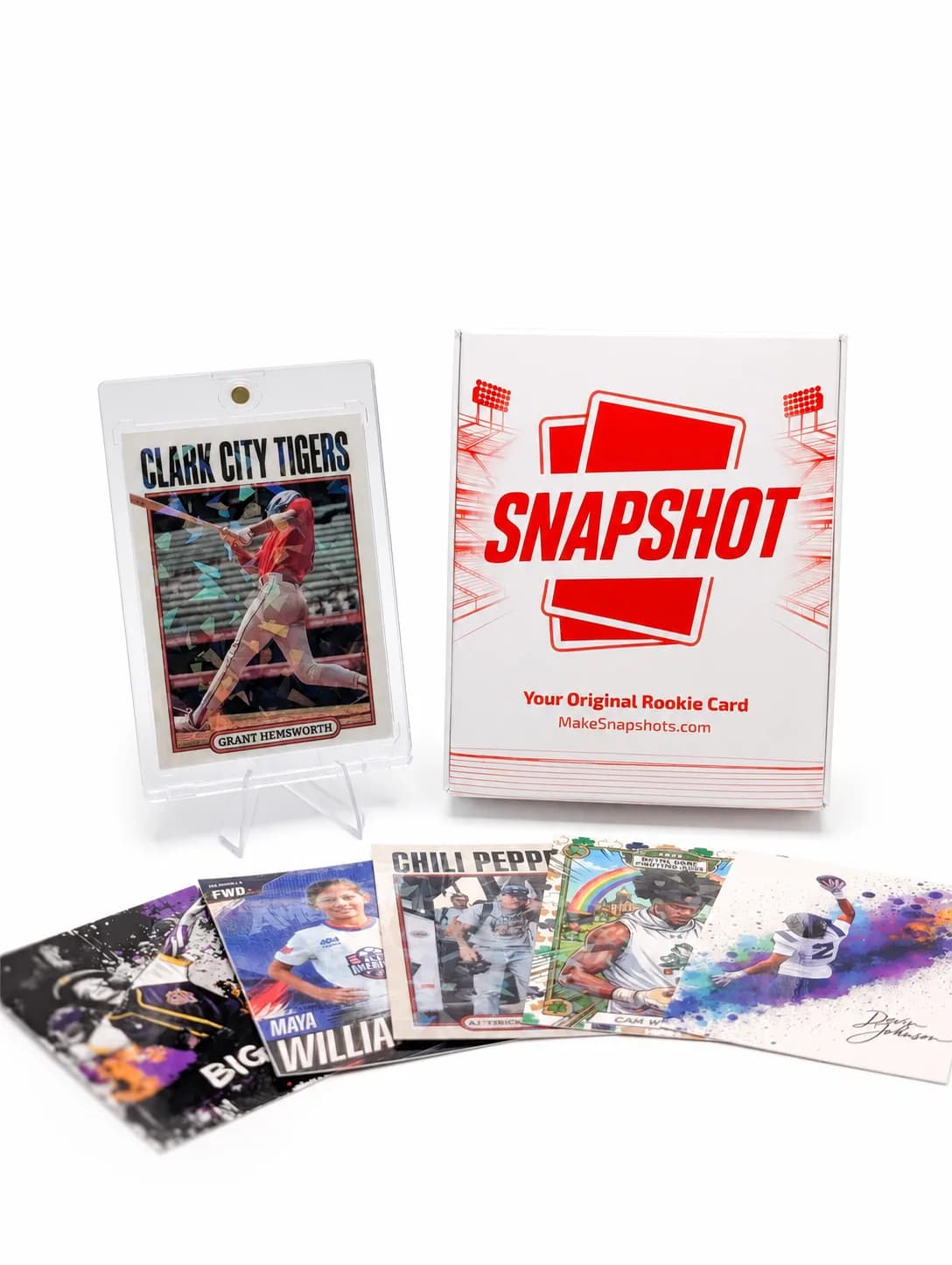
The Rookie Box
Perfect for those unforgettable moments
$17.99 - $49.99
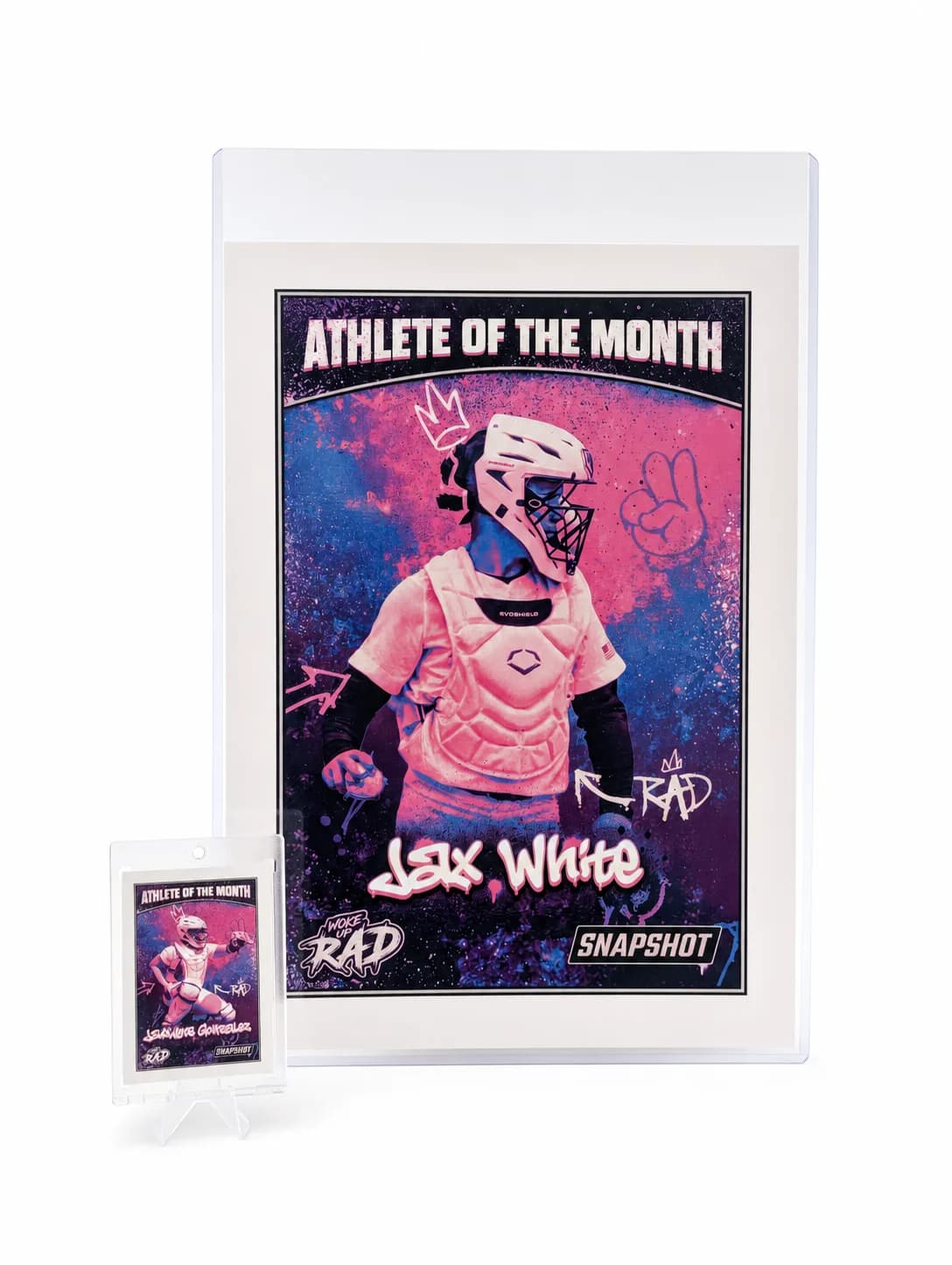
MEGA Card
Their moment, bigger than ever
$49.99
Create for free • Ships the next business day • Made in Des Moines, IA, USA
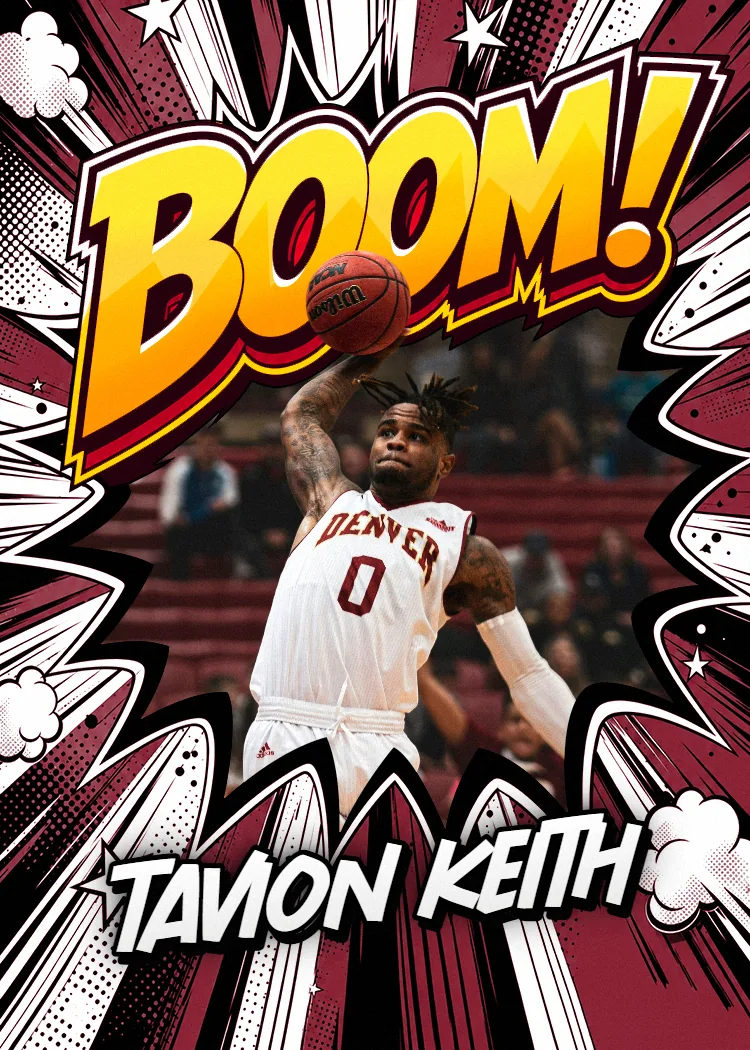
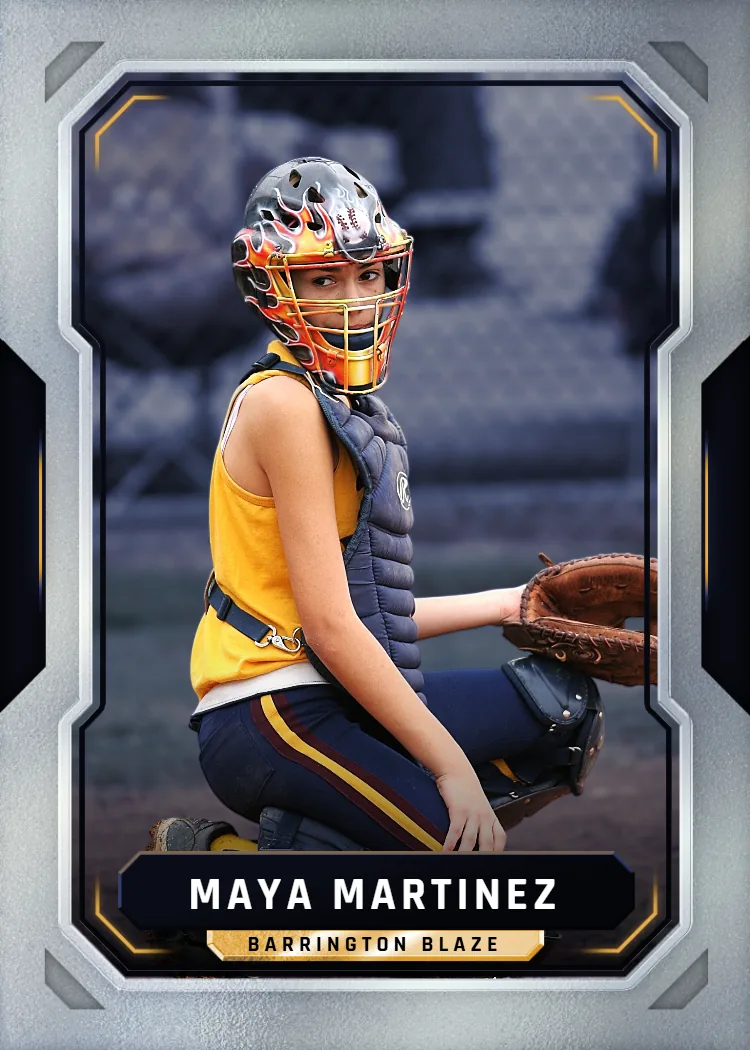
Got the Shot? Turn Your Best Nikon Lens Sports Photography Frame Into a Card
Whatever lens got you the shot, the next step is simple. Upload your photo, pick a pro-style template, and we'll print it on premium card stock with a free magnetic case, shipped in 2-3 days.
Upload Your Photo NowNo credit card required | Instant preview | Pro-quality designs
Explore More Card Options
Discover more custom trading card options for every sport and occasion