
Rating Pokémon Cards: What the Grades Actually Mean
Rating Pokémon cards isn't guesswork — but most collectors treat it like it is.
Upload your own artwork or photo, choose an available template, and preview your design before ordering a printed card.
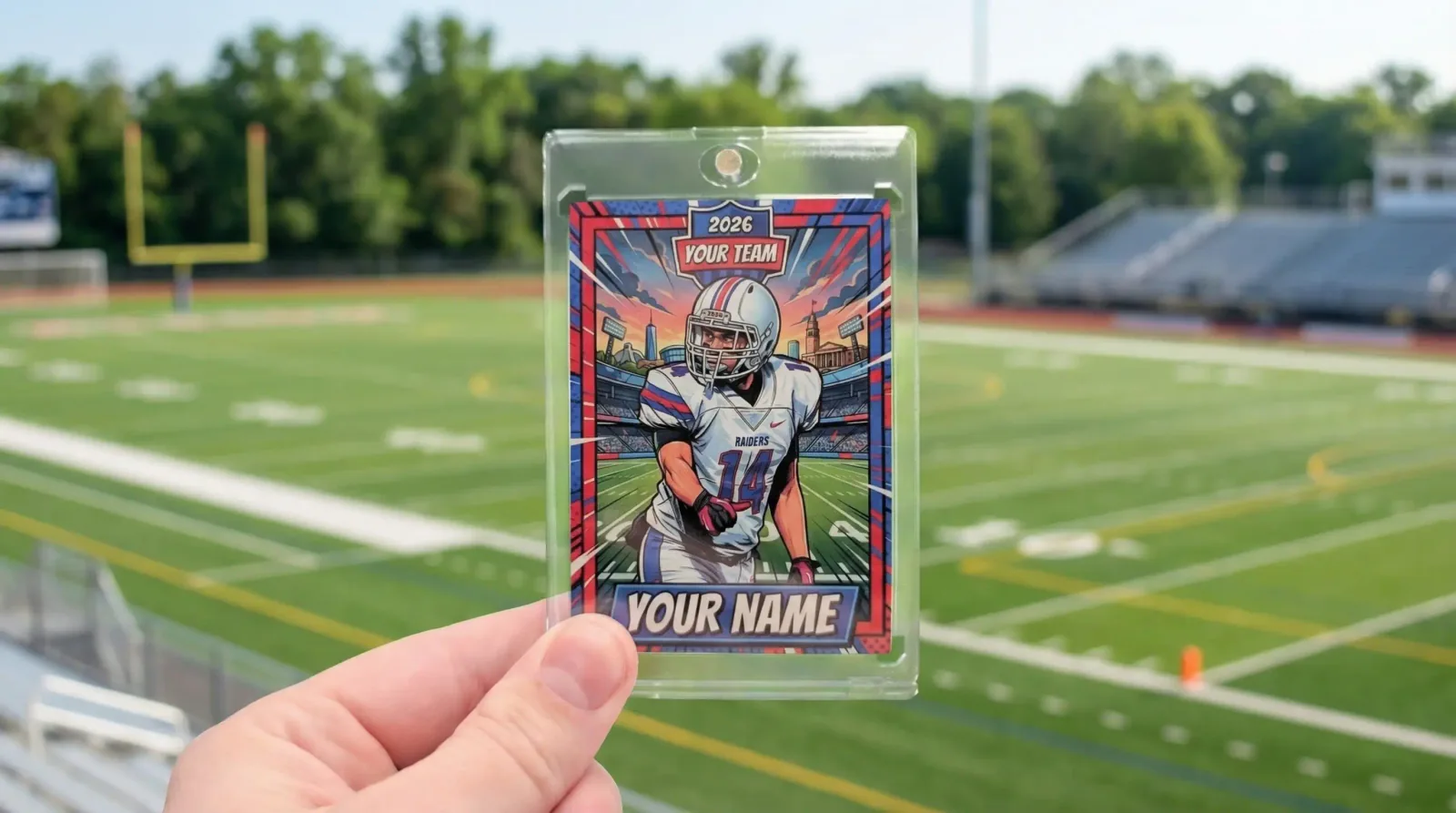

"I created a few AI cards for my kids. I started collecting back on February and the boys love the Kaboom cards. My daughter loves princesses so I made her a Disney card through AI. I looked for a company to actually make the card and found Snapshots. Very easy to use, very fast, excellent price. They actually called me to verify some of the information on the picture and offered to make any changes. I received them very quickly. I rarely leave reviews, but I felt this company deserved to hear that they are doing it right and I will definitely be using them again very soon."
— jimmy P. · 3 months ago
"We had my son’s senior pictures taken at Target field so I wanted to put those images on a baseball card to give out at his graduation party! I had so much fun creating them on the website! I ordered them on a Wednesday night and they were at my door that Saturday! Very quick! I couldn’t wait to open them! They are awesome! Better than I could have ever imagined! The quality is well worth the money! Amazing job! Will definitely recommend to anyone looking for a unique way to capture a forever memory!"
— Greg S. · 5 months ago
"These are great quality cards and look amazing will be ordering more from them."
— Blaine R. · 5 months ago
"I ordered cards on a Monday so they would be shipped and arrive by Friday. The next day through a series of unexpected events and missed communications on my part, I discovered my order was delayed. I reached out to see if there was anyway my order could still be processed and shipped out on time. Graham (CTO) reached out to me personally via email and phone to fix the issue and ensure my order was processed and shipped out on time. I received them on that Friday as I was originally hoping. Upon opening they were better than expected. The card stock is sturdy and the printing was high quality! I would definitely recommend this company and will be making more cards to order."
— Ron D. · 4 months ago
"This was perfect! Ordered and was in my mailbox within a week. They were exactly what I imagined! I can’t wait for my Kickin Nuggets U4 Soccer team to get their player cards!!!"
— Brittany C. · 5 months agoReviews from Google
Thousands of collectors submit cards expecting top grades, only to get back a PSA 7 or BGS 8 and no clear explanation why. The gap between a mint card and a gem-mint card can be less than a millimeter of edge wear — yet that difference routinely separates a $40 card from a $400 one. Most guides online either oversimplify the grading criteria or bury the useful details under jargon. That leaves real collectors making avoidable mistakes: storing cards wrong, misreading centering, or misunderstanding what 'pack fresh' actually means to a professional grader.
This page cuts through the noise. We'll walk through how professional grading scales work, debunk the most common myths collectors repeat, and show you how Snapshot's custom trading cards — printed on professional card stock and shipped in premium magnetic cases — give collectors, families, and fans a way to celebrate any card-worthy moment without worrying about grading damage at all. Every section answers a specific question directly, because you deserve straight answers.
Start with the grading scale itself — because that's where most myths begin.
See your photo on a card
Pick a photo and preview it on a real Snapshot template, right here.
Your photo stays on your device.
Frequently Asked Questions
What does PSA 10 actually mean for a Pokémon card?
PSA 10 — called 'Gem Mint' — is the highest grade PSA assigns and requires near-perfect scores across all four graded attributes: centering (55/45 or better front, 75/25 or better back), four sharp corners with no rounding, clean edges with no whitening or chips, and pristine surfaces with no scratches, print lines, or staining. It's genuinely rare on vintage cards. On modern cards it's more achievable, but even fresh pulls frequently have factory defects that drop them to PSA 9. Roughly 1-3% of submitted vintage holos achieve PSA 10, depending on the set.
Is there a difference between PSA, BGS, and SGC grading for Pokémon cards?
Yes — meaningfully so. PSA is the most widely recognized and commands the strongest resale market for Pokémon. BGS (Beckett Grading Services) uses four visible sub-grades on each label and is stricter on centering, which some collectors prefer for transparency. SGC has grown in popularity for vintage cards and tends to have faster turnaround times at certain price tiers. For investment-focused grading, PSA labels typically bring higher resale values on platforms like eBay. For personal display or detailed condition breakdowns, BGS sub-grades offer more information.
How do I tell if a Pokémon card is worth grading before I submit it?
Start with a raking light test — hold the card at a 45-degree angle under a bright lamp and look for surface scratches, haze, or print lines. Then check centering by measuring the border widths on all four sides; uneven borders are an immediate red flag. Inspect corners under magnification for rounding or fraying. Finally, compare the card's estimated graded value against the grading fee — PSA's basic service costs $25-$50 per card. If a PSA 9 version of your card sells for $35 on eBay, submitting a borderline card doesn't pencil out financially.
Can I clean a Pokémon card to improve its grade?
No — and attempting to clean a card before grading is one of the most damaging mistakes collectors make. Using any cloth, liquid, or cleaning agent on a card's surface risks creating micro-scratches that graders will identify under raking light. Even dry microfiber cloths can leave visible marks on holo surfaces. Graders are also trained to spot signs of tampering or surface alteration, which can result in a 'Altered' or 'Authentic — Altered' designation that destroys a card's value. The only safe intervention is proper sleeve and top-loader storage from the moment you pull the card.
What grade does a Pokémon card need to be worth slabbing?
It depends entirely on the card and the current market. A PSA 9 Charizard from Base Set Unlimited is worth hundreds of dollars — slabbing makes complete sense. A PSA 9 of a common card worth $4 raw is not worth the $25-plus submission fee. The rule most experienced collectors follow: a card needs to realistically achieve a grade where the slabbed value is at least 3-4x the combined cost of the card and grading fee. For most modern set commons and uncommons, raw storage in a quality sleeve and top-loader is the smarter choice.
Why do Pokémon cards from the same pack grade differently?
Manufacturing variance is the honest answer. Cards within the same booster pack can have different centering because of how they're cut from larger print sheets. Foil application on holo cards isn't perfectly uniform across an entire production run. Some cards come out of packs with microscopic surface scratches from friction against adjacent cards during packaging. This is why serious collectors who're chasing PSA 10s often buy multiple sealed booster boxes — they're statistically improving their odds of pulling a copy that happens to have landed better on the cutting table and survived packaging without contact damage.
Does the card holder or case affect the grading result?
The case itself doesn't — graders remove cards from holders before evaluating them. But the type of holder you use before submission absolutely affects whether the card arrives in gradeable condition. Cards stored loose in binders or soft penny sleeves are more vulnerable to corner wear and surface scratching than cards stored in rigid top-loaders or semi-rigid card savers. For cards you're planning to submit, the standard recommendation is a penny sleeve inserted from the top edge, placed inside a card saver (not a rigid top-loader), and submitted in that configuration per the grading company's packaging guidelines.
Are rating Pokémon cards services worth it for common cards?
Bluntly, no — not for financial reasons. Grading fees start at $25 per card at most major services, and that's before shipping, insurance, and wait times that can stretch months. A common card that retails for $1-$3 raw will not recoup that cost even in a PSA 10 slab. There are exceptions: certain error cards, specific regional prints, or cards with unusual characteristics that make them collectible regardless of monetary value. For most common cards, the joy of collecting is better served by proper raw storage. If you want to display them beautifully, a custom Snapshot card of a memorable moment costs less than one grading submission.
How long does professional Pokémon card grading take?
Turnaround times vary significantly by service tier and company. As of recent years, PSA's economy tier has ranged from 45 to 120 days or longer during high-demand periods. Express tiers with much faster turnaround are available, but they cost $150 or more per card, which makes them impractical for anything but high-value submissions. SGC has offered faster standard turnaround at competitive prices and has attracted collectors who need quicker results. Always check current estimated turnaround times directly on each company's website before submitting, because backlogs shift with market demand and can change dramatically after major Pokémon set releases.
Can I create a custom Pokémon-style trading card for a gift?
Absolutely — and it's one of the most personal gifts a collector or Pokémon fan can receive. Snapshot lets you upload any photo and apply a professional sports card template to create a custom card that looks and feels like the real thing, printed on professional card stock and shipped in a free magnetic case. It's not an official licensed Pokémon product, but it captures the same energy — a real, holdable card with someone's face or a special memory on it. Single cards start at $17.99 with free US shipping over $30 and arrive 3 to 5 business days after shipping (standard US shipping).
Free to design, instant preview. Free US standard shipping on orders $30+. Review delivery options at checkout.
How Rating Pokémon Cards Actually Works: The Grading Scale Explained
Professional card grading uses a numeric scale — typically 1 through 10 — where each number reflects a specific combination of centering, surface condition, edges, and corners. Here's how the process breaks down from submission to slabbed grade.
Four Subcategories Are Scored Independently
Graders at PSA, BGS, and SGC don't look at a card holistically and pick a number. They score centering, surface (front and back), edges, and corners as separate subcategories. BGS actually prints all four sub-grades on the label. A card can have flawless surfaces but lose an entire grade point from one dinged corner — it's that granular.
The Card Is Examined Under Bright, Raking Light
Professional graders use high-intensity directional lighting that reveals scratches, print lines, and haze invisible under normal conditions. What looks like a 10 on your kitchen table can show three light surface scratches under raking light. This is why so many collectors are surprised by their grades — they're not examining cards the same way graders do.
The Final Grade Is Assigned and Encapsulated
After scoring, the card is sealed in a tamper-evident hard plastic slab with the grade printed on the label. That encapsulation protects the card's condition permanently. The slab is the proof — it's what the secondary market trusts. Once encapsulated, the card's grade is locked in unless you crack it out and resubmit, which carries its own risks.
Understanding these three steps changes how you handle, store, and select cards worth grading.
Myth vs. Fact: Rating Pokémon Cards Edition
MythPack-fresh cards are always PSA 10 candidates
FactFactory defects — print lines, off-center cuts, holo scratches from packaging friction — affect a significant percentage of fresh pulls before a collector ever touches them.
MythCleaning a card before submission improves its grade
FactAny cleaning attempt risks creating new micro-scratches. Graders are trained to detect surface alteration, and flagged cards receive a designation that reduces their value.
MythAll grading companies produce grades the market treats equally
FactPSA slabs command the highest resale premiums for most Pokémon cards. BGS and SGC are respected but typically bring lower secondary market prices for equivalent grades on the same card.
MythA PSA 9 is almost as good as a PSA 10
FactOn high-demand cards, the price gap between PSA 9 and PSA 10 is enormous — often 5x or more. The market treats them as fundamentally different products, not near-equivalents.
MythOlder cards in binders are usually still in gradeable condition
FactBinder storage — especially in loose sleeves — causes corner rounding, holo scratching from page friction, and edge whitening over years. Most childhood binder cards grade PSA 6 or lower.
Why Condition Details Matter More Than Most Collectors Realize
The difference between a PSA 9 and PSA 10 isn't just cosmetic — it's often a 3x to 10x price multiplier on the secondary market. These four factors explain why condition-obsessed collectors aren't being dramatic.
Centering Kills More Grades Than Anything Else
A card can have perfect corners, perfect edges, and zero surface scratches — and still grade a PSA 8 because the print is off-center. PSA requires 55/45 or better on front for a 10. BGS is even stricter at 50/50. Off-center cards from certain print runs are structurally impossible to grade above an 8.
Whitening on Edges Is Often Irreversible
Cardboard fibers exposed on edges create white stress marks that graders flag immediately. This happens from shuffling, rough sleeve insertion, or simply rubbing against other cards. No cleaning method fixes it. Preventing it — with penny sleeves inserted from the top, not the side — is the only real solution for cards you plan to submit.
Surface Scratches on Holographic Cards Show More
Holo cards from vintage Pokémon sets are brutally unforgiving. The reflective foil layer amplifies every micro-scratch. Cards pulled from packs in the late 1990s and early 2000s often arrived with print lines already on the holo — those count against surface grade even though they came that way.
Card Stock Density Affects Corner Integrity Over Time
Older Pokémon cards used different manufacturing tolerances than modern sets. Corners on Base Set Charizards, for example, are notoriously soft and round faster than modern cards. That's why vintage Pokémon PSA 10s command such premiums — condition that good, on that era's cards, is genuinely rare.
Who's Actually Searching for Rating Pokémon Cards — and What They Need
Not every person asking about card ratings is a hardcore investor. The question covers a wide range of situations, and the right answer depends entirely on where you're coming from.
The Childhood Collection Resurfacing
Millions of adults are rediscovering binders from the late 1990s and wondering if anything is worth grading. For them, understanding the rating scale means knowing which cards to prioritize. A binder-stored Charizard with soft corners probably won't crack PSA 9, but a sleeve-protected Blastoise in near-mint condition might. Sorting honestly before submitting saves real money on grading fees.
The New Set Investor Pulling Fresh Packs
Modern Pokémon collectors pulling expensive alt-art cards from current sets face different challenges. Their cards aren't damaged by age — they're damaged in transit from the factory. Pack fresh doesn't mean grade-ready. These collectors need to understand how to immediately protect fresh pulls and what to realistically expect from modern card stock under grader scrutiny.
The Gift-Giver or Fan Who Wants Something Personal
A lot of people searching 'rating Pokémon cards' aren't submitting anything — they're fans who love the hobby and want a personalized card that feels real. Snapshot makes exactly that. Upload any photo, pick a template styled like a pro trading card, and get a premium custom card printed and shipped the next business day. No grading anxiety required.
Why Collectors and Fans Trust Snapshot for Custom Cards
Every card arrives on professional card stock with a free magnetic case, because the presentation matters as much as the print. We hear regularly from customers who say their Snapshot card is displayed more prominently than anything in their graded collection.
Snapshot Pricing: Premium Cards Without the Grading Fee
Free US standard shipping on orders $30+ — $5.00 flat under that.
Single custom card starts at $17.99. Card packs are available up to $49.99. The MEGA poster card — an oversized 11×15.4 inch statement piece — is $49.99.
You're getting a professionally printed, custom-designed card on premium card stock in a magnetic case — shipped fast from Des Moines, Iowa.
Box Options
Simple, collectible pricing. No subscriptions, no hidden fees.
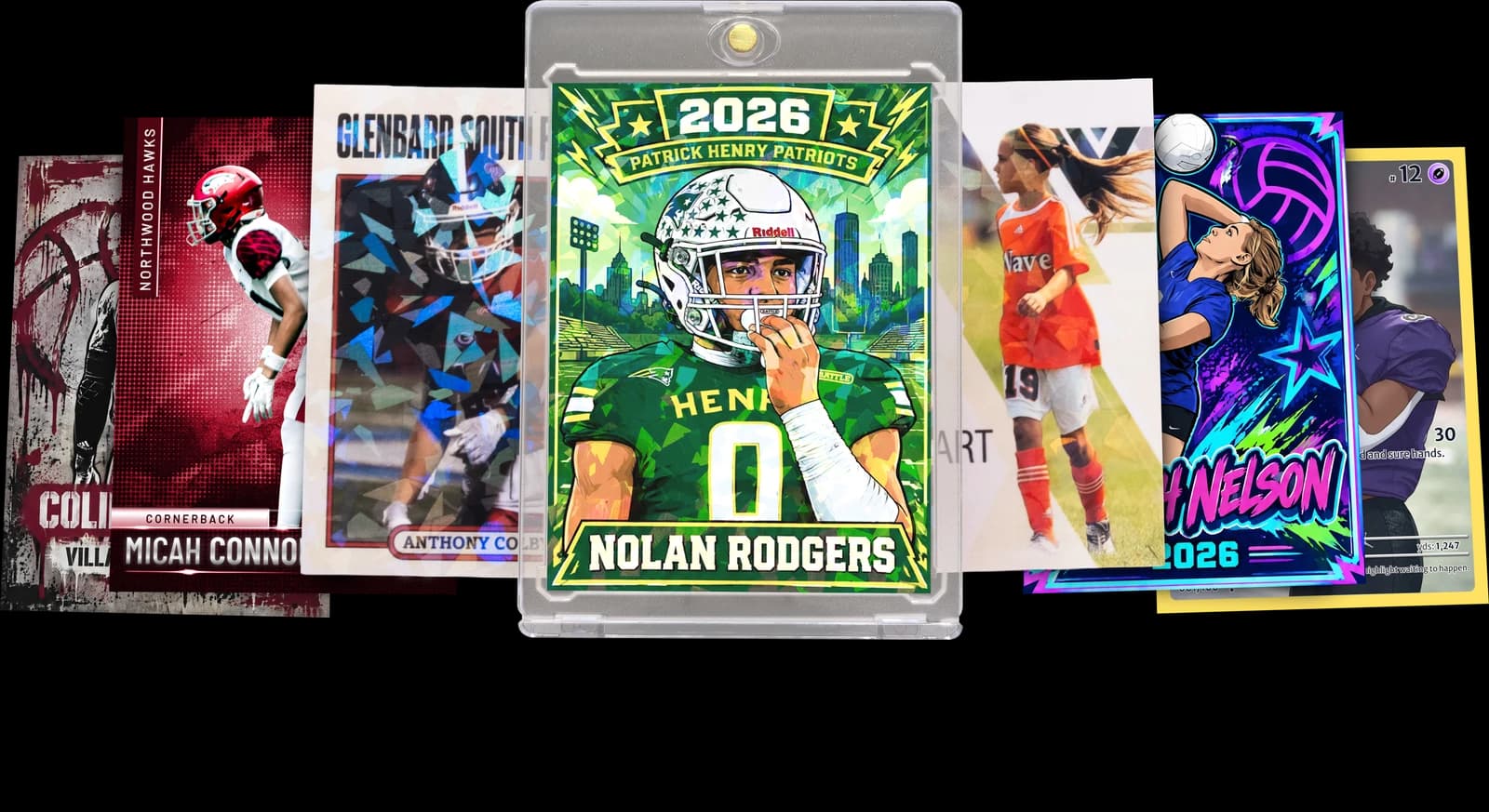
The Rookie Box
Perfect for those unforgettable moments
$17.99 - $49.99
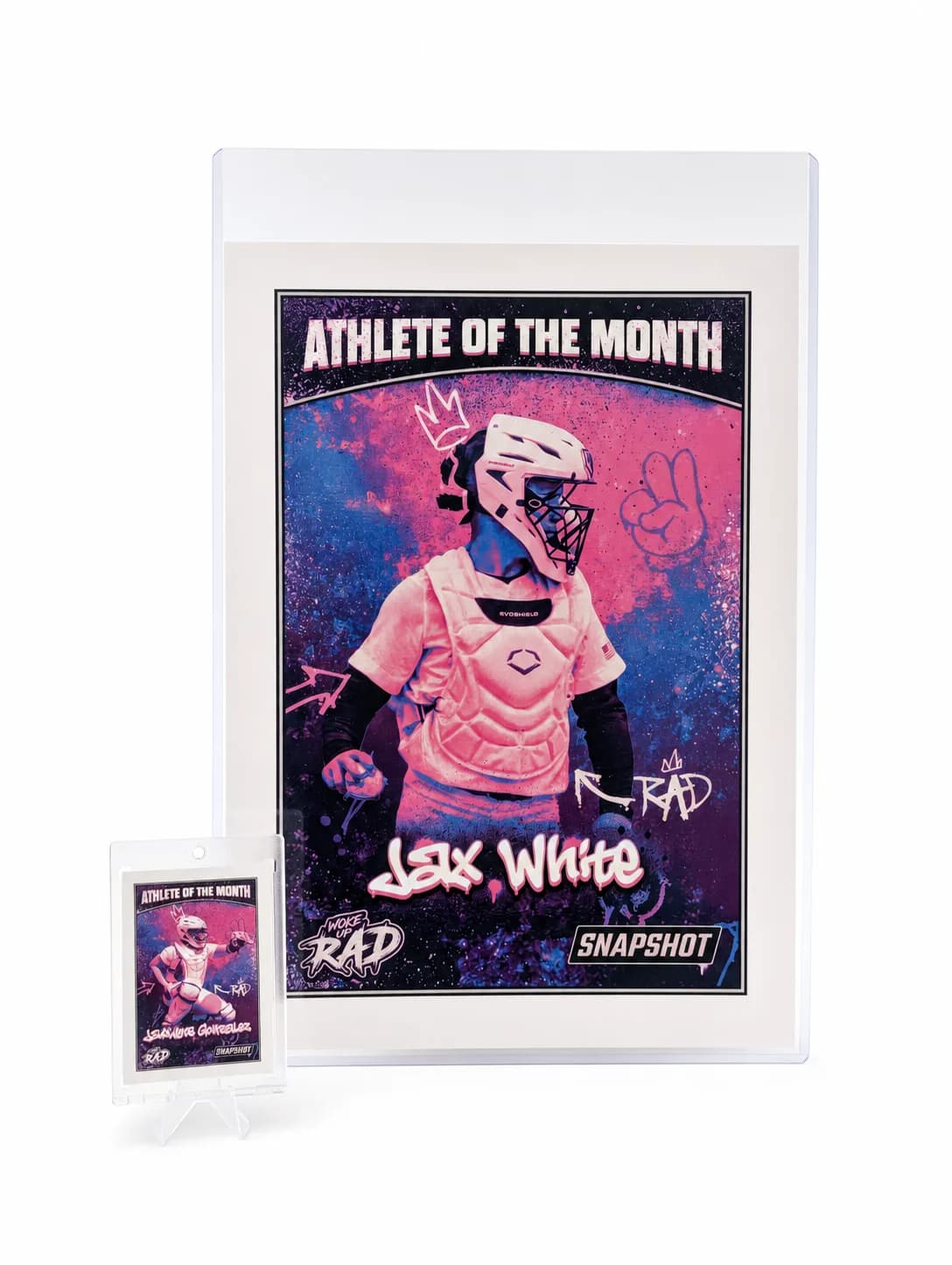
MEGA Card
Their moment, bigger than ever
$49.99
Create for free • Ships the next business day • Made in Des Moines, IA, USA



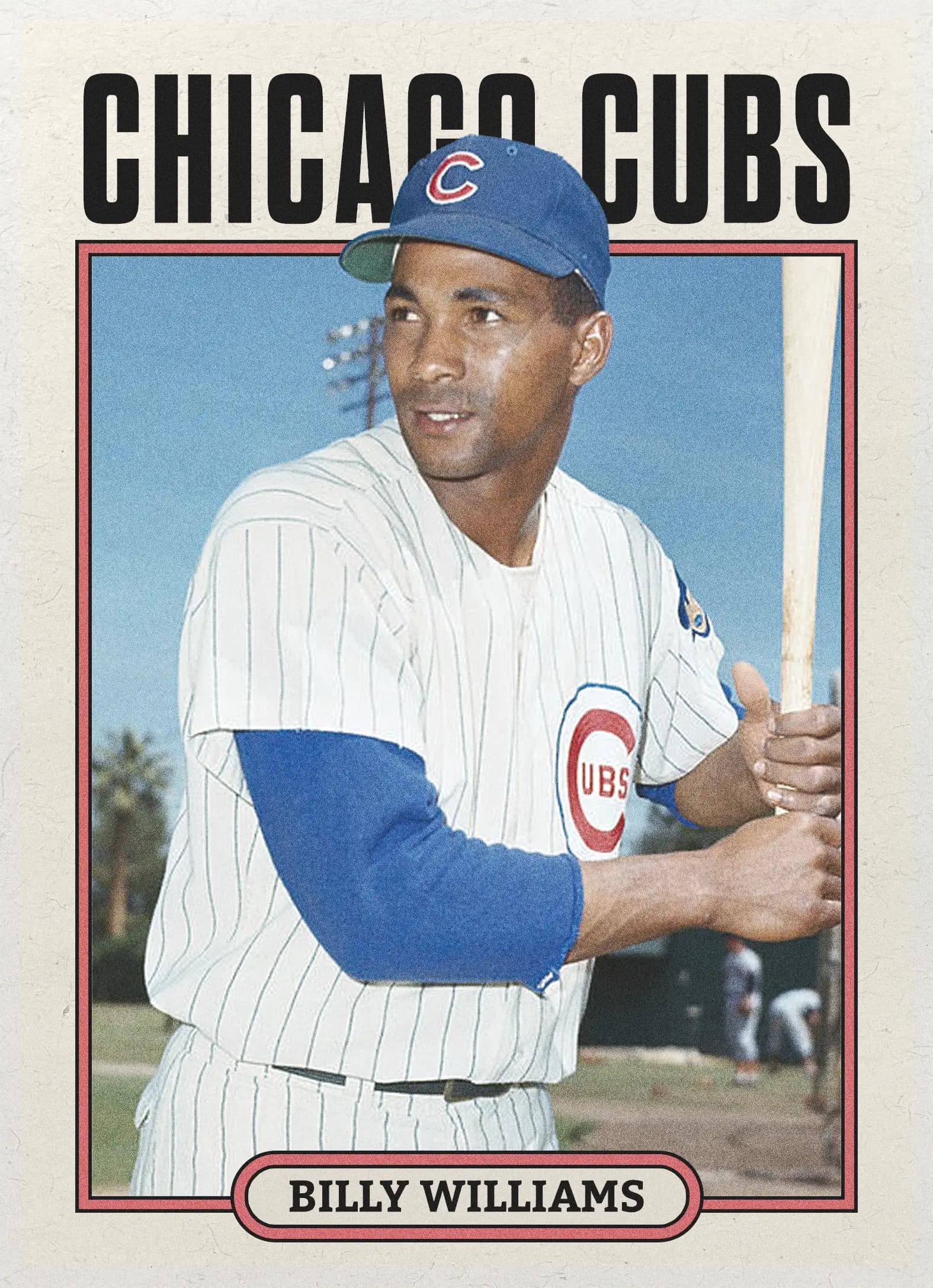
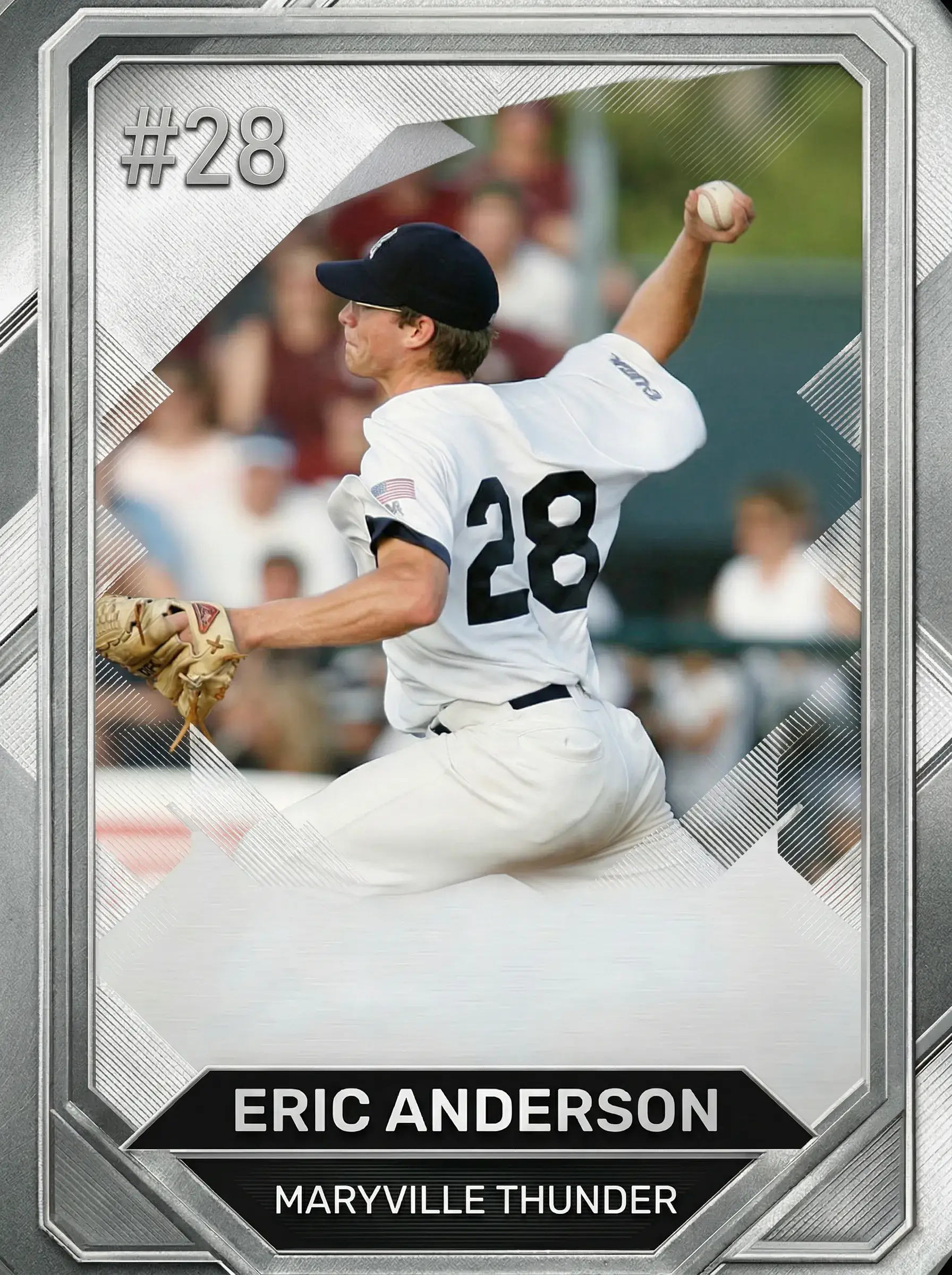
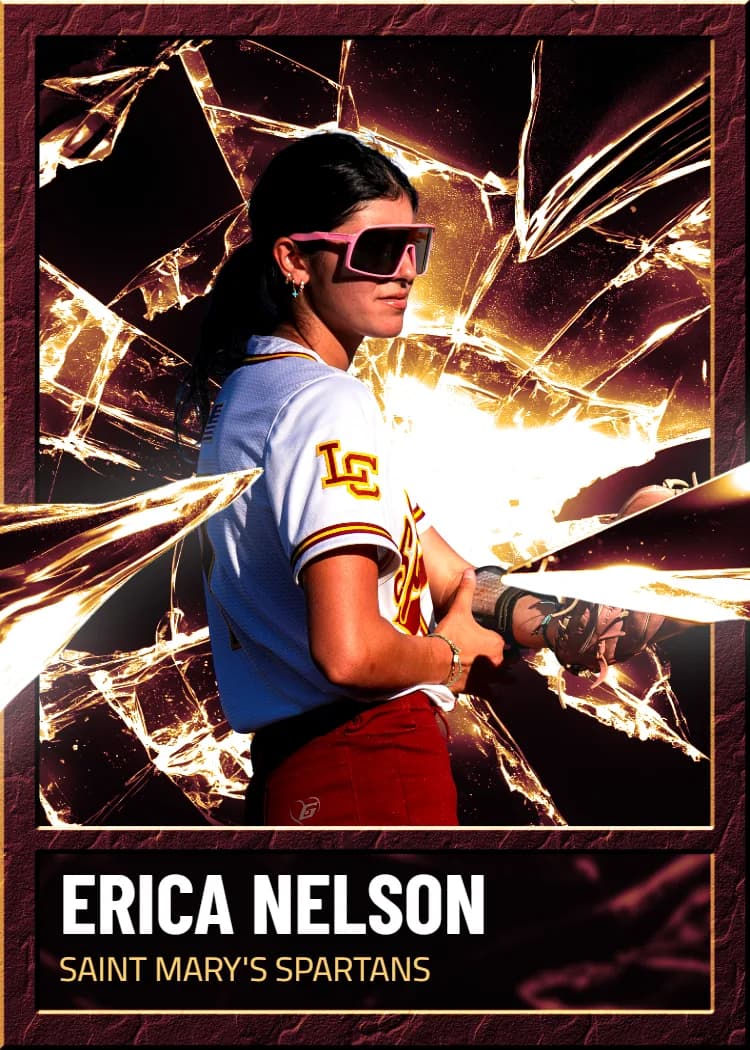
Done Rating Pokémon Cards? Make One That's All Yours
Skip the grading fees and submission wait times. Upload a photo, choose a pro template, and get a premium custom card printed on professional card stock — shipped in a magnetic case, free, anywhere in the USA. Single cards start at $17.99.
Build Your Card NowNo credit card required | Instant preview | Pro-quality designs
Explore More Card Options
Discover more custom trading card options for every sport and occasion
pokemon card generator
View card options →
pokemon card creator
View card options →
custom pokemon cards
View card options →
how to grade pokemon cards
View card options →
pokemon card printing machine
View card options →
vmax pokemon cards printable
View card options →