
How to Grade Pokemon Cards: The Complete Checklist
That Charizard in your binder might be worth $12 or $1,200. The difference? Grading.
Upload your own artwork or photo, choose an available template, and preview your design before ordering a printed card.
Most collectors have no idea how to grade Pokemon cards correctly before they submit — or even before they decide whether submitting is worth the money. You've probably eyeballed a card, decided it looks mint, then gotten it back from PSA or CGC with a 7 instead of a 9. That gap costs real money. Whitening on the black border, a soft corner you never noticed, print lines under the holo — graders catch what your naked eye misses. Without a system, you're guessing, and guessing gets expensive fast when submission fees run $20-$150 per card depending on turnaround.
Here's the good news: grading isn't mysterious once you break it into four categories — centering, corners, edges, and surface. Professional graders use this exact framework, and you can apply it at home with nothing but good lighting, a magnifying loupe, and patience. This guide walks through the checklist step by step, so you'll know which cards deserve a $150 submission and which ones are better off protected as-is. We'll also cover a smart alternative: turning your favorite pulls into custom display pieces instead of gambling on a grading slab.
Let's break down exactly how the pros do it, category by category.
We print and ship custom cards to collectors in all 50 states every week, working with everything from vintage Pokemon pulls to family photos.
What Collectors Are Doing With Their Best Pulls
Across the hobby, collectors are increasingly splitting their approach — sending true chase cards to professional graders while turning sentimental or one-of-a-kind pulls into custom printed keepsakes for everyday display. It's a practical shift: not every card needs a slab, but every meaningful pull deserves to be protected and shown off somehow.
Who Actually Needs to Grade Their Cards?
Grading makes sense for some collectors and is overkill for others — here's how to tell which camp you're in.
The Investment Collector
If you're holding vintage base set Charizards, first edition holos, or modern chase cards worth hundreds raw, grading adds real resale value. A PSA 10 can sell for 3-10x what the same card fetches raw. For these cards, learning the checklist before submission is non-negotiable — you're protecting real money.
The Nostalgic Collector
Maybe it's the Pikachu you pulled at age nine, or the deck your dad built with you. These cards carry emotional weight a grading number won't capture. Instead of risking a slab and a middling grade, plenty of collectors turn these into custom printed keepsakes they can actually display on a shelf or desk.
The Everyday Trader
If you're flipping bulk commons and uncommons for modest profit, grading fees usually eat your margin. Your energy is better spent learning condition grading well enough to price raw cards accurately — buy low, sell fair, skip the slab entirely.
Free to design, instant preview. Free US standard shipping on orders $30+. Review delivery options at checkout.
How to Grade Pokemon Cards in 4 Steps
Grading breaks down into four measurable categories — here's how each one works.
Check Centering First
Flip the card over and look at the border on the back — it's easier to judge symmetry there. Anything outside a 60/40 split front-to-back on either axis usually caps a card below a 9, no matter how clean everything else looks. Use a ruler or a centering tool if you want real precision instead of guessing by eye.
Inspect Corners Under Light
Angle the card under a bright lamp and rotate it slowly. Whitening, fraying, or a soft rounded tip on any of the four corners drops the grade fast. Corners take the most damage from binders and sleeves, so this is usually where cards lose points first — even ones that look flawless at a glance.
Run Edges and Surface Together
Edges show whitening similar to corners, but along the full border instead of just the tips. Surface is the trickiest — scan for scratches, print defects, indentations, and holo scuffing under raking light (light held at a low angle). A loupe at 10x magnification reveals what your eyes alone will miss almost every time.
Master these four categories and you'll predict grades within a point before you ever mail a submission.
Why Learning to Grade Pays Off
Knowing how to grade before you submit saves money, time, and disappointment.
You Stop Wasting Submission Fees
Grading fees aren't refundable if your card comes back lower than expected. Pre-grading at home means you only submit cards that genuinely have a shot at gem mint, not ones you're hoping for.
You Buy and Sell Smarter
Once you know what graders look for, you'll spot overpriced 'near mint' listings instantly. You'll also negotiate harder on raw cards you're buying to grade yourself.
You Protect Cards Before Damage Happens
Learning the checklist trains your eye to catch early wear — a soft corner, a hairline scratch — before it gets worse. That awareness alone extends the life of your whole collection.
You Make Better Display Decisions
Not every card needs a grading slab. Some are better honored as a printed keepsake or display piece, especially ones with sentimental value that a numeric grade can't capture anyway.
At-Home Pre-Grading Checklist
- Check centering on the back border, not just the front
- Inspect all four corners under bright, angled light
- Run a 10x loupe over the surface for scratches and print lines
- Check edges for whitening along the entire border
- Compare against recent sold prices before deciding to submit
- Photograph the card before mailing, for your own records
What Does Grading (and the Alternative) Actually Cost?
Professional Pokemon card grading runs anywhere from $20 to $150+ per card depending on the service and turnaround speed, plus shipping both ways and months of waiting.
Rookie Box custom cards run $17.99-$49.99, MEGA poster cards are $49.99, and shipping is free over $30 across the USA.
For less than one grading submission, you get a custom printed card shipped in 2-3 days — no waiting, no risk, guaranteed display-ready result.
Box Options
Simple, collectible pricing. No subscriptions, no hidden fees.
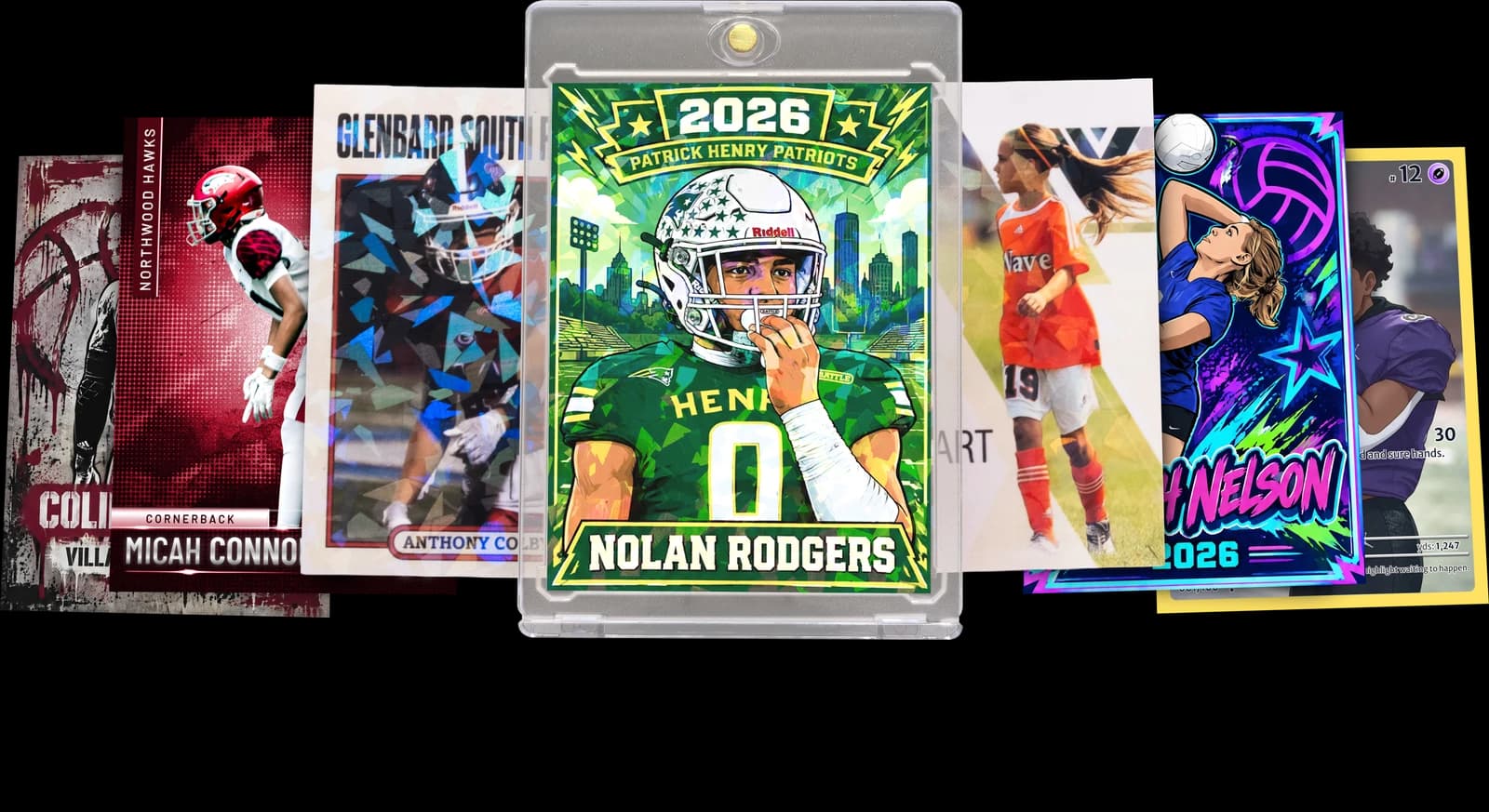
The Rookie Box
Perfect for those unforgettable moments
$17.99 - $49.99
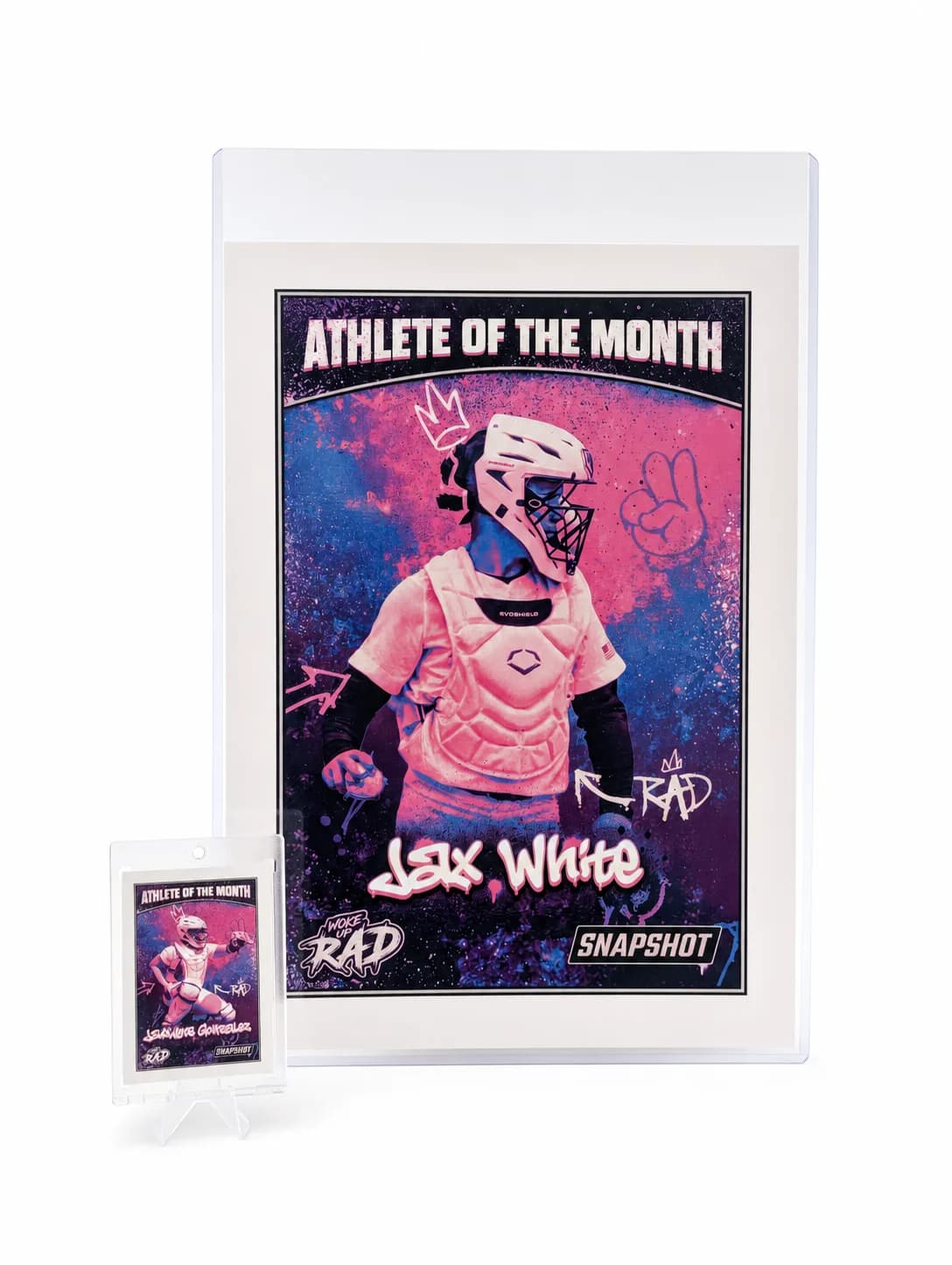
MEGA Card
Their moment, bigger than ever
$49.99
Create for free • Ships the next business day • Made in Des Moines, IA, USA
Frequently Asked Questions
Why do centering issues hurt a Pokemon card's grade so much?
Centering measures how evenly the image sits within the card's border, and Pokemon cards are notoriously prone to centering problems due to how they're cut during production. Graders typically want centering within a 55/45 ratio for a gem mint 10, and anything worse than 60/40 usually caps the card at a lower grade regardless of how flawless everything else looks. This matters because centering is often the single factor separating a $50 card from a $500 card in high-demand sets like base set or vintage promos. The back of the card usually reveals centering issues more clearly than the front, so always check both sides before assuming a card is well-centered. Vintage Pokemon cards from 1999-2000 are especially notorious for centering flaws because the original printing process wasn't as precise as modern production. If you're buying raw cards hoping to grade them, always ask sellers for a clear photo of the back border before purchasing, since centering can't be fixed and will limit your ceiling no matter what.
What does 'whitening' mean and why does it matter?
Whitening refers to the white cardboard layer beneath a card's colored surface becoming visible, usually along the black border edges or at the corners. It happens from handling, bending, sleeve friction, or even just normal shuffling over years of play or storage. Graders consider whitening one of the most common defects on Pokemon cards, especially vintage ones that were played with as kids rather than stored carefully from day one. Even minor whitening that's barely visible to the naked eye can show up clearly under a magnifying loupe or raking light, and it will absolutely affect your final grade. This is why so many childhood collections that look 'perfect' in a binder come back from grading with 6s and 7s instead of 9s and 10s. Once whitening happens, there's no way to reverse it — prevention through careful handling and quality sleeves is the only real defense. If your card already has whitening, it's often better suited for display or a custom keepsake than a grading submission where the flaw will simply get documented and lower the value.
How long does professional Pokemon card grading take?
Turnaround time varies widely depending on the grading company and the service tier you select, ranging from about two weeks for expedited premium service up to six months or longer for standard bulk submissions during peak periods. PSA in particular has faced backlogs during hobby boom periods, with some standard submissions taking three to four months from the day they're received. CGC and BGS have generally offered faster average turnarounds, though this shifts constantly based on submission volume. If you need a grade quickly for a sale or trade, expect to pay significantly more for express service — sometimes triple the standard fee. Many collectors submit cards in bulk batches to spread shipping costs and reduce the per-card fee, but that also means waiting for the entire batch to finish before anything ships back. If you're not in a rush, standard service saves money. If you need speed for a specific deal, budget for premium turnaround and confirm current wait times directly on the grading company's website, since they change often.
Is it worth grading a card that has visible print lines?
Print lines are a factory defect that appears as thin lines running through the card's surface or holo pattern, and they're extremely common on certain Pokemon sets, especially early holo rares. Unfortunately, print lines almost always cap a card's grade well below gem mint, often landing around a 7 or 8 even if every other category looks flawless. Some collectors still submit these cards anyway because certain print-line variations have developed their own niche collector interest, but don't expect a premium grade or a premium price. Before submitting, check your specific card against known population reports to see how common the defect is for that particular print run, since some sets are notorious for it. If the card holds sentimental value rather than serious resale potential, you're often better off skipping the grading fee altogether. A custom printed version preserves the image and the memory without spending money chasing a grade the card was never going to achieve in the first place.
What's a good beginner setup for checking card condition at home?
You don't need expensive equipment to start grading at home — a bright LED lamp, a 10x jeweler's loupe, and a soft microfiber cloth cover the basics for under thirty dollars total. Set up in a room with consistent, strong lighting, ideally daylight-balanced bulbs rather than warm yellow light that hides surface flaws. Hold the card at different angles under the light to catch raking light reflections, which reveal scratches and print defects that flat lighting completely misses. A centering ruler or grid tool helps you measure border symmetry more precisely than eyeballing it, though many collectors get accurate enough results just comparing front and back borders visually. Keep a notebook or spreadsheet logging your assessments so you can track your accuracy over time against actual grading results you receive back. As you handle more cards, your eye naturally gets faster and sharper at spotting the four core defect categories. This setup won't replace professional grading, but it dramatically improves your decision-making before you ever spend money on submission fees.
Should I grade cards from a set that's still in print?
Generally, grading modern cards from sets still widely available in stores makes less financial sense compared to vintage or limited-run cards, simply because supply keeps population reports high and premiums low. Exceptions exist for chase cards, alternate arts, and special illustration rares that pull rarely even from currently available packs, since scarcity within the set still drives demand despite the set itself being in print. If you pulled a card that's trading for hundreds of dollars raw already, grading can still add meaningful value even in a current set. But for standard holo rares or commons from an active set, grading fees usually exceed any value bump you'd gain from certification. It's smarter to wait and see how the set's secondary market settles after it rotates out of print, since prices sometimes shift substantially once reprints stop. In the meantime, protecting the raw card in a quality sleeve and rigid holder preserves your options without locking money into a grading fee you might regret.
Can a damaged Pokemon card still be displayed nicely?
Absolutely, and this is honestly one of the most overlooked options in the hobby. A card with whitening, a soft corner, or print lines might never earn a strong grade, but that doesn't mean it's not worth showcasing. Plenty of collectors take their most meaningful cards — even damaged ones — and turn them into custom printed keepsakes on premium card stock, preserving the image and the memory in a fresh, display-ready format. This sidesteps the entire grading conversation since you're not submitting the original for certification at all. It's especially popular for childhood cards that have visible wear from actual play, since those cards often carry more emotional value than market value anyway. A custom print lets you frame the image, put it in a magnetic case, or gift it to someone without worrying about further damaging a fragile original. It's a practical middle ground between expensive grading and just leaving a beat-up card loose in a box somewhere.
Free to design, instant preview. Free US standard shipping on orders $30+. Review delivery options at checkout.






Ready to Learn How to Grade Pokemon Cards — and Preserve the Ones You Love?
Not every card needs a slab. Snapshot turns your favorite pulls, photos, or memorabilia into premium custom cards, printed and shipped in 2-3 days with a free magnetic case.
Create Your Custom CardNo credit card required | Instant preview | Pro-quality designs
Explore More Card Options
Discover more custom trading card options for every sport and occasion
pokemon card generator
View card options →
pokemon card creator
View card options →
custom pokemon cards
View card options →
pokemon card template
View card options →
pokemon trainer card maker
View card options →
grading pokemon cards
View card options →