
The Real Buyer's Guide to a Telephoto Lens for Sports Photography
A blurry outfielder or a frozen, magazine-sharp catch — the difference usually comes down to one piece of glass.
Upload any photo — your kid, your pet, your whole team — pick a pro template, and we print and ship a real, holdable card the next business day.
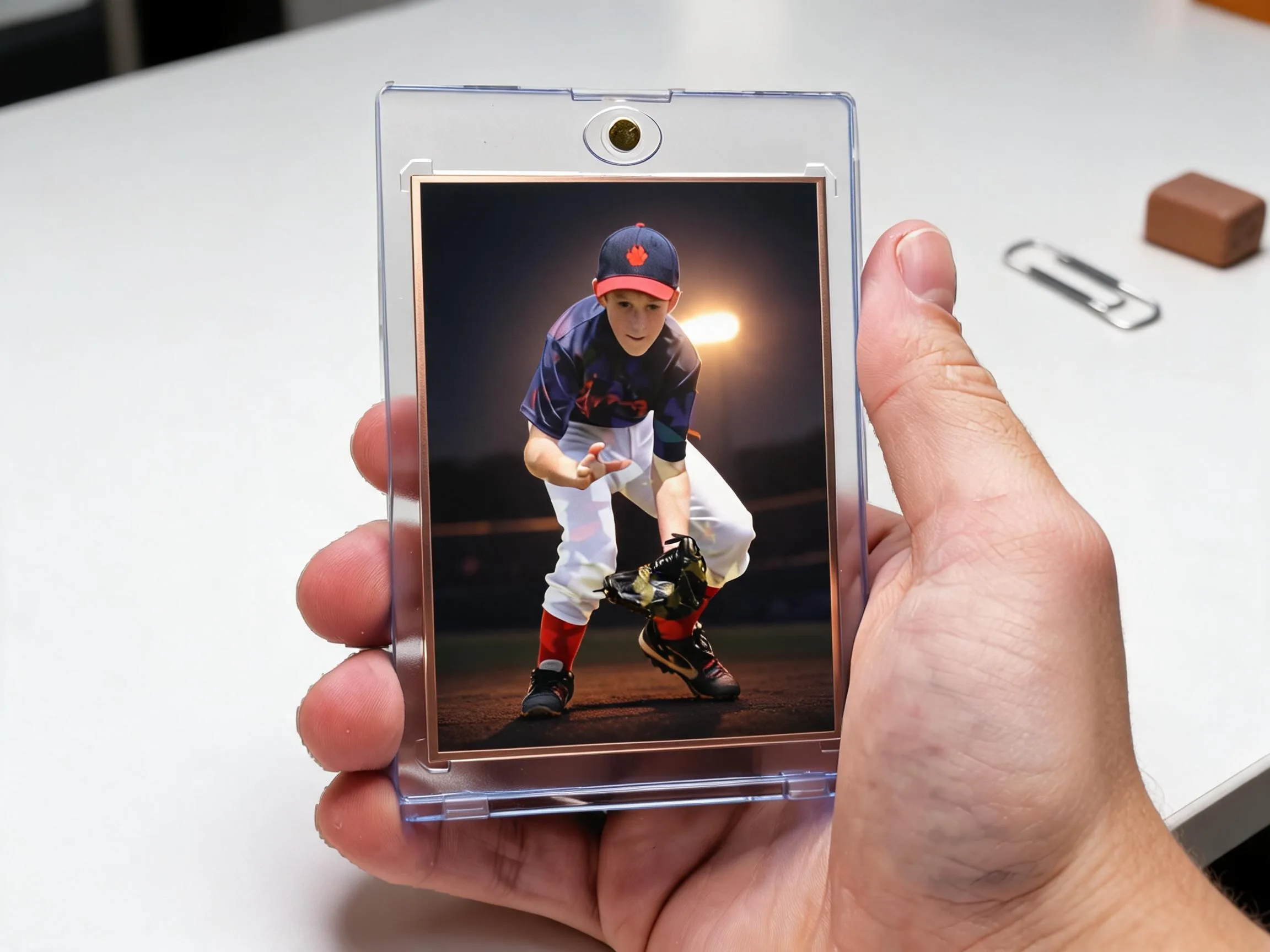
Most people shopping for a telephoto lens for sports photography get stuck comparing focal lengths and f-stops without knowing what actually matters for their sport. A 70-200mm feels perfect for baseball but leaves you cropping heavily at a football game from the bleachers. Buy too much zoom and you're stuck with a heavy, expensive lens that's hard to hand-hold during a three-hour tournament. Buy too little and every shot looks like it was taken from the parking lot. There's also the aperture question — f/2.8 costs a lot more than f/5.6, and not everyone needs it.
This guide breaks down focal length, aperture, autofocus speed, and budget by sport and shooting distance, so you can buy the right glass the first time. We'll also cover what to actually do with those sharp action shots once you've got them — because a hard drive full of great photos doesn't do much for a kid's bedroom wall or a team banquet table.
Let's start with how a telephoto lens for sports photography actually earns its keep on the sideline.
We ship custom cards to teams and families in all 50 states every week, and we've noticed the sharpest submissions almost always come from a telephoto lens shot right, not just a fancy camera body.
What Do You Actually Gain From the Right Lens?
The payoff isn't just sharper photos — it changes what you can capture and share.
Closer to the action without trespassing
You get field-level detail while staying safely in the stands or on the sideline where you belong. No more chasing a better angle mid-play or missing the shot because you were out of position.
Fewer wasted, blurry frames
Faster autofocus and image stabilization mean more keepers per game instead of a memory card full of near-misses. That matters when you're trying to capture one perfect frame for a card or print.
Better light performance
A lens with a wider aperture handles dim gyms and late-afternoon games far better than a kit lens ever will. Less grain, more color, and faces that actually look like faces instead of shadows.
Photos worth printing and framing
A genuinely sharp, well-composed action shot is the raw material for something bigger — a poster, a card, a keepsake a kid actually wants to keep on their dresser.
Free to design, instant preview. Ships the next business day.
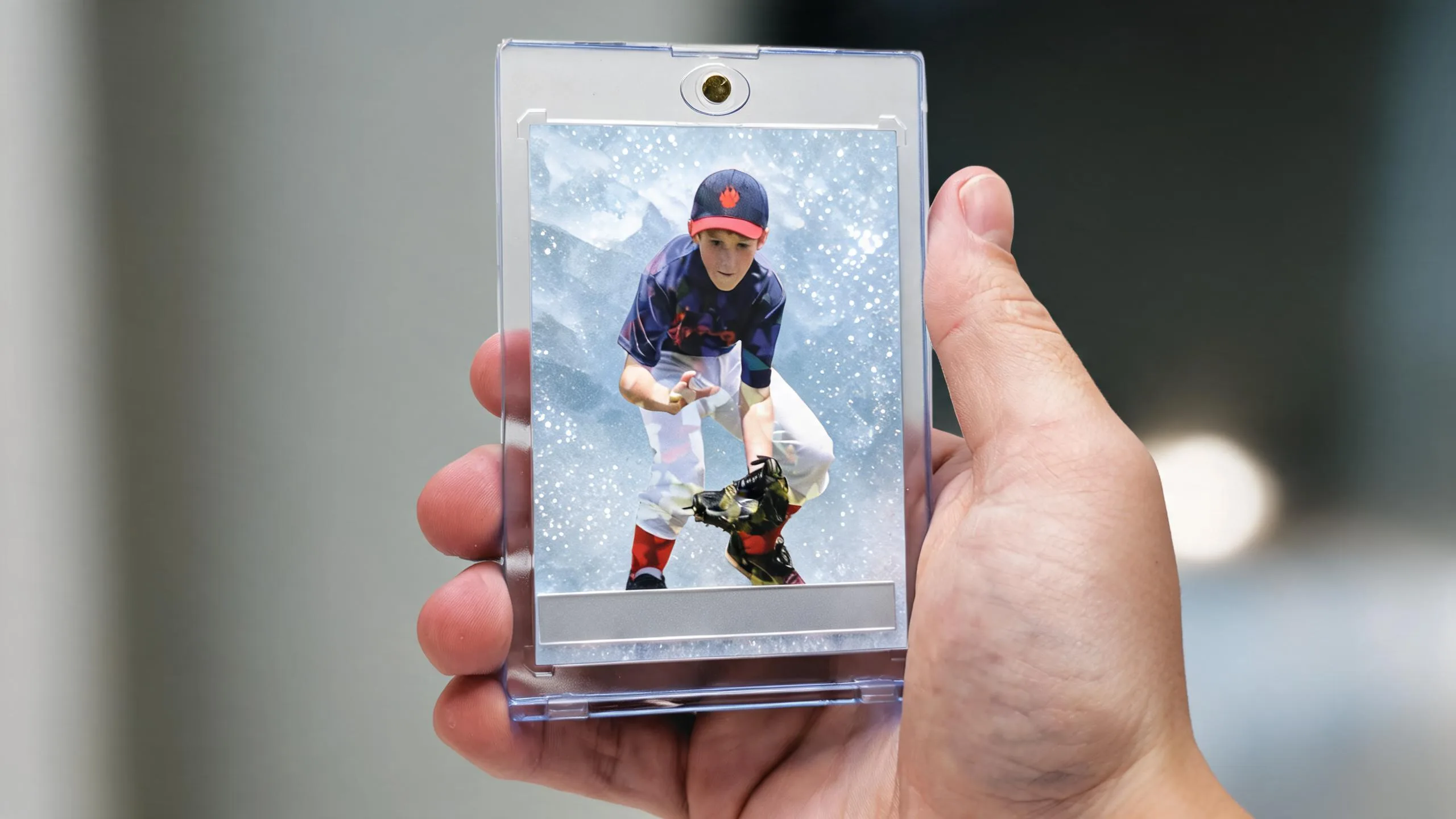
What Happens After You Get the Shot?
We work with parents, coaches, and team photographers across the country who send in game-day photos every week to turn into custom cards. The pattern's consistent — the sharpest, most detailed images almost always come from someone shooting with the right telephoto reach for their sport and distance, not just the priciest camera body.
How Does a Telephoto Lens for Sports Photography Actually Help You?
It comes down to three things: reach, speed, and how the lens handles motion.
Reach pulls the action to you
A telephoto lens for sports photography compresses distance, letting you fill the frame with a player from 50, 100, even 300 feet away. That's the whole point — you can't walk onto the field during a play, so the lens has to do the walking. Focal lengths from 70mm to 400mm cover most youth and high school sports; anything beyond that is usually reserved for pro-level stadium shooting where you're seated far from the action.
Aperture controls light and background blur
A wider aperture, like f/2.8, lets in more light, which matters under gym lighting or evening games under weak stadium bulbs. It also blurs the background so your subject pops instead of getting lost in a crowd of parents and folding chairs. Cheaper lenses top out around f/5.6, which is fine outdoors in daylight but gets tricky once the sun drops.
Autofocus speed freezes the moment
Sports move fast, and a sluggish autofocus motor means missed shots — the ball's already gone by the time the lens locks on. Look for lenses built for continuous autofocus tracking, sometimes labeled with terms like USM, VR, or OS depending on the brand. This is the feature that separates a decent telephoto lens for sports photography from one that just looks impressive on paper.
Once you understand these three factors, comparing lenses gets a lot less confusing.

70-300mm vs. 100-400mm vs. 70-200mm f/2.8
| Option | Best For | Price Range |
|---|---|---|
| 70-300mm zoom | Youth soccer, baseball, softball from bleachers | $200-$500 |
| 100-400mm zoom | High school football, track, field hockey at longer range | $600-$1,500 |
| 70-200mm f/2.8 | Indoor volleyball, basketball, low-light gyms | $1,800-$2,800 |
Who Actually Needs a Telephoto Lens for Sports Photography?
Different sports and shooting distances call for different setups — here's how it breaks down.
Youth and rec league parents
If you're shooting from bleachers 40-80 feet from the action, a 70-300mm zoom covers soccer, baseball, and lacrosse without breaking the bank. It's light enough to hold through a full doubleheader and versatile enough to switch sports weekend to weekend. This is the most common setup we see behind the great close-up shots that end up on custom cards.
High school and club-level shooters
Bigger fields, faster play, and stricter sideline rules mean you'll want more reach — think 100-400mm — plus quicker autofocus. Track meets, football, and field hockey all benefit from the extra working distance since you often can't get closer than the track rail or team bench area.
Indoor sports and gym lighting
Volleyball, basketball, and wrestling demand a wider aperture lens since gym lighting is dim and unpredictable. A 70-200mm f/2.8 is the go-to for a reason — it handles low light and fast movement better than slower, longer lenses that were built for sunny outdoor fields.
What Should You Budget For Lens and Cards Together?
Telephoto lenses range widely, but turning your best shot into something tangible is fixed and affordable.
Rookie Box $17.99-$49.99, MEGA 11"x15" poster card $49.99, free shipping
A single custom card starts at $17.99, packs run up to $49.99, and the 11"x15" MEGA poster card is $49.99 — all with free shipping nationwide.
Box Options
Simple, collectible pricing. No subscriptions, no hidden fees.
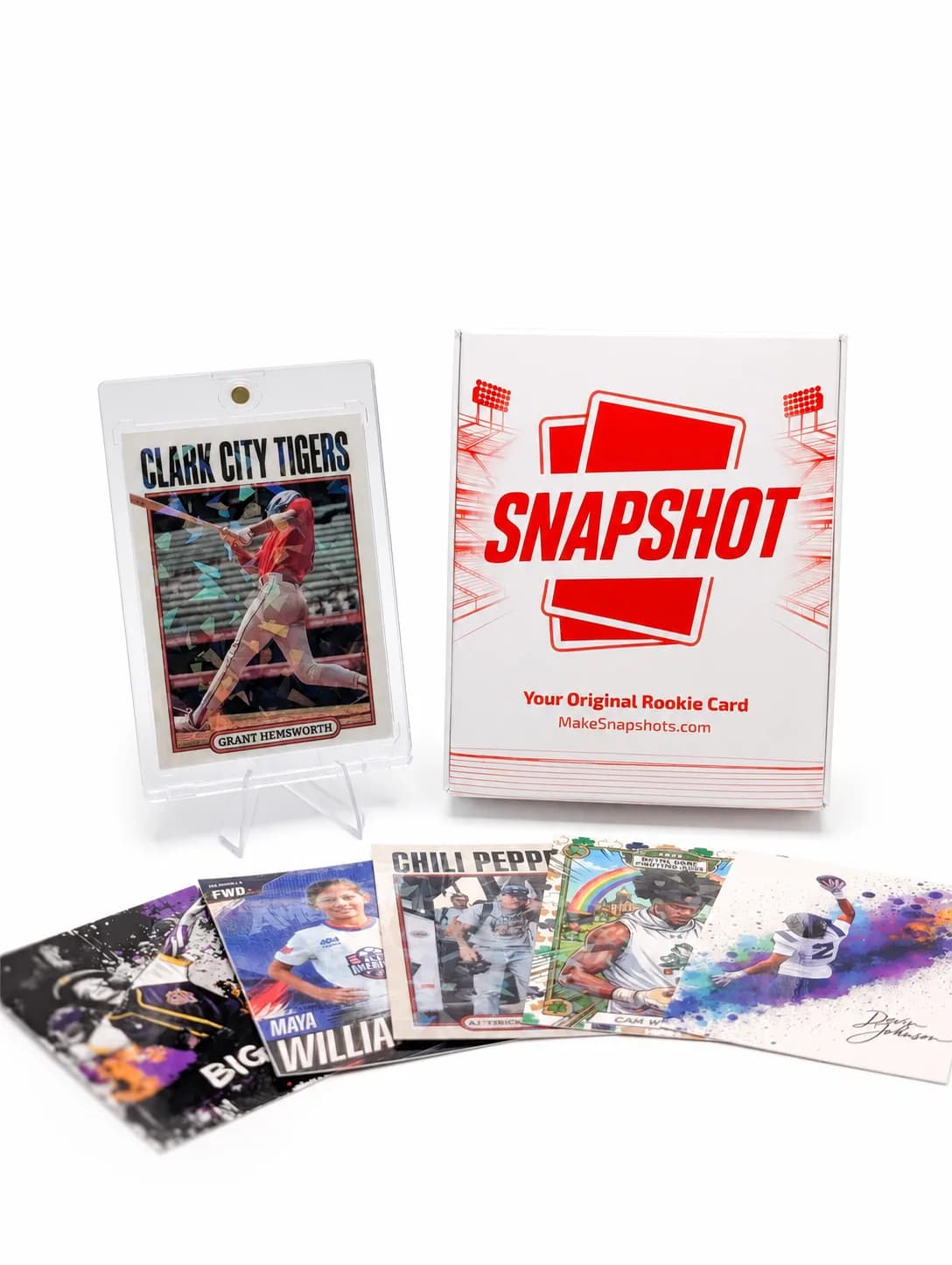
The Rookie Box
Perfect for those unforgettable moments
$17.99 - $49.99
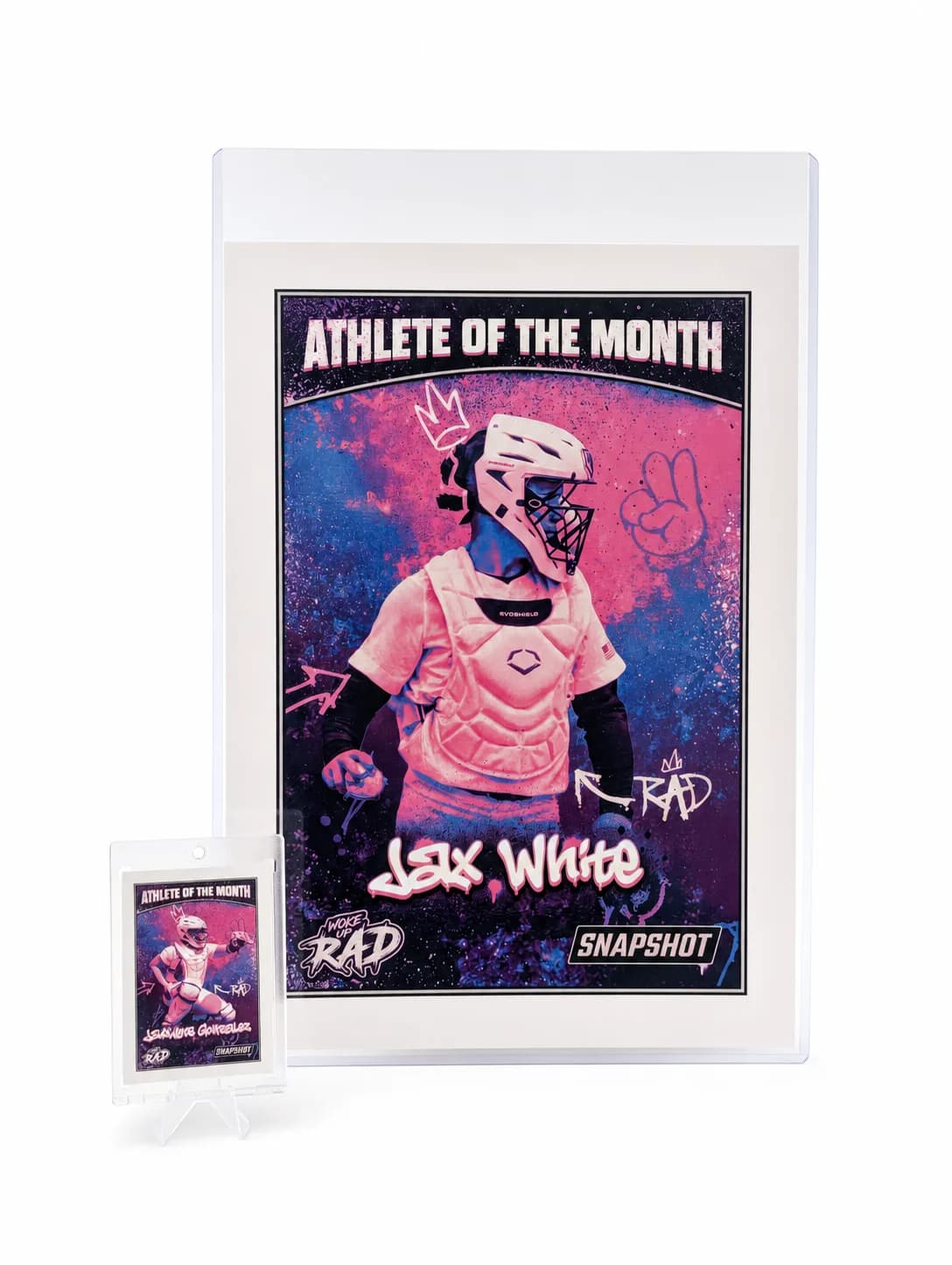
MEGA Card
Their moment, bigger than ever
$49.99
Create for free • Ships the next business day • Made in Des Moines, IA, USA
Frequently Asked Questions
What's the best focal length for a telephoto lens for sports photography?
It really depends on the sport and how close you can physically get to the action. For youth soccer, baseball, or softball where you're shooting from bleachers 40-100 feet away, a 70-300mm lens covers almost every situation you'll encounter. If you're shooting football, field hockey, or track from farther sidelines, you'll want something in the 100-400mm range for extra reach. Basketball and volleyball are trickier because you're often close but the action is fast and indoors, so a shorter 70-200mm with a wide aperture works better than a longer, slower lens. There's no single perfect number, which is why so many buyers end up overthinking this decision. A good rule of thumb: figure out your typical shooting distance first, then pick the shortest lens that comfortably reaches that distance. Going longer than you need just adds weight, cost, and a narrower field of view that makes it harder to track fast-moving players.
Do I need an expensive f/2.8 lens, or will f/5.6 work fine?
It depends almost entirely on your lighting conditions. If you're shooting outdoor day games in decent sun, an f/5.6 lens will perform just fine and cost you hundreds less than an f/2.8 equivalent. But if you're shooting indoor gym sports, evening games under stadium lights, or anything in overcast weather, that extra light-gathering ability of f/2.8 makes a real difference in image sharpness and reduces the grainy, noisy look that shows up in low light. The tradeoff is size, weight, and price — f/2.8 telephoto lenses are noticeably heavier and often cost two to three times more than their f/5.6 counterparts. Many casual and even semi-serious shooters do perfectly well with a variable aperture lens that ranges from f/4.5 to f/5.6, especially if most of their shooting happens outdoors in daylight. Save the f/2.8 investment for when you're consistently shooting indoors or in low light and the image quality difference actually matters to your results.
Will a telephoto lens work on my existing camera body?
Most telephoto lenses are made for specific camera mounts, so compatibility depends on your camera brand and sensor type rather than the lens itself being universal. Canon, Nikon, Sony, and Fujifilm all use different mount systems, and within each brand there are often separate mounts for mirrorless versus DSLR bodies. Before buying, check your camera's mount type, which is usually listed in the manual or on the manufacturer's website, and match it exactly to the lens listing. Third-party lens makers like Sigma and Tamron often produce the same lens in multiple mount versions, so double-check you're ordering the right one. If you're using an older DSLR, some newer telephoto lenses may require an adapter to work on mirrorless bodies, which can affect autofocus speed. When in doubt, search your exact camera model plus the lens name before purchasing, since a wrong mount purchase means a return and a delay before your next game.
Can I use a telephoto lens for sports photography on a smartphone?
Smartphones can attach clip-on telephoto lenses, but the results rarely match what a dedicated camera and lens combination produces, especially for fast-moving sports. Phone sensors are small, and even with added glass, autofocus speed and low-light performance lag well behind a proper mirrorless or DSLR setup. That said, if you're shooting casually and just want closer shots for social media, a clip-on 2x or 3x telephoto attachment can genuinely help fill the frame better than digital zoom alone, which just crops and loses detail. The bigger limitation is usually shutter lag and autofocus tracking, since phones struggle to keep up with a sprinting athlete or a fast-moving ball. If you're planning to print a photo large, turn it into a poster, or use it for something like a custom card, a proper telephoto lens on a dedicated camera will give you noticeably sharper, higher-resolution results that hold up at bigger sizes.
How much should I expect to spend on a good telephoto lens?
Entry-level telephoto zooms in the 70-300mm range typically run $200 to $500 and are a solid starting point for parents and hobbyists shooting weekend games. Mid-range options with faster autofocus and better build quality, often 100-400mm, land between $600 and $1,500 depending on brand and optical quality. Professional-grade lenses with wide constant apertures like f/2.8, especially in the 70-200mm or 400mm range, can run anywhere from $1,800 to well over $4,000 for top-tier glass. Third-party brands like Sigma and Tamron often deliver 80-90% of the performance of name-brand lenses for significantly less money, which is worth considering if budget matters. Don't forget to factor in a sturdy monopod or fast memory card too, since a great lens paired with a slow card can still cause missed moments during burst shooting. Most casual sports parents find their sweet spot somewhere between $400 and $900 for a lens that handles several sports well.
What camera settings pair best with a telephoto lens for sports?
Start with a fast shutter speed, generally 1/1000th of a second or faster, since that's what actually freezes motion regardless of how good your lens is. Set your camera to continuous autofocus tracking mode, sometimes labeled AI Servo or AF-C depending on brand, so it keeps refocusing as players move toward or away from you. Burst or continuous shooting mode helps too, since sports happen in fractions of a second and a single shutter press often misses the peak action. Keep your aperture as wide as your lens allows in lower light, then narrow it slightly in bright daylight to improve sharpness across the frame. ISO should adjust automatically or manually based on lighting, and don't be afraid to push it higher indoors since a slightly grainy sharp photo beats a smooth blurry one every time. Practice panning with moving players before game day so your tracking feels natural once the action actually starts.
How do I keep a telephoto lens steady without a tripod?
A monopod is the most practical solution for sideline sports shooting since it's fast to reposition and far less bulky than a full tripod. Many photographers simply brace their elbows against their body and widen their stance, which stabilizes the lens surprisingly well for shots under 300mm. Image stabilization built into many modern lenses also compensates for hand shake, though it won't help with subject motion blur from a slow shutter speed. Leaning against a fence, railing, or bleacher seat gives extra support during longer games when your arms start to tire. If you're shooting from a fixed spot for an extended period, a monopod with a tilt head lets you track players smoothly left to right without constantly repositioning your whole body. Heavier lenses, especially anything over 400mm, really benefit from some form of support since hand fatigue noticeably affects shot sharpness by the second half of a game.
What's the difference between a zoom and a prime telephoto lens?
A zoom lens covers a range of focal lengths, like 70-200mm, letting you adjust framing without moving, which is incredibly useful when you can't control your shooting position during a game. A prime lens has a single fixed focal length, such as 300mm, but typically offers a wider maximum aperture and sharper image quality for the same price point as a comparable zoom. For most sports parents and hobbyists, the flexibility of a zoom outweighs the optical advantages of a prime, since you rarely get to choose your exact distance from the action. Professional sideline photographers sometimes carry both, using a prime for tight, dramatic shots and a zoom for general coverage throughout the game. If you can only own one lens, a versatile zoom in the 70-300mm or 100-400mm range will serve you better across multiple sports and shooting distances than a single prime focal length would.
How does a telephoto lens help when I want to print photos as custom cards?
Sharpness and resolution matter enormously once you move from a phone screen to a printed card, poster, or framed piece, since printing reveals detail loss that's invisible on a small screen. A telephoto lens captures tighter, more detailed shots of a player's expression, grip, or form that translate beautifully onto premium card stock. Blurry or heavily cropped photos, common with phone zoom or short lenses, tend to look pixelated or soft once enlarged for something like our 11-inch by 15-inch MEGA poster card. Good lighting and fast shutter speeds paired with proper telephoto reach give you the clean, magazine-quality action shot that actually looks impressive printed and displayed. We've seen the difference firsthand — a properly composed telephoto shot uploaded to create a custom card looks noticeably sharper and more professional than a cropped wide-angle photo trying to fake the same closeness. If you're investing in a lens specifically to create keepsakes, prioritize sharpness and focus accuracy over raw zoom power.
Free to design, instant preview. Ships the next business day.

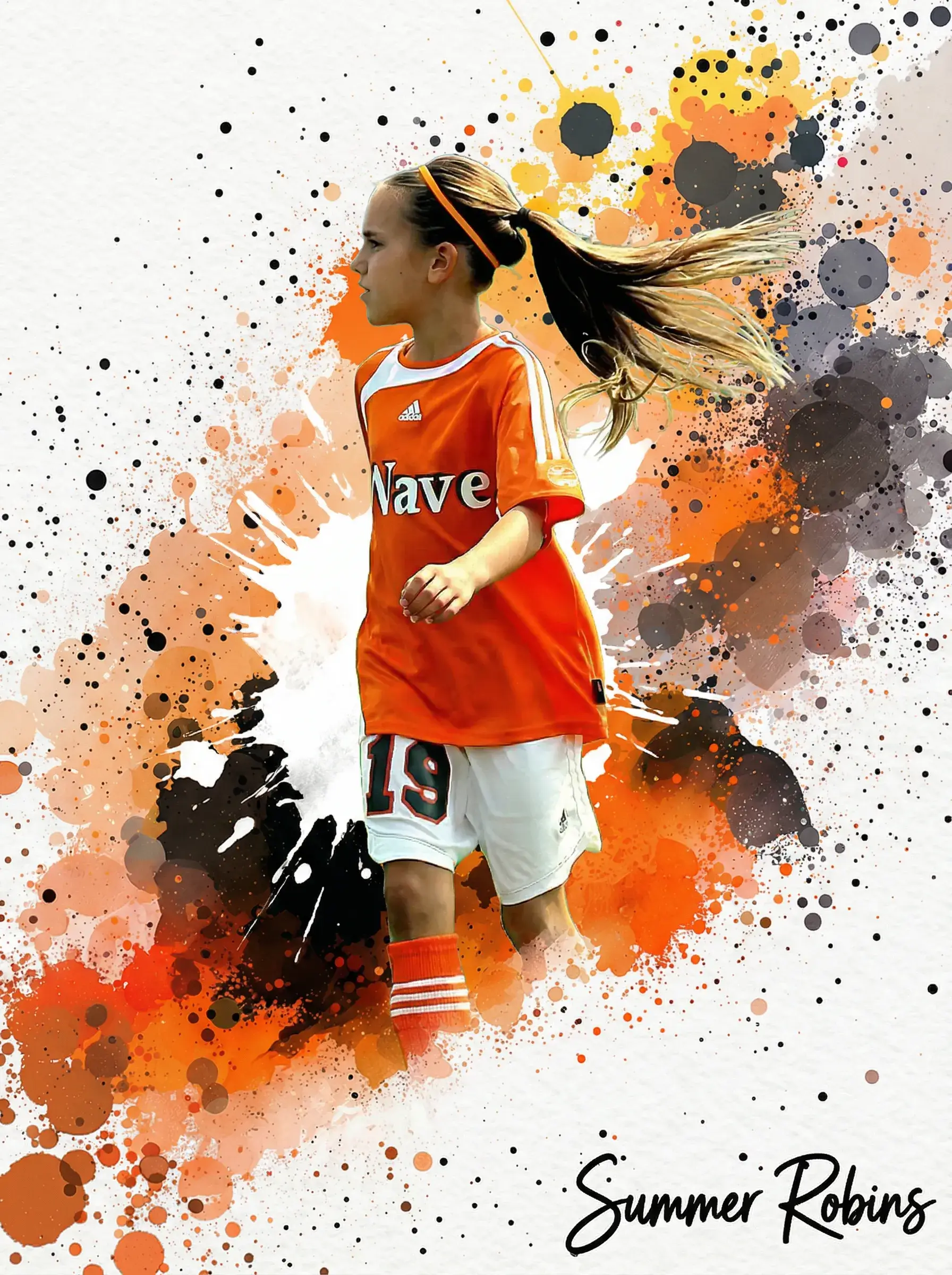
Turn Your Telephoto Lens for Sports Photography Shots Into Custom Cards
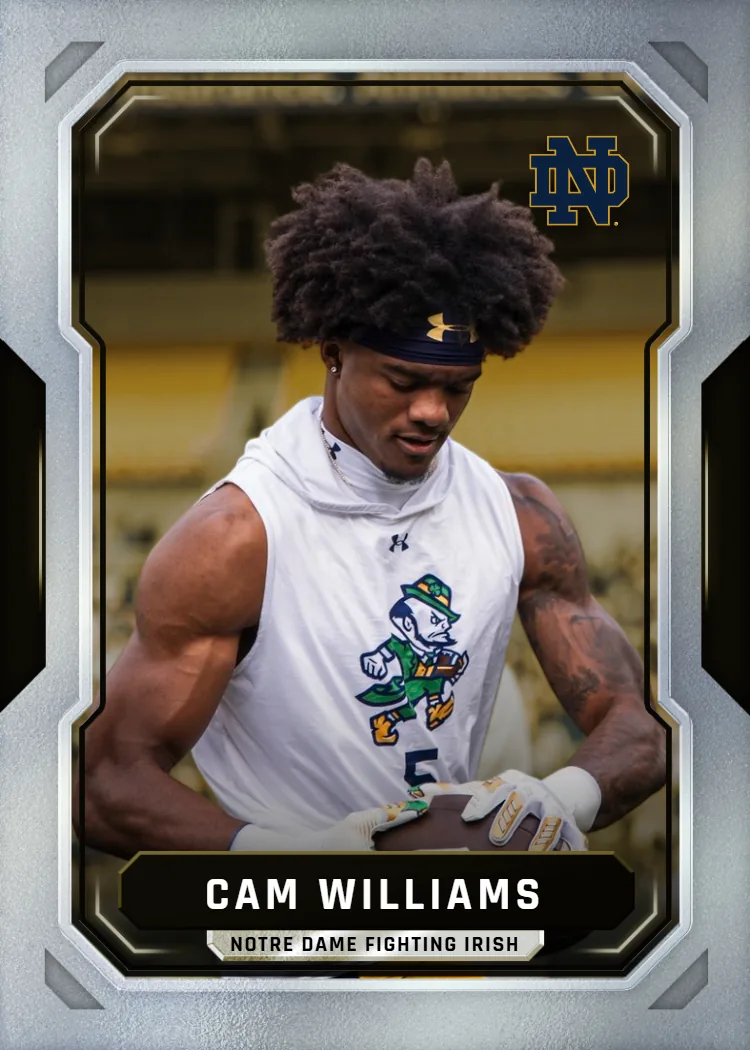
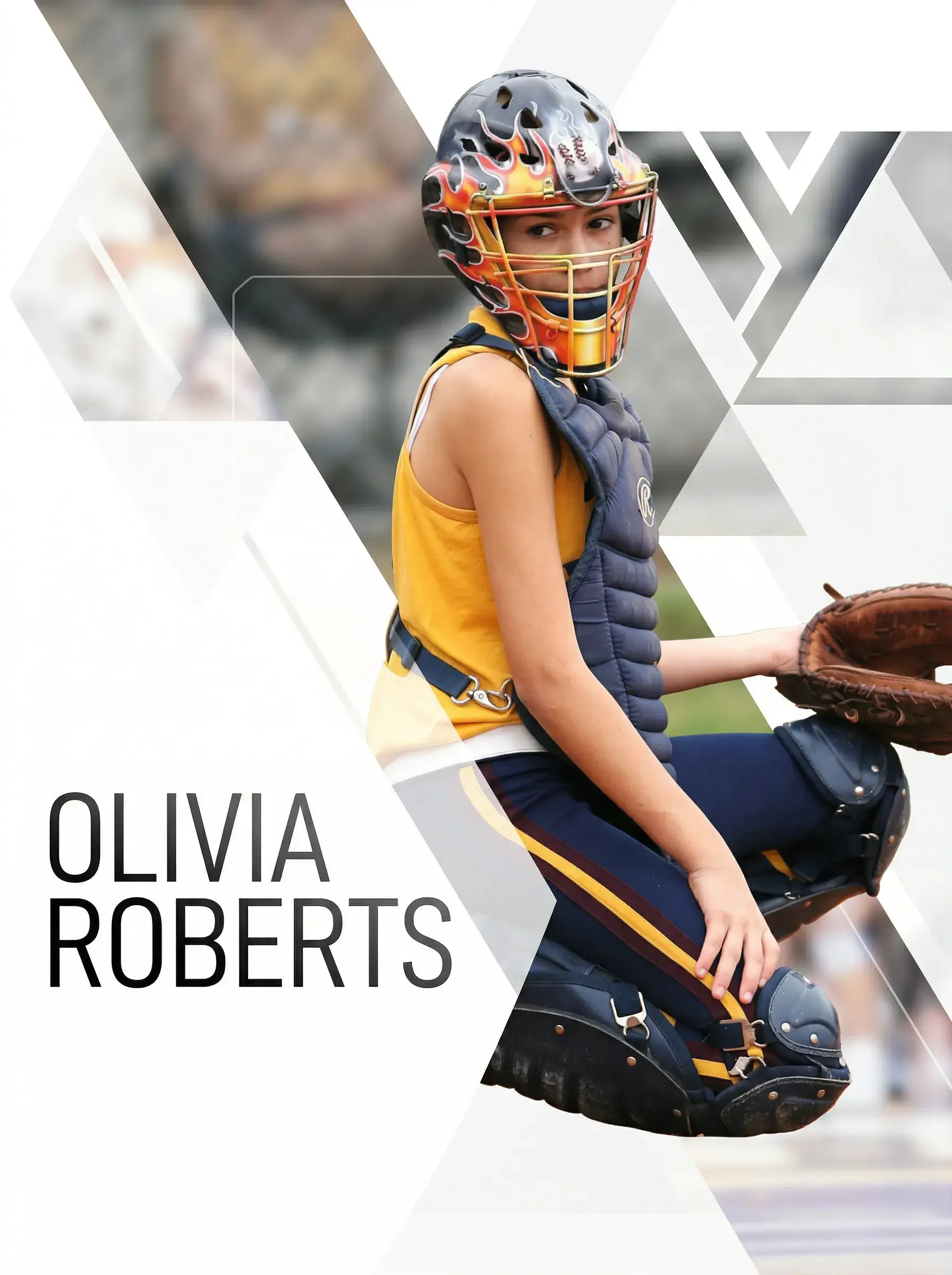
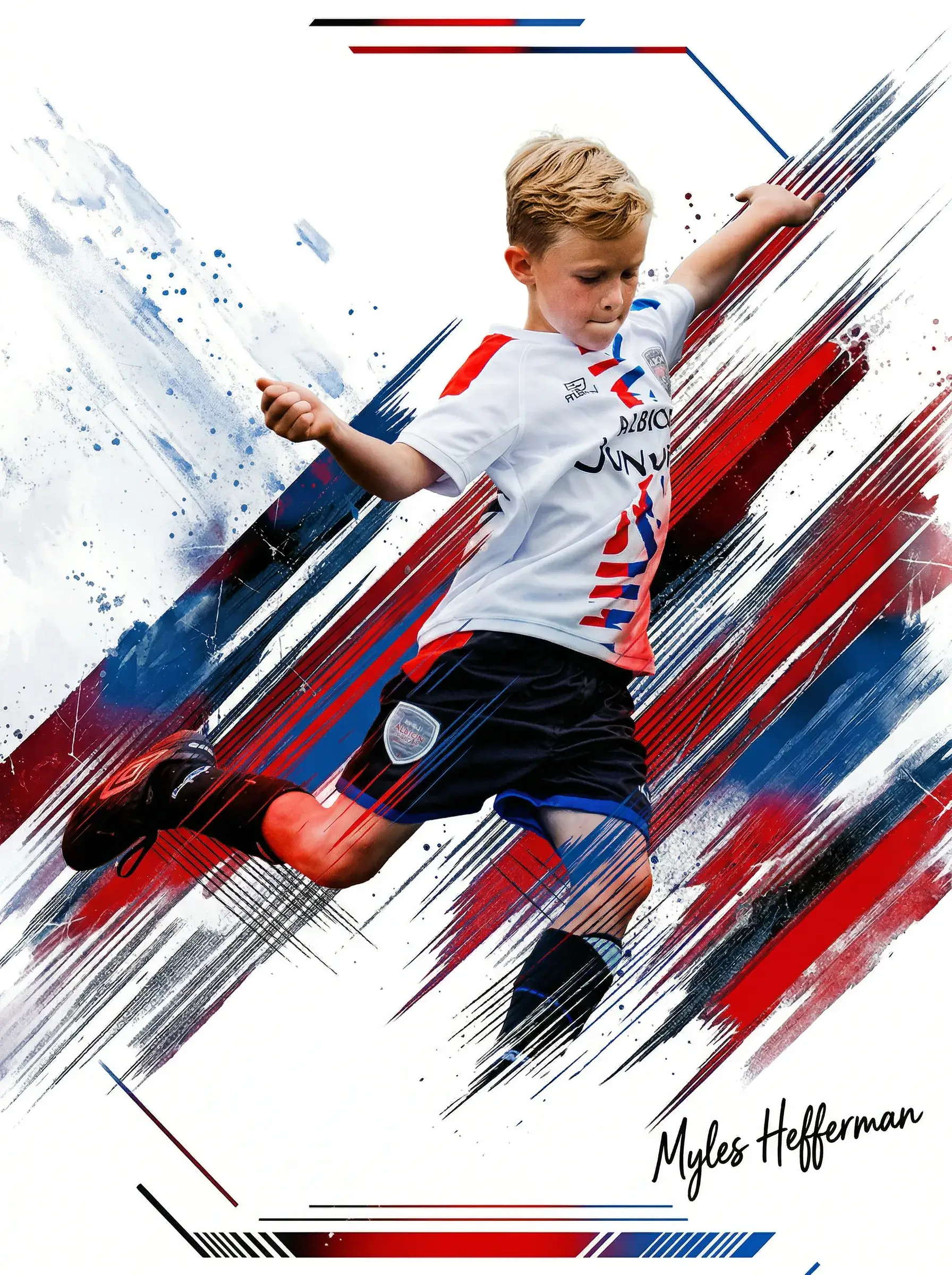
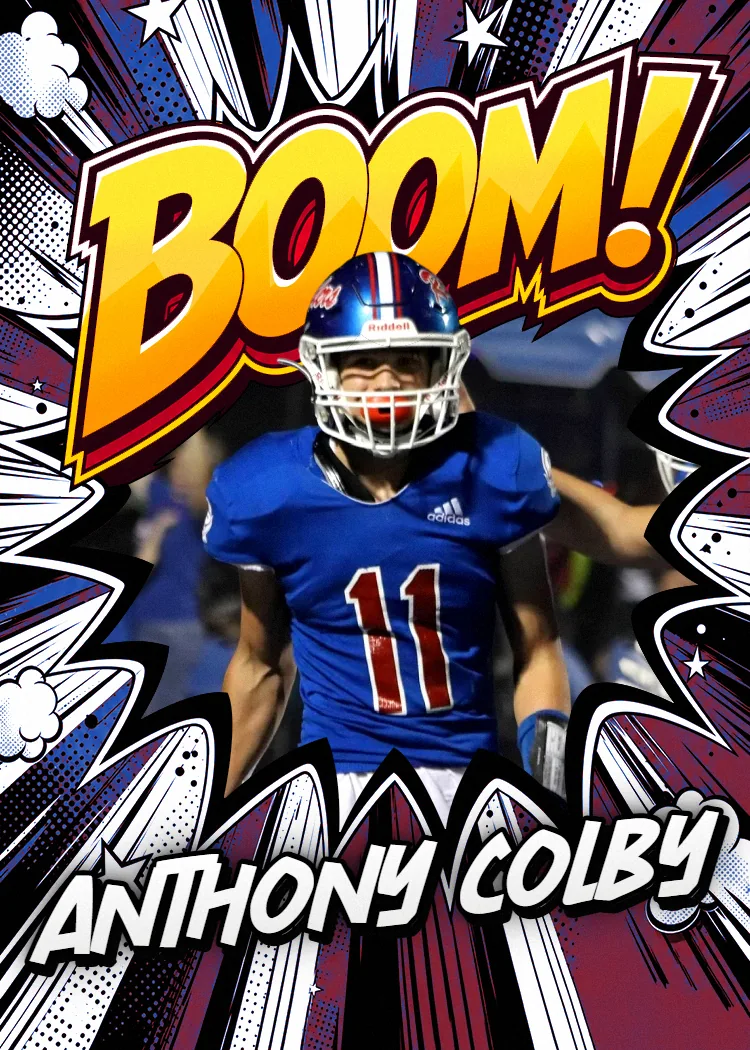
Once you've got that sharp, frame-filling action shot, don't let it sit on a memory card. Upload it, pick a pro-style template, and get premium printed cards with a free magnetic case shipped in 2-3 days.
Upload Your Photo NowNo credit card required | Instant preview | Pro-quality designs
Explore More Card Options
Discover more custom trading card options for every sport and occasion