
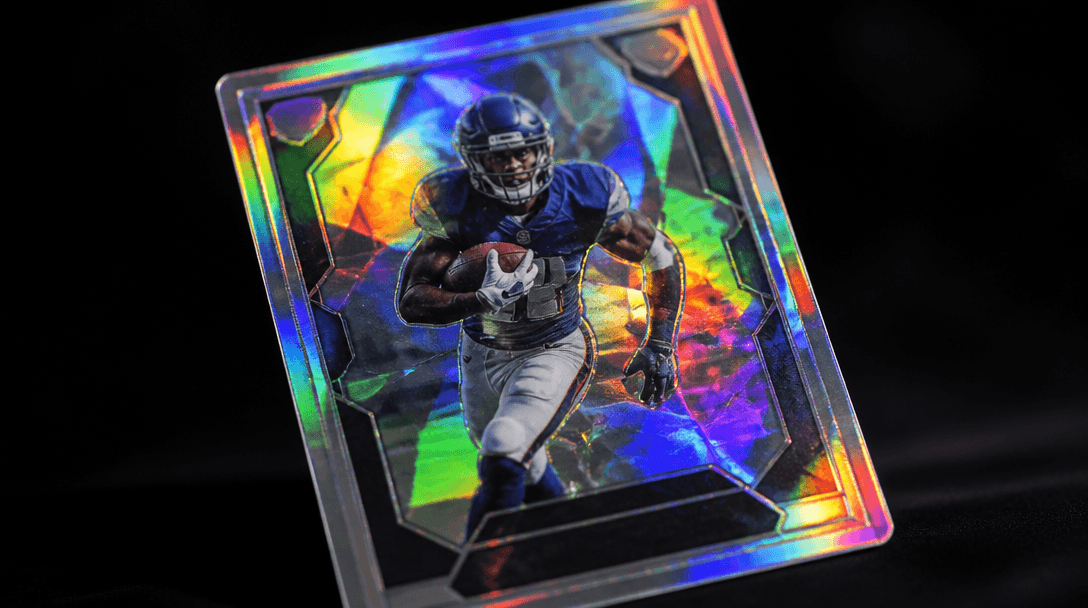
How a holographic card works
A holographic trading card has a finish layer with a fine micro-pattern pressed into it. That pattern refracts light — splitting it into its component colors — instead of just reflecting it back.
The result is the familiar effect: tilt the card and a rainbow or prism shimmer ripples across the surface. The design underneath stays visible; the holographic layer plays over the top of it.
Why people love them
Holographic is the finish most people picture when they think of a special trading card. It catches the eye instantly and signals that a card is something more than a base card.
For a custom card, that matters. A holographic finish makes a card of a kid or a teammate feel like a genuine premium collectible, not just a print.
Holographic vs. foil
Holographic is often confused with foil, but they are different finishes. Foil gives a flat metallic, mirror-like shine — it reflects light. Holographic refracts light into shifting color.
Foil is shine; holographic is shine plus moving rainbows. Holographic is the flashier, more attention-grabbing of the two.
Getting a holographic custom card
On a custom card, holographic is an upgrade you choose rather than a separate product. You design the card normally, then add the holographic finish on a template that supports it.
Rookie holographic upgrades cost $2.99 per selected card, capped at $14.99 per box. MEGA holographic upgrades cost $14.99 per card. Bulk holographic upgrades are $14.99 for 25 cards, $22.99 for 50 and $29.99 for 100. Foil is $5 per box where available; team packs have separate pricing.