
Card Knowledge

What is the difference between foil and holographic cards?

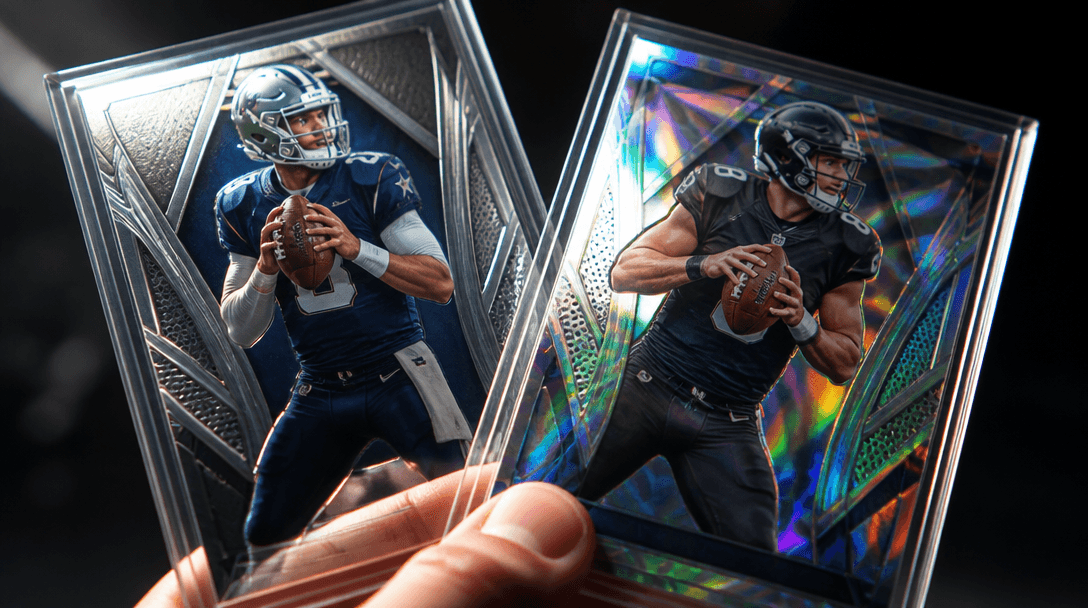
A foil card and a holographic card side by side showing their different finishes

Quick answer

Foil cards have a smooth metallic, mirror-like shine that catches light. Holographic cards go a step further with a pattern that shifts color — a rainbow or prism effect — as the card moves. Foil reflects light; holographic refracts it into shifting color. Both are premium upgrades over a standard card.

Key takeaways

  • ✓Foil = a reflective metallic shine that catches light.
  • ✓Holographic = a color-shifting rainbow or prism effect that moves with the card.
  • ✓Both are premium upgrades; holographic is the flashier of the two.
  • ✓Holographic upgrade prices depend on product and quantity: Rookie upgrades are $2.99 per selected card, capped at $14.99 per box.

What a foil finish does

A foil card has a metallic layer that gives parts of the card — or the whole card — a bright, mirror-like shine. Tilt it under light and it gleams.

The effect is clean and premium without being loud. Foil makes a card feel special and high-end while keeping the design readable and the look relatively subtle.

What a holographic finish does

A holographic card adds a structured pattern that breaks light into shifting color. Move the card and you see a rainbow or prism effect ripple across it.

Holographic is the flashier finish. It catches the eye immediately and is the look most people picture when they think of a rare or premium trading card.

Foil reflects, holographic refracts

The simplest way to keep them straight: foil reflects light back at you like a mirror, so you see brightness and shine. Holographic refracts light, splitting it into colors, so you see shifting rainbows.

Foil is shine. Holographic is shine plus moving color. That is the core difference.

How to choose

Neither is better — it is a matter of taste and the look you want. Choose foil for a clean, upscale shine that complements the design. Choose holographic for maximum eye-catch and that classic premium-card wow.

Rookie holographic upgrades cost $2.99 per selected card, capped at $14.99 per box. MEGA holographic upgrades cost $14.99 per card. Bulk holographic upgrades are $14.99 for 25 cards, $22.99 for 50 and $29.99 for 100. Foil is $5 per box where available; team packs have separate pricing.

The Snapshot Team|Custom trading card specialists|Last reviewed: July 22, 2026

Ready to make your own card?

Upload a photo, pick a template, and preview your custom card in about 60 seconds. Free to design.

Start Creating Free

More questions

Is holographic the same as foil?

No. Foil is a reflective metallic shine, like a mirror catching light. Holographic adds a color-shifting rainbow or prism pattern that moves as the card tilts. Holographic is the flashier of the two finishes.

Which looks more premium, foil or holographic?

Both look premium. Foil is a clean, upscale shine that stays subtle; holographic is the bold, eye-catching look people associate with rare cards. It comes down to taste rather than one being objectively better.

How much does a foil or holographic finish cost?

Rookie holographic upgrades cost $2.99 per selected card, capped at $14.99 per box. MEGA holographic upgrades cost $14.99 per card. Bulk holographic upgrades are $14.99 for 25 cards, $22.99 for 50 and $29.99 for 100. Foil is $5 per box where available; team packs have separate pricing.

Can any template be made foil or holographic?

The finishes are available on select templates rather than every design. When you are choosing a template, look for the ones that support a foil or holographic upgrade.

Will a holographic finish make the card hard to read?

No. The finish is designed to enhance the card without obscuring the photo or text. The design stays clear; the holographic effect plays across it as the card moves.

Explore more