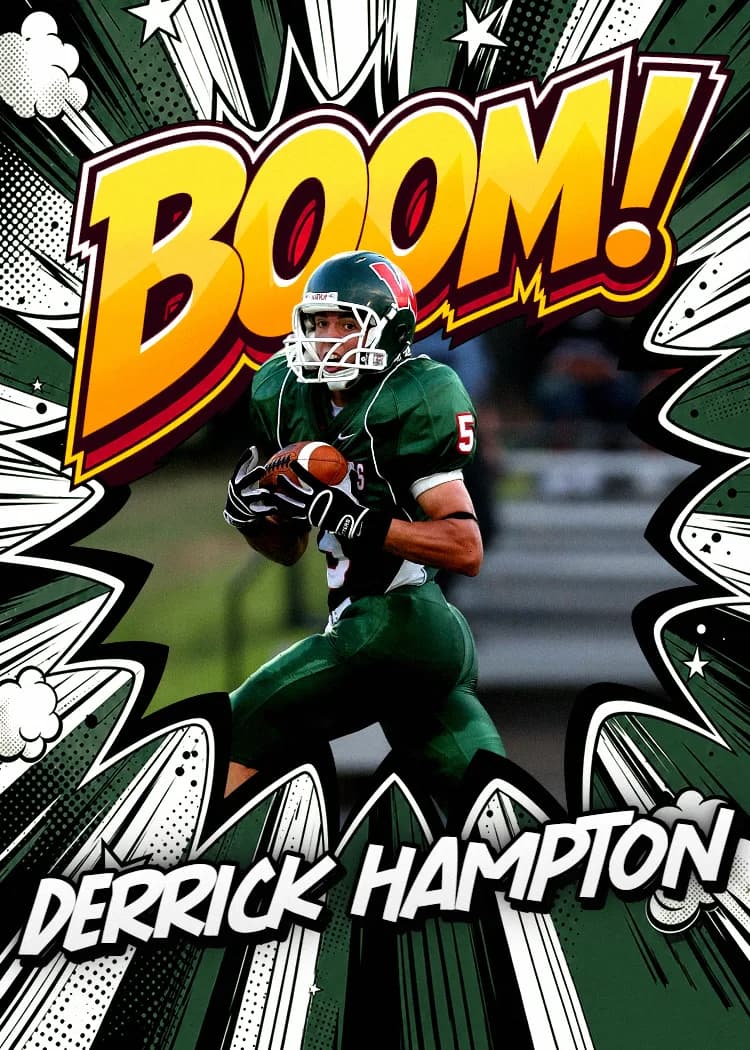



The photo: the player, not the screen
The temptation is to use a gameplay screenshot, but the strongest esports cards star the player. A portrait at the setup — headset on, monitor glow behind — or a clean headshot with the headset around the neck gives the card a real subject and prints sharply.
Screenshots are low-resolution and often include game art you do not own. If you want the game represented, let the template style and the details on the back carry it instead.
Build the card
Upload the photo, crop to frame the player, and choose a bold, high-energy template. The name line gets the gamertag — that is the identity — with the real name optional underneath.
On the back, add the game, main or role, current rank or rating, and season achievements: tournament placements, a first championship, a clip-worthy moment. It reads like a real pro card because it is built like one.
Esports cards for teams, clubs, and leagues
School esports programs, club teams, and amateur leagues are natural fits for roster sets — a card for every starter at bulk pricing toward roughly $0.90 each. They work as end-of-season gifts, LAN party favors, or recruitment-table handouts.
Individual cards are a great gift for the gamer in your life: their gamertag on a real card, in a display case, from $17.99. Order 7 to 10 days before you need it.