What to Put on a Senior Night Card Besides Stats
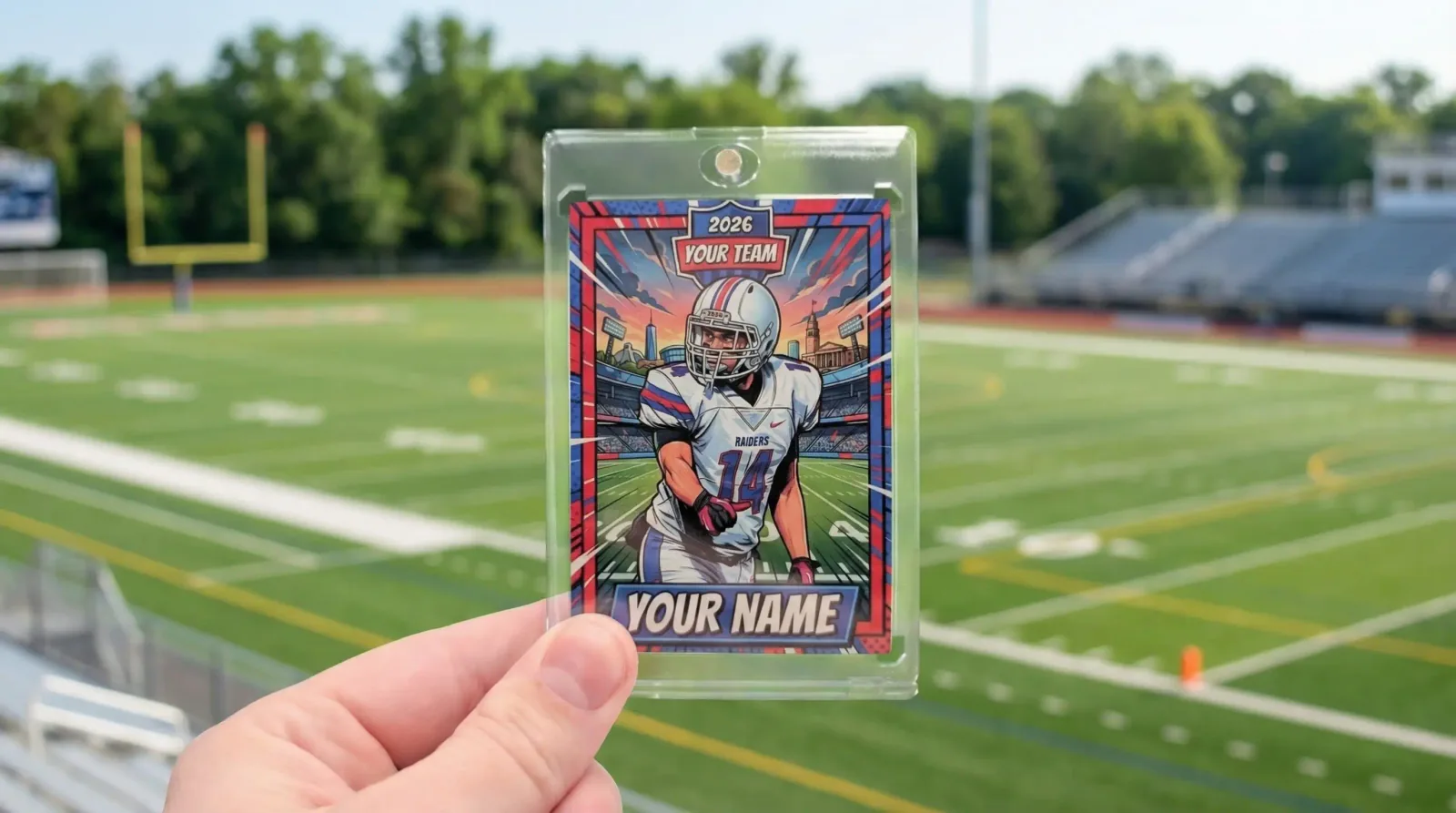
A senior-night card has a small amount of space to hold several years of playing together. Statistics can help, but they do not have to carry the whole story. One recognizable photo and a sentence about something that player contributed can make a better keepsake than a crowded list of numbers.
Start with a simple question: what would this player recognize as their own season? It might be a position change, time spent helping a younger teammate, or the ritual everyone remembers from the bus ride home. Choose something the player would be comfortable sharing.
Give each side one job
Use the front to identify the person: a clear photograph, preferred printed name, jersey number and team or season. Let the back add something the front cannot show. That could be a short coach's message, a memory from teammates, or one achievement with enough context to explain why it mattered.
Do not force a full biography into a small text box. Write the message in a separate document first. If it needs tiny type to fit the chosen template, shorten it or include a longer handwritten note with the gift.
Turn a general compliment into a specific memory
The examples below are invented writing prompts, not testimonials or accounts of real players. Replace them with details that are true for your team, and use only the wording the player and organizer approve.
- Instead of “Great teammate”: “You stayed after practice to help the new players learn the drill.”
- Instead of “An unforgettable season”: “From learning a new position to leading warmups, you kept showing up for the team.”
- Instead of filling in missing stats: “A season of early practices, long trips and teammates who became friends.”
- For a short thank-you: “Thank you for making the younger players feel like they belonged.”
Specific does not mean embarrassing. Avoid an inside joke that needs an explanation, a private setback, a medical detail or a nickname the player dislikes. If a quote comes from a coach or teammate, ask that person to approve the final wording before attaching their name.
Choose the photograph for the person receiving it
An action photo can tell the story of a sport, but a clear portrait may work better for a player who wants family to recognize their face. Compare both at the actual crop. Keep eyes, hands and important equipment away from the frame and nameplate.
Use the original photo when available and confirm permission to reproduce it. A screenshot from a photographer's gallery may be too compressed for the crop and does not establish permission to print. If a family supplies several options, ask which one the player prefers before completing the design.
For a team, agree on the pattern before writing every card
Set one structure that treats players consistently: the same season label, roughly the same message length and the same amount of space for a personal detail. A shared template can make a set feel connected while leaving each player's contribution distinct.
- Create one roster row per player with the preferred name, jersey number, photo filename and message.
- Choose who checks the photo and wording for each row. Keep private contact details out of the printed design.
- Finish one example to check that the longest name and message fit.
- Have a second person match every finished front and back against the roster.
- Confirm each approval before placing the order.
One card for each of twelve different players means twelve designs. Twelve identical copies of one card is a different order. Review the team ordering workflow before building the full roster, and check current production and delivery estimates against the event date before paying.
Leave room for the moment itself
You do not need to print every part of the presentation. A short card-back message can sit beside a handwritten note, a team photo or a few words spoken at the ceremony. Pick one detail for the card that will still make sense when someone finds it in a drawer years later.
To plan the physical gift, compare sports keepsake options. To start the design, choose a card template that fits your photo. For a larger roster, the team planning checklist covers photo matching and approvals that apply across sports.
Written by the Snapshot team, which makes and sells custom printed cards. Product examples show our own range; check current options and delivery estimates before ordering. About Snapshot · Questions or corrections
Tags
Related Articles
Personalized Baseball Cards: What to Include
Personalized baseball cards transform any player into a trading card star, creating unique memorabilia that captures individual achievements, statistics, and personality. Whether you're creating cards for Little League players, high school athletes, travel ball teams, or adult rec leagues, this comprehensive guide covers everything you need to know about designing and ordering personalized baseball cards in 2026.
Read More →Custom Baseball Cards: Team Planning Guide
For a baseball team set, plan the roster and approval process before selecting a design. Each player needs a correctly matched photograph and name; the set also needs consistent season labels and a clear decision about which statistics to include.
Read More →Ready to Create Your Custom Cards?
Choose a template, personalize your photo and details, then review your design before ordering.
Start Creating Now