
The Back of Trading Card Designs: What Goes There and Why
Nobody remembers the back of a trading card until they flip one over and it's blank.
Upload a photo of your player, pet or team, choose an available template, and preview your design before ordering a printed card.
Most people obsess over the front of a card — the photo, the pose, the team colors — and completely forget the back matters just as much. A back of trading card layout that's empty or sloppy makes the whole thing look unfinished, like a rough draft instead of something you'd actually collect. Parents making a card for their kid's first season, coaches building a team set, or anyone printing a one-off gift often stall out at this exact step. What stats go where? Does it need a bio? Is a blank back even acceptable? These aren't trivial questions if you want the card to feel real.
Here's the good news: the back of a trading card follows a pretty simple formula, and you don't need a design degree to nail it. Stats, a short bio line, team or jersey info, and a card number or series mark cover 90% of what makes a back feel legitimate. Snapshot builds that structure into every template, so you upload a photo, pick a layout, and the back gets handled with the same care as the front. No guessing, no starting from a blank page.
Let's break down exactly what goes on the back, why it matters, and how to get it right the first time.
Related Topics
We print and ship custom card fronts and backs to customers in all 50 states every week, from single gift cards to full team sets.
What to Include on the Back of Your Card
- Player or subject name spelled correctly
- Team name, jersey number, or position
- Key stats or season highlights
- Short bio line or personal message
- Card number if part of a set
- Consistent font matching the front design
Free to design, instant preview. Free US standard shipping on orders $30+. Review delivery options at checkout.
Why the Back of a Card Deserves as Much Attention as the Front
A strong back does more than fill space — it changes how the whole card is perceived.
It completes the collectible feel
A blank back reads as unfinished, no matter how sharp the front photo looks. Stats and details on the back signal this was made with intention, not just printed as a novelty photo.
It tells the story numbers can't
A short bio line — hometown, favorite play, a nickname — adds personality that a stat line alone can't capture. That's often the part people read twice, especially on gift cards for kids or teammates.
It matches what real cards look like
Anyone who's collected cards knows the back is half the experience. Matching that format makes a custom card feel like it belongs in a real set, not a one-off novelty print.
It holds up under premium printing
Printing both sides on professional card stock means the back doesn't peel, smear, or fade faster than the front. It's built to be handled, flipped, and displayed for years, not just photographed once.
How Does the Back of Trading Card Design Actually Work?
Building a proper back doesn't take long once you know the four or five elements that need to be there.
Pick a template with a back layout built in
Every Snapshot template comes paired with a matching back design, so you're never left staring at a blank panel. You choose the front style — pro-style rookie card, throwback design, whatever fits — and the back updates automatically to match the theme. This step alone saves most people from the biggest mistake: treating the back as an afterthought instead of part of the design.
Fill in the details that make it real
This is where stats, a name, jersey number, position, and a short line about the season or highlight go. You don't need professional stat-tracking software — just the numbers you have. Even basic info like team name and year turns a photo into something that reads like an actual collectible, not just a printed picture.
Review, confirm, and print on premium card stock
Once the front and back are set, you review the full card before it goes to print. Snapshot prints both sides on premium card stock so the back holds up the same way the front does — no flimsy paper stock that curls or fades. Production takes one business day; shipping time is quoted at checkout for your address.
Three steps, and the back gets the same attention as the front — because it should.
What People Notice First About a Finished Card
Customers building team sets and gift cards consistently flip the card over before they say anything about the front. It's usually the small details on the back — a stat line, a nickname, a card number — that get the strongest reaction, because that's the part that makes it feel like a real collectible instead of a printed photo.
Who Actually Needs a Well-Designed Card Back?
The back of a trading card matters across a wider range of situations than people expect.
Youth and rec league keepsakes
Parents printing end-of-season cards want something that feels complete, not just a photo slapped on cardstock. A back with the kid's stats, team name, and a short highlight line turns a simple photo into a keepsake that gets saved for years, not tossed in a drawer.
Team sets and locker room culture
Coaches building a full-team set need consistency across every card, front and back. A matching back layout — same fonts, same stat format — makes a 15-card team set look cohesive instead of like 15 separate one-off projects.
Gifts and personal milestones
Someone making a card for a birthday, retirement, or a friend's beer-league championship wants the back to carry a message or inside joke, not just blank space. A filled-out back turns a novelty gift into something the recipient actually keeps on a shelf.
What Does a Custom Card With a Full Back Design Cost?
Pricing stays simple whether you're ordering one card or a full team set.
Rookie Box single cards start at $17.99, packs run up to $49.99, and the MEGA 11"x15" poster card is $49.99. Free shipping over $30 applies across the USA, and every order includes a free magnetic case.
You get a fully designed front and back, printed on premium card stock, shipped in 2-3 days — no separate charge for a finished back design.
Box Options
Simple, collectible pricing. No subscriptions, no hidden fees.
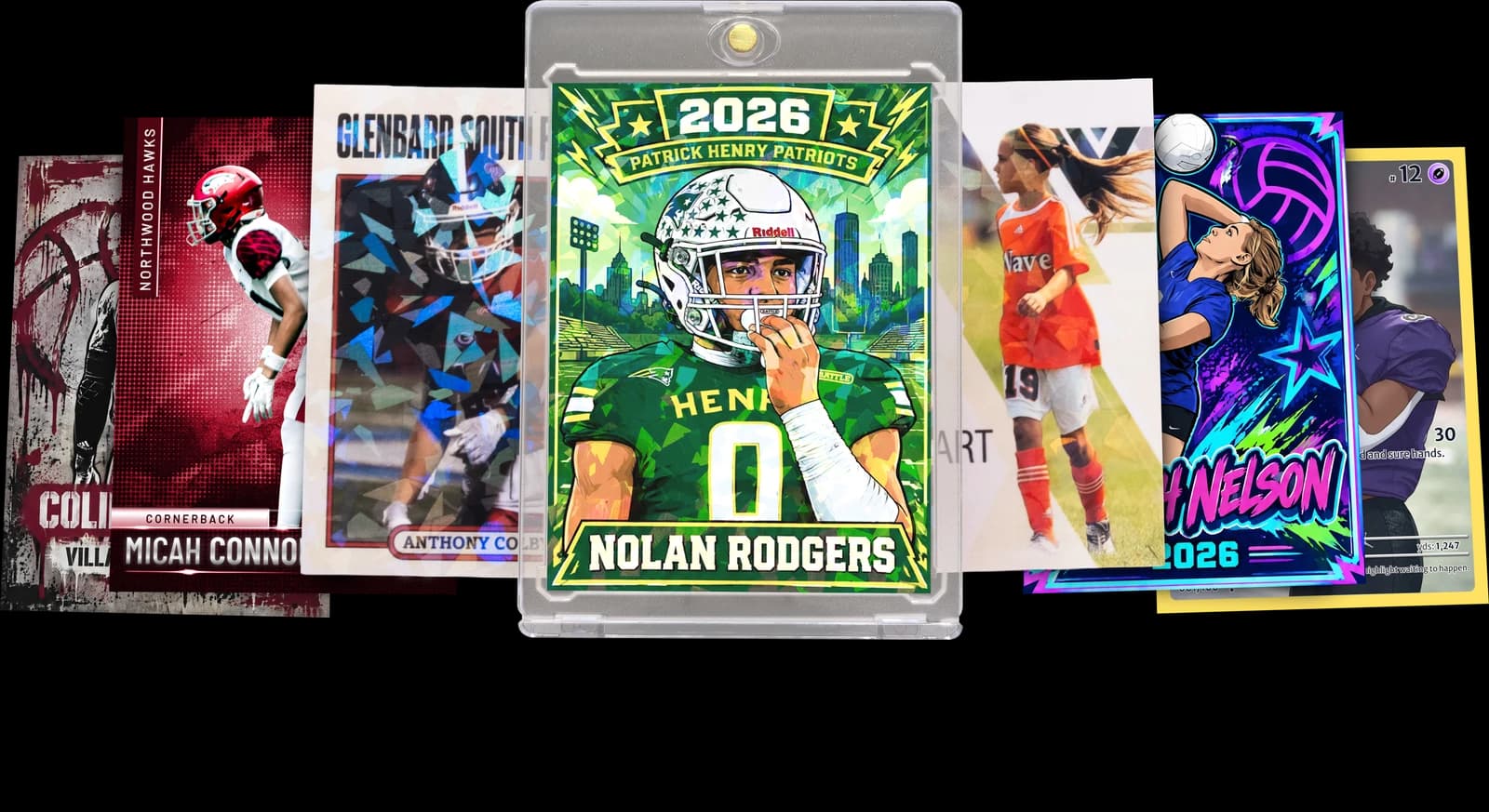
The Rookie Box
Perfect for those unforgettable moments
$17.99 - $49.99
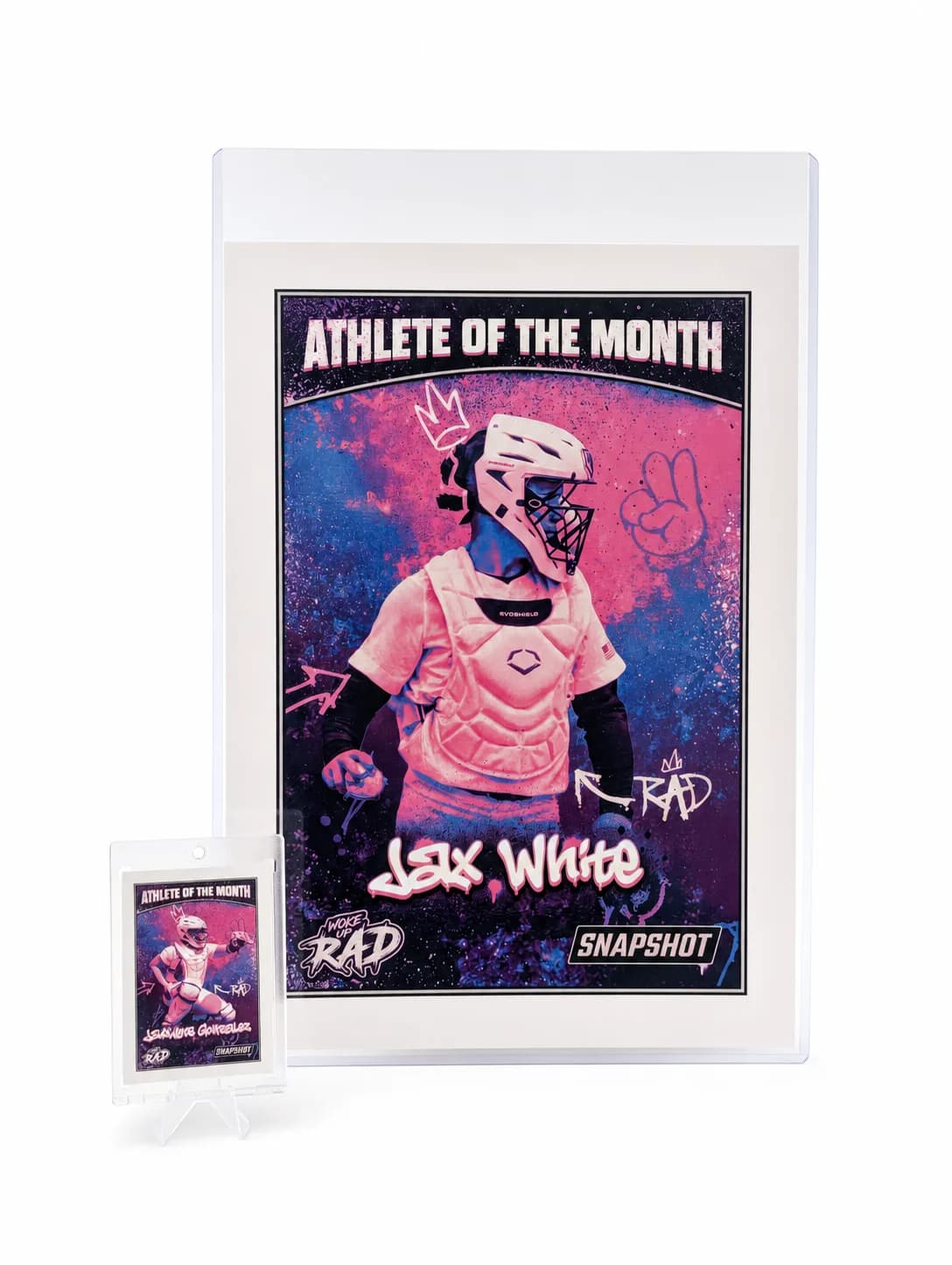
MEGA Card
Their moment, bigger than ever
$49.99
Create for free • Ships the next business day • Made in Des Moines, IA, USA
Frequently Asked Questions
Can I put a message or quote on the back instead of stats?
Absolutely, and it's a popular choice for gift cards, retirement cards, or anything less about stats and more about sentiment. A short quote, an inside joke, or a line like "World's Okayest Bowler, 2024" can replace a traditional stat line entirely if that fits the occasion better. Some people blend both, using a small stat section alongside a personal message, which works especially well for milestone cards like a last game of the season or a birthday. The back of the card doesn't have to follow pro-sports conventions exactly; it just needs to feel intentional rather than empty. If you're making the card as a gift, a personal message often lands better than generic stats anyway, since the recipient probably already knows their own numbers. Flexibility is really the point here — the back is yours to customize, whether that means hard data, humor, or something sentimental.
How long does it take to get a custom card with a full front and back design?
Snapshot ships custom cards in 2-3 days after you finalize the design, and that includes both the front and back printed together as one finished product. There's no separate wait time for back-side details since everything prints in a single run on premium card stock. Production takes one business day; shipping time is quoted at checkout for your address. If you're ordering for a specific event — a birthday, a team banquet, an end-of-season celebration — it's smart to build in a small buffer, especially if you're deciding between design options or waiting on final stats from a coach. Most customers who plan a few days ahead of the actual event have zero issues receiving cards in time. Rush situations can work too, but earlier ordering always gives you more room to review the back layout carefully before it goes to print, which matters more than people expect once the card arrives.
What size text works best for the back of a card?
Readability matters more than styling on the back of a trading card, since most of what's there is meant to be read quickly, not just glanced at like a photo. Stat lines and names typically work best in a clean, mid-sized font that doesn't compete with any background graphics or team colors behind the text. Smaller details like a card number or series mark can shrink down since they're secondary information, but the player's name and key stats should stay large enough to read at arm's length without squinting. Templates built specifically for card backs already account for this balance, sizing text so it fits standard card dimensions without looking cramped or oversized. If you're customizing text yourself, a good rule of thumb is to preview the design at actual size, since text that looks fine zoomed in on a screen can feel too small or too large once printed on a physical card. Consistency across a full team set also matters more than any single card looking perfect alone.
Do trading card backs need a card number?
Not always, but it's a nice touch if you're printing more than one card, especially for a team set or a themed series. Card numbers give a set structure, like "3 of 15," which mimics how official trading cards are organized and adds to that authentic, collectible feel. For a single card — a birthday gift or a one-off keepsake — a card number usually isn't necessary since there's no set to reference. It becomes more valuable when you're producing cards for an entire roster, a family holiday card set, or any project where multiple cards are meant to be collected together. If you do include numbers, it's worth deciding on the order ahead of time, whether that's alphabetical, jersey number, or some other logic, so the set feels intentional rather than random. It's a small detail, but it's often the kind of thing that makes people treat a custom card set more like something to collect and display rather than something to glance at once.
Is it possible to design the back myself instead of using a template?
You can customize most fields within a template, including text, stats, and layout choices, but starting from a completely blank back isn't really necessary given how much flexibility the templates already offer. Templates exist specifically because the back of a trading card follows a fairly predictable structure — name, stats, bio, maybe a logo — and building that from scratch usually just recreates what's already available. That said, you have control over what actually goes in those fields, so two customers using the same template can end up with very different-feeling backs depending on the details, tone, and photos they choose. If you want more creative freedom, choosing a simpler template with fewer preset fields gives you more room to add your own text or message. The main advantage of using a template rather than starting blank is consistency and speed — you get a professional-looking layout without needing to think through spacing, font sizing, or alignment yourself.
What happens if I make a mistake on the back before printing?
You'll have a chance to review the full card, front and back, before it goes to print, so mistakes can be caught and fixed before anything ships. This review step is exactly why it's worth slowing down on the back design rather than rushing past it to focus only on the photo. Common mistakes include misspelled names, wrong jersey numbers, or outdated stats, all of which are easy to fix if caught during the review stage but harder to correct once a physical card has already been printed and shipped. It helps to have a second person double-check details, especially for team sets where names and numbers need to match a roster exactly. If you're making cards for multiple players, cross-referencing against an actual roster or scorebook before finalizing reduces the chance of errors slipping through. Taking an extra minute or two to review the back carefully is a small step that prevents having to reorder a card later because of a detail that got missed the first time around.
Do MEGA poster cards also include a designed back?
The MEGA 11"x15" poster card is primarily a large-format display piece, so the design emphasis shifts more toward the front image at that size, though back-side details can still be included depending on the template chosen. Because of its size, the MEGA card tends to get used for standout moments — a graduation, a championship win, a season highlight — where the large photo itself is the main focus rather than a stat-heavy back layout. If you want a full front-and-back stat card experience, the standard single card or pack sizes are typically better suited, since they mirror traditional trading card dimensions more closely. That doesn't mean the MEGA card can't carry personal details on the back; it just tends to be used differently, more like a poster-meets-card hybrid than a pocket-sized collectible. If you're deciding between formats, think about whether the end goal is something to display on a wall or something to hold, flip, and collect, since that answer usually points you toward the right size.
Why do some custom cards look cheap even with a good front photo?
Nine times out of ten, it comes down to the back — either it's blank, poorly aligned, or printed on a different stock than the front. A sharp photo on the front can only carry a card so far if flipping it over reveals empty space or mismatched design elements. Cheaper printing services sometimes cut corners on the back specifically, using thinner paper or skipping layout design entirely, which creates an obvious quality gap between the two sides. Font inconsistency is another common issue, where the back uses a generic default font that clashes with a more polished front design. Alignment problems, like text sitting too close to the edge or unevenly spaced stat lines, also make a card feel amateur even when the core idea was solid. Choosing a service that treats the back as part of the actual design process, rather than an afterthought bolted on at the end, is really the difference between a card that looks store-bought and one that looks like a rushed home project.
Free to design, instant preview. Free US standard shipping on orders $30+. Review delivery options at checkout.
Design the Back of Trading Card Layouts That Actually Look Finished
Upload a photo, pick a template, and fill in the back with stats, a bio, or a personal message. Every card prints front and back on premium card stock and ships in 2-3 days with a free magnetic case included.
Start Your Card NowNo credit card required | Instant preview | Pro-quality designs
Explore More Card Options
Discover more custom trading card options for every sport and occasion
sports cards
View card options →
trading cards
View card options →
custom cards
View card options →
sports card prices
View card options →
1 1 sports cards
View card options →
card design template
View card options →