
What Are the Dimensions of a Trading Card, Exactly?
Everyone assumes trading cards are one universal size — until they try to fit one into someone else's binder sleeve.
Upload a photo of your player, pet or team, choose an available template, and preview your design before ordering a printed card.
Search around and you'll find people asking what are the dimensions of a trading card and getting three different answers: 2.5x3.5 inches, 63x88mm, or some vague 'about the size of a credit card' comparison. None of those are technically wrong, but they don't explain why the number matters or where it came from. If you're designing a custom card, ordering sleeves, or building a display case, guessing at the size wastes money and time. A quarter-inch error means your card won't fit standard toploaders or magnetic cases at all.
The short answer: the standard trading card measures 2.5 inches by 3.5 inches, which equals 63.5mm by 88.9mm. That's the size baseball, basketball, football, and most hobby cards have used for decades, and it's the size every major sleeve, toploader, and magnetic case is built around. Snapshot prints every custom card to this exact spec on premium card stock, so whatever photo you upload comes out fitting standard protective gear without any surprises.
Let's separate the myths from the actual facts, then walk through how the size applies to a custom card order.
We ship custom cards to teams, families, and collectors in all 50 states every week, and standard sizing questions come up in nearly every order.
Frequently Asked Questions
Is a trading card the same size as a credit card?
Not quite, though people compare them because they're close. A standard credit card measures 3.375 inches by 2.125 inches, while a trading card measures 2.5 inches by 3.5 inches — different proportions entirely, even though both feel similarly compact in your hand. The credit card is wider and shorter, while the trading card is taller and narrower. If you've ever tried to slide a credit card into a card sleeve made for trading cards, you've probably noticed it doesn't sit right, and that's exactly why. The comparison persists mostly because both items are small, rigid, and pocket-sized, so people reach for it as a quick mental reference. For anyone designing a custom card layout, it helps to actually measure rather than eyeball based on a credit card, since the aspect ratio is genuinely different. Getting this wrong during a DIY design project is one of the most common sizing mistakes we see from first-time custom card creators.
Do all sports use the same trading card dimensions?
Yes, essentially every major sport in the United States has settled on the same 2.5x3.5-inch standard for trading cards, and that consistency is intentional. Baseball cards, which arguably built the entire hobby, established the size decades ago, and other sports simply adopted it rather than inventing their own format. Basketball, football, hockey, soccer, and even niche categories like wrestling or racing cards all follow suit. This uniformity means a collector can store cards from completely different sports in the exact same binder pages, boxes, and sleeves without sorting by size. It also means custom card printers, including Snapshot, don't need separate templates for different sports — the same physical dimensions apply whether someone's uploading a Little League photo or a fantasy football roster. The only real deviations show up in specialty products like jumbo cards, oversized rookie cards, or promotional poster-format pieces, and those are clearly marketed as non-standard rather than trying to pass as regular cards.
What size are jumbo or oversized trading cards?
Jumbo cards typically run around 5 inches by 7 inches, though some novelty and promotional formats go even larger, up to poster scale. These oversized cards aren't meant to fit in standard sleeves or toploaders — they're display pieces, often framed or propped on a shelf rather than stored in a binder. Snapshot's MEGA card, for example, measures 11 inches by 15 inches, intentionally sized for wall or desk display rather than pocket storage. The appeal of a jumbo card is visual impact: a bigger canvas means more detail, larger text, and a bolder presence in a room. That said, jumbo cards are the exception, not the rule, and most collectors still want the bulk of their collection in standard 2.5x3.5-inch format so it stores efficiently. If you're ordering a custom set, it's common to get one jumbo centerpiece card alongside a batch of standard-size cards for the rest of the team or family.
Why do trading cards need to be a standard size at all?
Standard sizing exists because the entire supporting ecosystem — sleeves, toploaders, binder pages, display cases — is manufactured around one consistent measurement. Without that standard, every collector would need custom storage for every card, which would be expensive and impractical at scale. It also matters for trading and resale: a card that matches standard dimensions can be handled, graded, and displayed using the same equipment as every other card in someone's collection. Think about how frustrating it would be if every set used a slightly different size — nothing would stack evenly, sleeves would need constant swapping, and grading companies would need multiple slab sizes. Standardization also helps printers, since equipment calibrated for one size can run efficiently without retooling for different formats. For anyone printing custom cards, sticking to the standard means the finished product behaves exactly like a card someone would pull from a retail pack, which matters more than people expect until they try to store an oddly-sized card.
What size sleeve or toploader fits a standard trading card?
A standard penny sleeve or toploader is built to snugly fit a 2.5x3.5-inch card, generally with just a hair of extra room to allow the card to slide in without force. Toploaders are rigid plastic holders meant for extra protection, while penny sleeves are thin and flexible, often used underneath a toploader for double protection. Both are manufactured to the same core dimension, so as long as your card is true to standard size, either option works without modification. Magnetic cases follow the same principle but add a stronger, more secure hold with magnetic closure instead of a snug slide-fit, which is why they're popular for display purposes. If a card doesn't fit a standard sleeve or feels too loose or too tight, that's usually a sign the card was cut slightly off-spec during production. This is exactly why Snapshot ships every custom card with a free magnetic case sized to fit perfectly, so there's no separate purchase or measuring required on your end.
Can I print a custom trading card in a non-standard size?
Technically yes, but there's a real tradeoff worth understanding before you do. A non-standard custom card won't fit typical sleeves, toploaders, or binder pages, which limits how you can store or display it alongside a normal collection. Some people intentionally want a different size for a specific display purpose, like a large wall piece or a small keychain-style card, and that's a reasonable use case. But if the goal is a card that behaves like a 'real' trading card — something that can be handled, traded, cased, and stored the standard way — sticking to 2.5x3.5 inches is the safer choice. Snapshot's standard product line follows the true dimension for exactly this reason, while the MEGA poster card is offered as a deliberate oversized option for people who want a bigger, frameable piece. Knowing which outcome you actually want before ordering saves you from ending up with a card that doesn't fit the case you already bought.
How thick is a standard trading card?
Trading cards are printed on premium card stock that's noticeably thicker and stiffer than regular paper, giving them the rigid snap collectors expect when handling or shuffling a stack. The thickness isn't usually measured by the average buyer, but it matters for how the card feels, how well it resists bending, and how it performs inside a toploader or sleeve. A card that's too thin feels flimsy and creases easily, while a card that's properly weighted holds its shape through normal handling, mailing, and display. Custom card printers use professional card stock specifically because it mimics the feel of officially licensed sports cards, which matters if the goal is a card that feels authentic rather than like a printed photo. If you've ever compared a store-bought pack card to a home-printed photo card, the difference in stiffness and snap is usually the first thing you notice, and that's a direct result of the stock choice, not just the surface print quality.
Does card size affect how a custom photo prints on the card?
Yes, significantly. The standard 2.5x3.5-inch canvas is relatively small, so photo cropping and composition matter a lot more than people expect going in. A photo that's tightly framed on a single subject — a player mid-swing, a close-up portrait — translates beautifully at that size, while a wide group shot with lots of background detail can lose clarity once everything's scaled down. Text elements like a name, number, or stat line also need enough contrast and size to stay legible at standard dimensions. This is exactly why template-based design, where a photo drops into a pre-built layout sized for 2.5x3.5 inches, tends to produce better results than trying to freehand a design from scratch. Snapshot's templates are built around these exact proportions so uploaded photos automatically size and crop appropriately for print, minimizing the guesswork. If you're planning your own shot specifically for a custom card, framing the subject a little tighter than you would for a normal photo usually pays off once it's printed at standard scale.
What's the difference between a trading card and a postcard in size?
Postcards are considerably larger, typically around 4 inches by 6 inches, compared to a trading card's 2.5 by 3.5 inches. The two formats serve completely different purposes despite both being rigid, printed pieces of card stock. Postcards are designed for mailing and often feature a single large image with space on the back for writing and postage. Trading cards are designed for collecting, trading, and protective storage, which is why the smaller size pairs with sleeves and toploaders rather than an envelope. Someone hoping to create a 'card' that's actually postcard-sized should say so explicitly when ordering, since most custom card companies default to standard trading card dimensions unless told otherwise. Confusing the two formats is a common mistake for first-time buyers who assume 'card' means any small rectangular print. If storage and collectibility matter to you, trading card size is almost certainly the format you want rather than postcard dimensions.
Are graded trading card slabs a different size than the card itself?
Yes, and this trips people up regularly. The card inside a graded slab still measures the standard 2.5x3.5 inches, but the protective slab encasing it is considerably larger, since it needs to fully enclose the card along with a label showing grade and certification details. Slab sizes vary slightly by grading company, but they're all noticeably bigger than the card itself, often closer to 3 by 4.5 inches or more depending on the brand. This means graded cards need their own specific storage boxes or slab-friendly display cases, separate from standard sleeves and toploaders built for raw, ungraded cards. If you're custom printing cards purely for personal display rather than professional grading, this distinction doesn't affect you directly, since grading applies to authentication of existing printed cards rather than something you'd request for a custom photo card. It's still useful context if you're building a display that mixes graded cards with standard raw cards, since the size mismatch affects how everything fits together on a shelf.
How do I measure a card at home to check if it's standard size?
Grab a ruler or tape measure and lay the card flat on a hard surface, measuring the longer side first, then the shorter side. A true standard card should read 3.5 inches on the long edge and 2.5 inches on the short edge, with essentially no variance if it was professionally cut. If you're getting a measurement that's off by more than a sixteenth of an inch, that's usually enough to cause fit issues in a toploader or sleeve. It helps to measure in a couple of different spots along each edge, since a slightly warped or unevenly cut card can measure differently at different points. If you're checking a custom-printed card you received, comparing it directly against a known standard card — like one from a retail pack — is the fastest way to confirm it's on-spec. Any card that's noticeably off from 2.5x3.5 inches either wasn't cut to standard, or it's an intentionally different format like a jumbo or mini card, which should've been labeled as such at purchase.
Will a custom card from Snapshot fit in my existing card collection?
Yes, every standard custom card from Snapshot is printed at true 2.5x3.5-inch dimensions, so it fits directly into existing binders, boxes, sleeves, and toploaders without any adjustment needed. This is intentional — the goal is for a custom card featuring your own photo to handle exactly like a card you'd pull from a retail pack, not like a specialty print that needs its own separate storage. Whether you're adding a custom card of your kid's Little League season to a family collection, or slipping a personalized card into a binder alongside licensed sports cards, the fit will be seamless. The only exception is the MEGA poster card, which is deliberately oversized at 11 by 15 inches for wall or desk display rather than pocket storage, so it won't fit standard sleeves by design. Every standard order also ships with a free magnetic case sized specifically for the card, so there's no separate purchase needed to protect or display it right out of the box.
Free to design, instant preview. Free US standard shipping on orders $30+. Review delivery options at checkout.
How Are Trading Card Dimensions Actually Standardized?
There's no single global law dictating card size, but decades of manufacturing consensus made 2.5x3.5 inches the de facto standard.
The Print Industry Settled on One Size
Back when tobacco and gum companies started inserting cards into packs in the early 1900s, sizes varied wildly — some were closer to postcards. By the 1950s, printers standardized on 2.5x3.5 inches because it fit efficiently on printing sheets with minimal waste. That efficiency argument still holds today, which is why the size never really changed.
Protective Gear Locked the Standard In
Once toploaders, penny sleeves, and binder pages were manufactured around 2.5x3.5 inches, the size became permanent by default. Changing card dimensions now would mean an entire secondary market of cases, sleeves, and display binders stops working. That's a lot of incentive to leave well enough alone, and it's why the spec hasn't budged in seventy years.
Custom Card Printers Follow the Same Spec
When a company prints a custom card today, it maps to that same 2.5x3.5-inch template so the finished product slides into any standard case. Snapshot builds every design — youth sports, family photos, pet portraits — to that measurement. The only common exception is a jumbo or poster-format card, which is intentionally oversized and sold as a display piece rather than a pocket card.
The takeaway: standard size isn't arbitrary, it's the backbone of an entire industry's storage system.
Why Does Knowing the Standard Size Matter?
Getting the dimensions right isn't just trivia — it affects what you can actually do with the card once it's printed.
Sleeves and Cases Fit Without Guesswork
A card printed at true 2.5x3.5 inches slides into any standard toploader, penny sleeve, or magnetic case on the market. No trimming, no forcing it, no gaps that let a card rattle around and get scuffed.
Display and Storage Options Multiply
Binder pages, card boxes, and display stands are all built around the standard footprint. Sticking to it means your custom card fits right alongside a full collection instead of needing its own special storage.
Print Quality Stays Sharp at Scale
Standard dimensions are proven for photo clarity and text legibility at small size. A photo that looks great at 2.5x3.5 inches on premium card stock won't look cramped or blurry, because the template was designed for exactly that scale.
Resale and Trading Stay Simple
If a card ever gets passed along, gifted, or traded, standard sizing means it behaves like any other card in a collection. Nobody has to explain why it's a weird shape or won't fit the album.
Where Do Standard Card Dimensions Actually Get Used?
The 2.5x3.5-inch standard shows up in more places than most people expect, well beyond a shoebox of old baseball cards.
Youth and Rec League Team Sets
Coaches ordering end-of-season cards for a whole roster need every card to be identical in size so they slide into the same team binder or display box. A batch of custom cards printed to standard dimensions means every kid's card looks and feels the same, regardless of the photo or pose.
Personal and Family Keepsakes
Someone turning a graduation photo, a pet picture, or a family portrait into a card wants it to sit in a normal card case, not some oddball frame. Standard sizing means it stores next to actual sports cards on a shelf or in a drawer without looking out of place.
Gifts and Novelty Collectibles
A custom card made as a gift — for a birthday, retirement, or milestone — reads as a 'real' collectible when it matches standard dimensions. Recipients recognize the format instantly, and it slots into a magnetic case for display on a desk or shelf without any modification needed.
What Do Repeat Custom Card Orders Tell Us?
Orders coming back from coaches, parents, and collectors across the country consistently request the same standard dimensions when reordering for new seasons or new family members. That consistency isn't accidental — it's because the first batch fit their existing cases and albums perfectly, so there's no reason to change the spec on the next order.
What Does a Standard-Size Custom Card Cost?
Pricing depends on format and quantity, but every standard card ships at true 2.5x3.5-inch dimensions regardless of tier.
Rookie Box single cards start at $17.99, packs run up to $49.99, and the oversized MEGA 11x15-inch poster card is $49.99. Free shipping over $30 applies across the USA.
You get standard-size, case-ready cards printed on premium card stock and shipped in 2-3 days — no minimums, no guesswork on fit.
Box Options
Simple, collectible pricing. No subscriptions, no hidden fees.
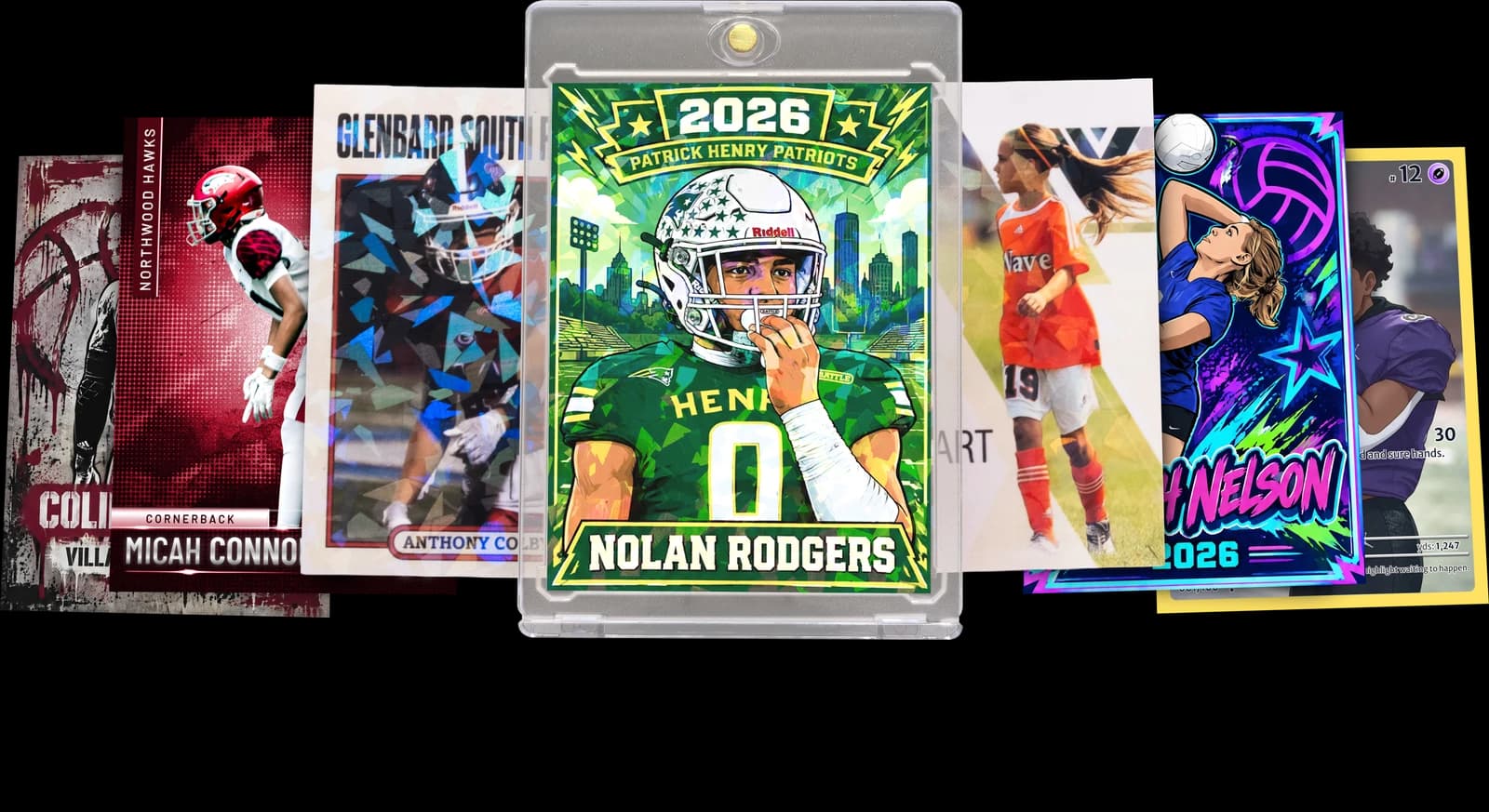
The Rookie Box
Perfect for those unforgettable moments
$17.99 - $49.99
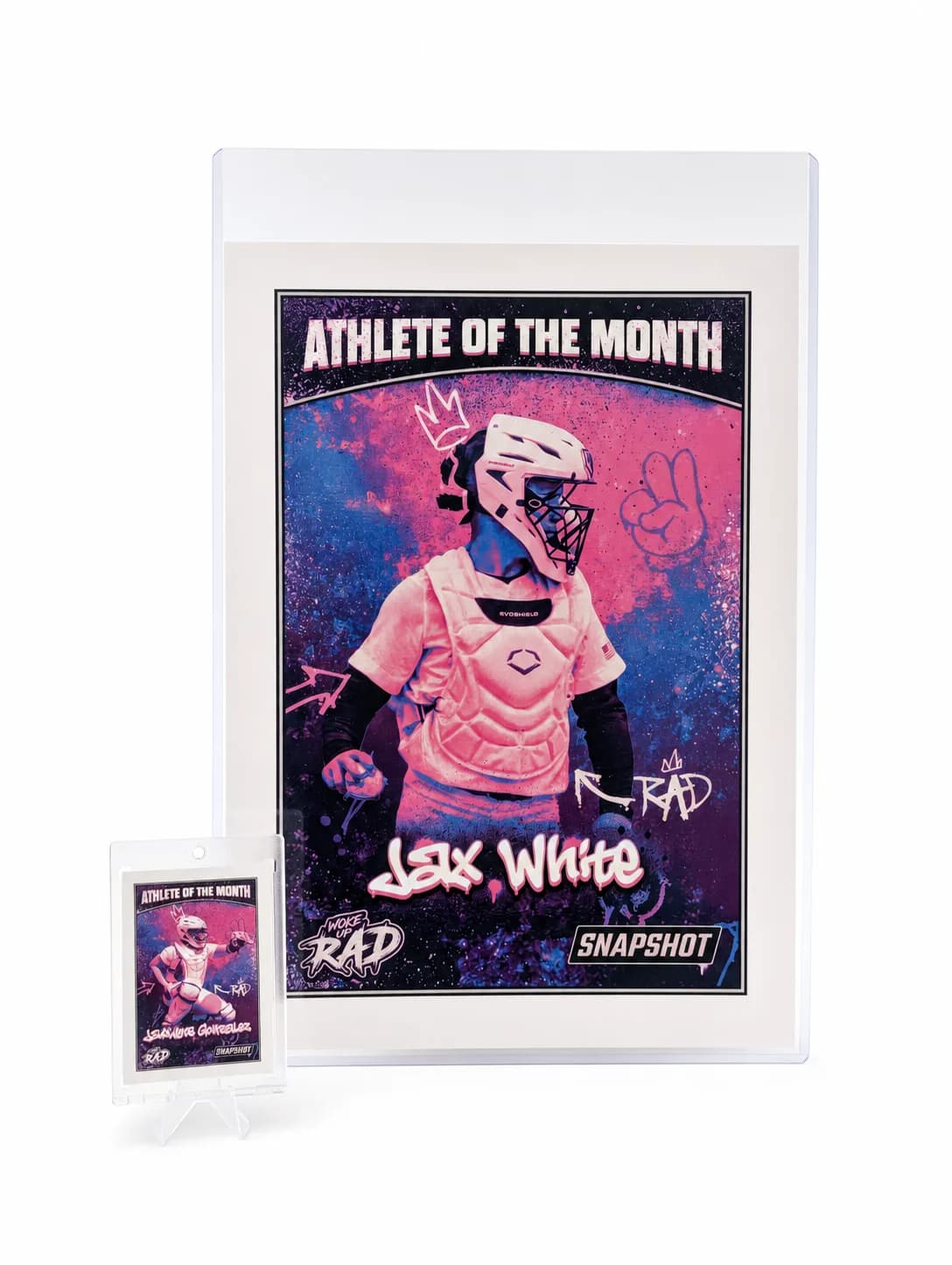
MEGA Card
Their moment, bigger than ever
$49.99
Create for free • Ships the next business day • Made in Des Moines, IA, USA






Ready to See What Are the Dimensions of a Trading Card in Action?
Upload your photo, pick a template, and get a standard-size custom card printed on premium card stock, shipped in 2-3 days with a free magnetic case included. Free shipping over $30 applies nationwide.
Create Your Card NowNo credit card required | Instant preview | Pro-quality designs
Explore More Card Options
Discover more custom trading card options for every sport and occasion
sports cards
View card options →
trading cards
View card options →
custom cards
View card options →
sports card prices
View card options →
trading cards logo
View card options →
DnD monster cards
View card options →