
Trading Card Sizes
A standard trading card is 2.5 x 3.5 inches, or 63.5 x 88.9 mm. That single size covers US sports cards, poker playing cards and — to within half a millimeter — Magic and Pokemon. Yu-Gi-Oh!, tarot, bridge and mini cards are the real exceptions, and the chart below gives every one of them in both units.
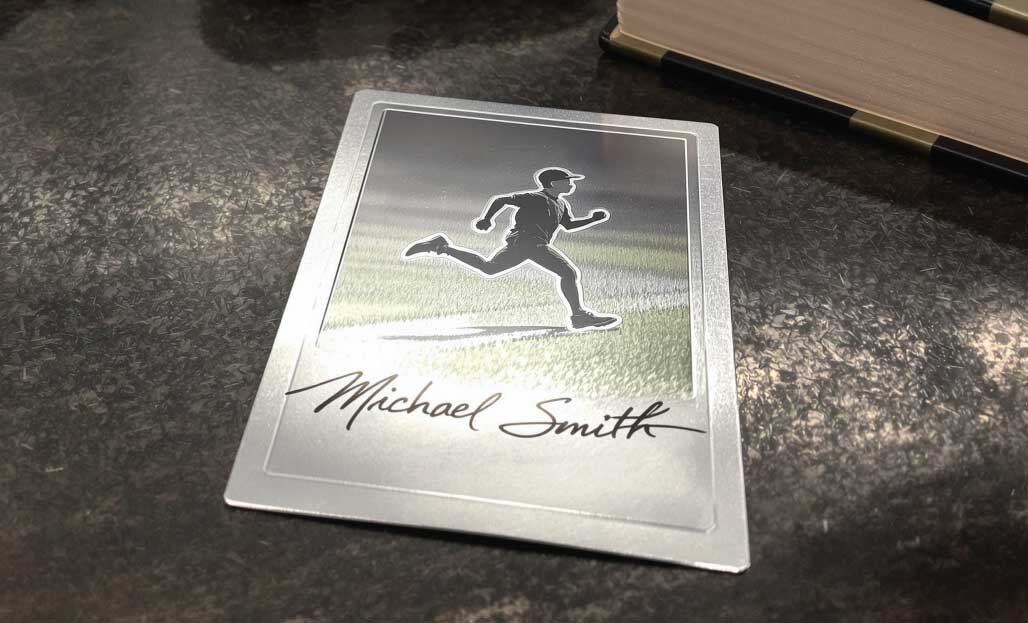
Card Size Chart
Each format is specified in one unit and converted into the other. The Specified in column tells you which figure is the original and which is the conversion — that is why some rows are tidy in inches and untidy in millimeters, and others the reverse.
| Format | Inches | Millimeters | Specified in | Typically used for |
|---|---|---|---|---|
| Standard trading card (sports)Standard size | 2.5 x 3.5 in | 63.5 x 88.9 mm | Inches | Topps, Panini, Upper Deck, and every modern US sports card |
| Magic: The GatheringStandard size | 2.48 x 3.46 in | 63 x 88 mm | Millimeters | MTG, and the same size as most modern trading card games |
| PokemonStandard size | 2.48 x 3.46 in | 63 x 88 mm | Millimeters | Pokemon TCG, and other games sharing the standard TCG size |
| Yu-Gi-Oh! | 2.32 x 3.39 in | 59 x 86 mm | Millimeters | Yu-Gi-Oh!, and other Japanese-size card games |
| Poker playing cardStandard size | 2.5 x 3.5 in | 63.5 x 88.9 mm | Inches | Standard poker and most custom deck printing |
| Bridge playing card | 2.25 x 3.5 in | 57.1 x 88.9 mm | Inches | Bridge decks, and anywhere a narrower card is easier to fan |
| Mini card | 2.125 x 3.25 in | 54.0 x 82.5 mm | Inches | Allen & Ginter style mini inserts |
| Vintage tobacco card | 1.4375 x 2.625 in | 36.5 x 66.7 mm | Inches | T206-era cards (1909-1911) and their reprints |
| Tarot card | 2.76 x 4.72 in | 70 x 120 mm | Millimeters | Tarot and oracle decks |
Converted figures are rounded — millimeters to one decimal place, inches to two. These are nominal sizes: every printed card carries a small cutting tolerance, which is why sleeves are made larger than the cards they hold.
Why You See Both 63 x 88 mm and 2.5 x 3.5 in
Both numbers describe the same card, measured in different systems. US sports cards were specified in inches and card games were specified in millimeters, so the two traditions rounded to tidy numbers in their own units. 2.5 x 3.5 inches is 63.5 x 88.9 mm, which is 0.5 mm wider and 0.9 mm taller than 63 x 88 mm.
That gap is small enough to be invisible in practice. A standard deck sleeve has an opening around 66 x 91 mm, which is 3 mm of slack — several times the difference between the two card sizes. The same is true of a penny sleeve, a top loader and a nine-pocket binder page. A Magic card and a Topps card share all of them.
So treat any source that says the difference will ruin a print job with caution. It will not. The difference that genuinely matters is Yu-Gi-Oh! at 59 x 86 mm, which is about 4 mm narrower than a standard card and needs its own smaller sleeves.
What Fits What: Sleeves and Holders
Most people asking for a card size really want to know whether a card will fit something they already own. These are the nominal sizes of the common protection.
Penny sleeve (soft sleeve)
2.625 x 3.625 inFits a 2.5 x 3.5 in card. The usual first layer before a top loader.
Standard TCG deck sleeve
66 x 91 mmFits both a 63 x 88 mm card and a 2.5 x 3.5 in one — the half-millimetre difference disappears inside it.
Small / Japanese deck sleeve
62 x 89 mmFor 59 x 86 mm cards such as Yu-Gi-Oh!. A standard card will not fit.
Top loader
3 x 4 inRigid holder for a standard card, usually over a penny sleeve.
Download an editable sports card layout
This original SVG front layout includes a photo placeholder, editable player details, and a hidden trim-guide layer. It is free to download without an account. Use it for your own cards, including commercial projects; use only photos, names, and logos you have permission to reproduce.
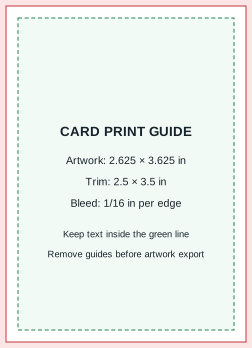
- Open the SVG in a vector editor. Replace the photo placeholder and edit the name, team, season, and number.
- Keep the canvas at 2.625 × 3.625 inches, including bleed. Keep important text at least 1/8 inch inside the trim line.
- Hide or remove the guide layer before exporting. For Snapshot’s print geometry, export full-bleed artwork at 1181 × 1631 pixels. Confirm requirements with your printer before submitting.
This is a downloadable front design for editing outside Snapshot. The card builder does not import this SVG as a template. To order using Snapshot’s supported workflow, choose a design in the template catalog and add your photo and details there; account requirements apply when saving.
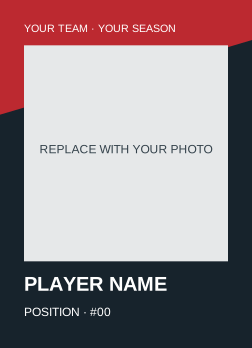
Preview uses placeholder text. Replace it before printing.
Designing a Card: Cut Size, Bleed and Resolution
Design to the bleed box, not the finished card. A trimmer cannot cut to a perfect line every time, so artwork has to run past the edge and be cut away. The numbers below are the ones Snapshot's own press runs — not a general rule of thumb.
Finished card (cut size)
2.5 x 3.5 in
What arrives in your hand. Standard trading card size.
Artwork size (with bleed)
2.625 x 3.625 in
An extra 0.0625 in (1/16 in) on every side, trimmed off.
Print resolution
450 DPI
Higher than the 300 DPI commonly quoted for print.
Print file, in pixels
1181 x 1631 px
The bleed box at the print resolution above.
Keep text away from the trim line
Anything you cannot afford to lose should sit at least 1/8 inch inside the cut edge. Names, numbers and logos placed right on the edge are the most common thing a trim removes.
The aspect ratio is 5:7, and it scales
2.5 x 3.5 inches reduces to 5:7. Our MEGA poster card is 11 x 15.4 inches, which is exactly the same ratio at poster scale, so one design fits both without re-cropping.
You do not have to do any of this by hand
The Snapshot builder handles bleed, resolution and safe margins for you. Upload a photo, pick a template, and the print file comes out at the right size.
Sizes by Format
Detail pages for the formats with the most to say beyond a single measurement.
MTG Card Size
Magic: The Gathering at 63 x 88 mm, why it is quoted as 2.5 x 3.5 inches, card backs, and printing custom cards at that size.
Baseball Card Size
The 2.5 x 3.5 inch standard, the vintage sizes that came before it, and what fits sleeves, top loaders and binder pages.
Standard Trading Card Size
A closer look at the single standard size and where it came from.
Playing Card Dimensions
Poker and bridge sizes, and what to use for a custom deck.
Custom Playing Cards
Print a full deck at standard poker size with your own artwork.
MEGA Poster Card
The same 5:7 card proportions blown up to 11 x 15.4 inches.
Card Size Questions
What is the standard trading card size?
The standard trading card size is 2.5 x 3.5 inches, or 63.5 x 88.9 millimeters. Every modern US sports card from Topps, Panini and Upper Deck uses it, and so do standard poker playing cards. It has been the industry norm since the late 1950s and it is the size Snapshot prints.
Are Magic and Pokemon cards the same size as sports cards?
Yes, for every practical purpose. Magic: The Gathering and Pokemon cards are specified as 63 x 88 mm, while a US sports card is specified as 2.5 x 3.5 inches, which is 63.5 x 88.9 mm. The difference is 0.5 mm across and 0.9 mm tall — smaller than the slack inside a standard sleeve, so one sleeve fits both.
What size is a Yu-Gi-Oh card?
A Yu-Gi-Oh! card is 59 x 86 mm, about 2.32 x 3.39 inches. This is the Japanese or small card size and it is genuinely smaller than a Magic, Pokemon or sports card — roughly 4 mm narrower and 2 mm shorter. It needs small sleeves; standard sleeves are too loose to protect it properly.
What size should I make my artwork for a custom trading card?
Design to the bleed box, not the cut size. Snapshot prints a 2.5 x 3.5 inch card from artwork that spans 2.625 x 3.625 inches — an extra 1/16 inch on every side that the trimmer cuts away. At our 450 DPI print resolution that is a 1181 x 1631 pixel image.
What is bleed, and why is the print file bigger than the card?
Bleed is extra artwork past the trim line so a slightly off-center cut still lands on your design rather than on bare white card stock. Industry practice is 1/16 to 1/8 inch per side. Snapshot uses 1/16 inch, which turns a 2.5 x 3.5 inch card into a 2.625 x 3.625 inch print file.
Will a custom card fit standard sleeves, top loaders and binder pages?
Yes, provided it is 2.5 x 3.5 inches. That size fits penny sleeves, standard TCG deck sleeves, 3 x 4 inch top loaders and nine-pocket binder pages without modification. Snapshot cards are cut to exactly that size, so they sit in the same protection you already own.
How many pixels do I need for a sharp trading card print?
At least 1181 x 1631 pixels for a full-bleed 2.5 x 3.5 inch card. That is the bleed box at 450 DPI, which is the resolution Snapshot prints at. A 300 DPI file works too at roughly 788 x 1088 pixels, but it leaves no room to crop, so start larger where you can.
Is a tarot card the same as a playing card?
No. A tarot card is typically 70 x 120 mm, about 2.76 x 4.72 inches — considerably taller and narrower in proportion than a 2.5 x 3.5 inch playing card. Tarot is also the least standardized format on this page; sizes vary noticeably between publishers, so check the specific deck.
Now print one at exactly that size.
Upload a photo, pick a template, and get a real 2.5 x 3.5 inch card on premium stock. No account needed to start designing.
Start Building