
MTG Card Size
A Magic: The Gathering card is 63 x 88 mm, or about 2.48 x 3.46 inches. It is normally quoted as 2.5 x 3.5 inches, the standard trading card size, because the two are only 0.5 mm and 0.9 mm apart. Both descriptions are correct and both fit the same sleeves.

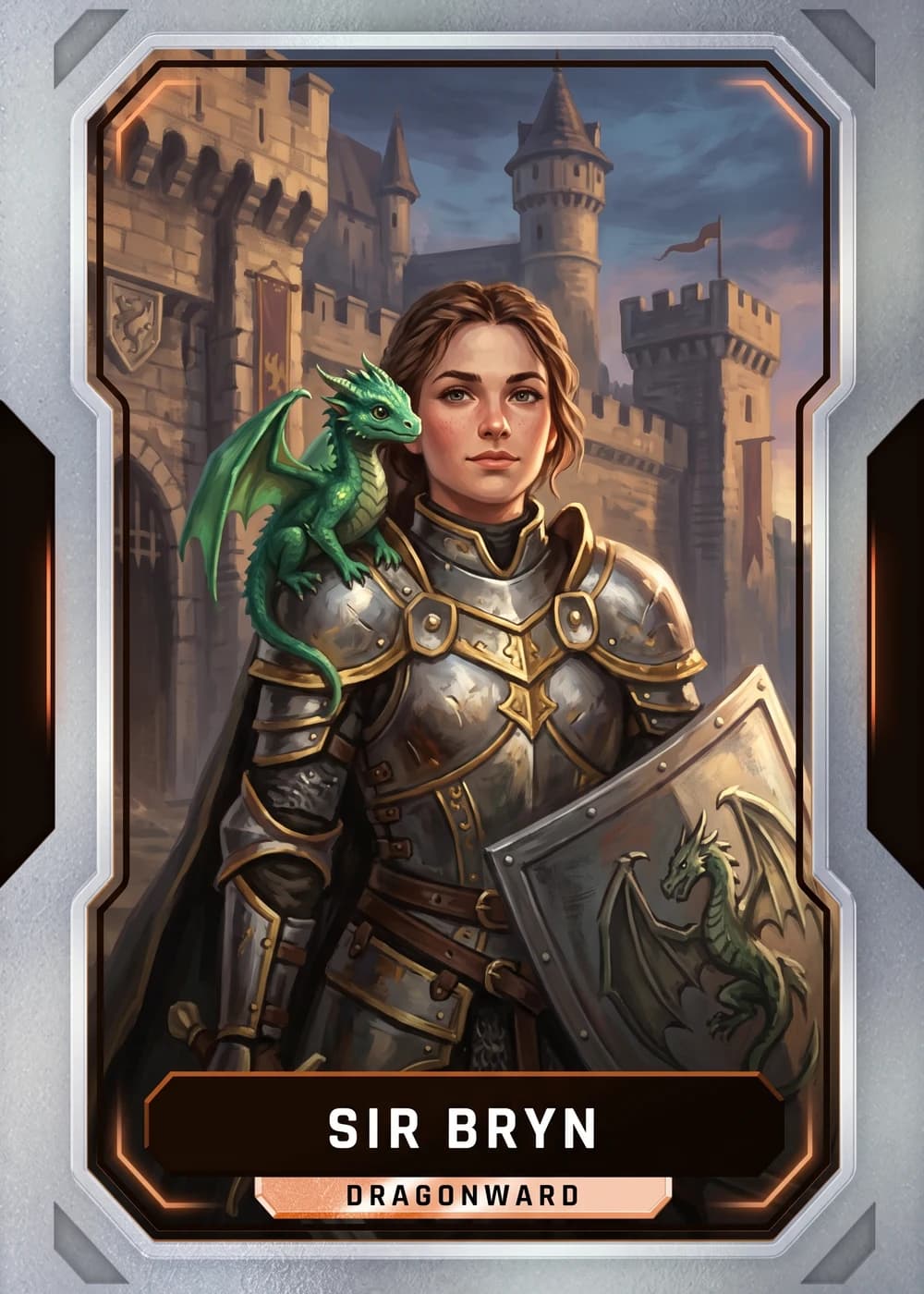



63 x 88 mm or 2.5 x 3.5 Inches?
Both. They describe the same card. Magic is specified in millimeters and the US sports-card industry is specified in inches, so each tradition rounded to a tidy number in its own system. Converting either one produces an untidy number in the other, which is the entire reason you see two figures quoted.
MTG, as specified
63 x 88 mm
The published size.
The same card, in inches
2.48 x 3.46 in
A direct conversion, rounded to two places.
Standard trading card
2.5 x 3.5 in
Equal to 63.5 x 88.9 mm.
Does the half-millimeter matter?
Not in practice. The difference between the two is 0.5 mm across and 0.9 mm tall. A standard deck sleeve has an opening of roughly 66 x 91 mm, which leaves about 3 mm of slack — several times the gap. The same is true of penny sleeves, 3 x 4 inch top loaders and nine-pocket binder pages.
You will find sources claiming this difference ruins custom print jobs. It does not. The thing that genuinely ruins a card is missing bleed, covered further down, which is a difference of an eighth of an inch rather than half a millimeter.
MTG vs Pokemon vs Yu-Gi-Oh
Two of the three big trading card games share a size. The third does not, and it is the one that catches people out when they buy sleeves.
| Game | Millimeters | Inches | Sleeve |
|---|---|---|---|
| Magic: The Gathering | 63 x 88 mm | 2.48 x 3.46 in | Standard |
| Pokemon | 63 x 88 mm | 2.48 x 3.46 in | Standard |
| Yu-Gi-Oh! | 59 x 86 mm | 2.32 x 3.39 in | Small / Japanese |
The Back of an MTG Card
The back of a Magic card is the same 63 x 88 mm as the front. A card is one piece of stock, so there is no separate back dimension to look up. What matters about the back is not its size but its uniformity: it is identical on every card in the game, which is what stops any card being identified while it is face down in a deck.
Uniformity is a rule, not a style choice
Because a shuffled deck must be unreadable from behind, a card whose back differs — through wear, a misprint or a substitution — has to be sleeved with the rest or it is marked. This is why sleeves are near-universal in competitive play.
A custom card has a custom back
Snapshot cards are printed on both faces from your own design, so the back carries your photo, stats or artwork. That makes them distinct from any published card, which is exactly what you want for a gift, a display piece or a keepsake.
Design the back to the same spec as the front
Same 2.5 x 3.5 inch cut size, same 2.625 x 3.625 inch artwork area with bleed, same 450 DPI. Nothing about the back is smaller or treated differently by the press.
Printing a Card at This Size
Design at 2.5 x 3.5 inches and add bleed on every side. The numbers below are Snapshot's own press specification, so a card built this way comes out at standard trading card size and sleeves alongside the rest of a collection.
Finished card
2.5 x 3.5 in
Standard trading card size, within half a millimeter of a Magic card.
Artwork area with bleed
2.625 x 3.625 in
0.0625 in extra per side, trimmed away after printing.
Print file
1181 x 1631 px
The artwork area at 450 DPI.
Safe margin
1/8 in
Keep text and logos this far inside the trim line.
A note on tournament play
Custom and proxy cards are not legal in sanctioned tournaments — those require authentic printings, however carefully a substitute is made. Custom cards are for casual games, playtesting, display and gifts. Snapshot prints from your own photos and designs, so what you get is your card rather than a copy of someone else's.
MTG Card Size Questions
What size is an MTG card?
A Magic: The Gathering card is 63 x 88 millimeters, which is about 2.48 x 3.46 inches. It is almost always quoted as 2.5 x 3.5 inches because that is the nearest standard imperial size and the difference is only half a millimeter. Every Magic card printed for normal play uses this size.
Are MTG cards 2.5 x 3.5 inches?
For every practical purpose, yes. The specified size is 63 x 88 mm and exactly 2.5 x 3.5 inches is 63.5 x 88.9 mm, so an inch-specified card is 0.5 mm wider and 0.9 mm taller. That gap is far smaller than the slack inside a standard sleeve, which is why one sleeve fits Magic cards and sports cards alike.
What size is the back of an MTG card?
The back of a Magic card is exactly the same size as the front — 63 x 88 mm. Both faces of a card are the same piece of stock, so there is no separate back dimension. What makes the back distinctive is its artwork and its uniformity: it is identical across the game so no card can be identified while face down.
Is MTG the same size as Pokemon and Yu-Gi-Oh?
Magic and Pokemon are the same size at 63 x 88 mm. Yu-Gi-Oh! is not — it uses the smaller Japanese size of 59 x 86 mm, roughly 4 mm narrower and 2 mm shorter. Magic and Pokemon share standard sleeves; Yu-Gi-Oh! needs small sleeves, and a standard sleeve leaves it loose.
What sleeves fit MTG cards?
Standard-size deck sleeves, with an opening around 66 x 91 mm, are made for 63 x 88 mm cards. They also fit 2.5 x 3.5 inch cards such as sports cards and custom prints. Do not use small or Japanese-size sleeves, which are cut for 59 x 86 mm cards and will not take a Magic card.
What size should a custom card file be to match an MTG card?
Design at 2.5 x 3.5 inches and add bleed. Snapshot prints that cut size from a 2.625 x 3.625 inch artwork area — an extra 1/16 inch on every side that gets trimmed away — which is 1181 x 1631 pixels at 450 DPI. The result shuffles and sleeves alongside standard cards.
Are custom or proxy cards legal in tournaments?
No. Sanctioned tournament play requires authentic cards, and a card that is not an official printing cannot be used regardless of how accurately it is made. Custom and proxy cards are for casual games, playtesting, display and gifts. Snapshot prints custom cards from your own photos, which are visually distinct from any published card.
Make a card at standard size.
Upload a photo, pick a template, and get a real 2.5 x 3.5 inch card that sleeves with the rest of your collection. No account needed to start.
Start Building