Best Settings for Sports Photography Canon Cameras
Blurry action shots are frustrating. The right Canon settings make the difference between a keeper and a throwaway.

Most photographers shooting sports for the first time dial in Auto mode and wonder why every image looks soft or overexposed. The truth is Canon cameras are incredibly capable, but they reward intentional manual control. Shutter speed, aperture, ISO, autofocus mode — each one directly affects whether you freeze a pitcher mid-release or end up with a motion-blurred mess. And when you're trying to capture a once-in-a-season moment, there's no room to guess. You need a reliable baseline before you ever step onto the sideline.
The best settings for sports photography Canon shooters rely on center around one core idea: prioritize shutter speed above everything else. Start at 1/1000s minimum for most sports. Use AI Servo autofocus to track moving subjects continuously. Set your aperture wide — f/2.8 to f/4 — to pull in enough light and separate your athlete from a busy background. Once you've nailed those fundamentals, the rest of the settings fall into logical place. This guide breaks it down myth by myth, fact by fact, so you leave with a real working setup.
Let's clear up the biggest misconceptions first, then build your ideal Canon settings checklist.
We ship custom sports cards to customers in all 50 states every week, handling photos from youth leagues, high school teams, and adult rec leagues alike.
How to Dial In the Best Settings for Sports Photography on Canon
Three adjustments account for roughly 90% of the improvement most Canon sports shooters see. Master these in order and the rest becomes fine-tuning.
Lock in Shutter Speed First
Set your Canon to Shutter Priority (Tv) mode and start at 1/1000s. For fast sports like lacrosse, volleyball spikes, or martial arts, push to 1/1600s or even 1/2000s. This single setting is responsible for freezing motion cleanly. Don't compromise here. Everything else — ISO noise, depth of field — is secondary to capturing a sharp, decisive moment worth printing.
Switch Autofocus to AI Servo Mode
Canon's AI Servo AF continuously recalculates focus as a subject moves toward or away from the lens. One-Shot AF locks and holds — fine for portraits, wrong for sports. Navigate to your AF menu, select AI Servo, then set your AF area to Zone AF or Tracking depending on your Canon model. Practice holding your subject in the active focus zone before the peak moment arrives.
Set ISO to Auto with a Hard Ceiling
Modern Canon bodies handle high ISO better than most shooters expect. Enable Auto ISO, then set the maximum ceiling based on your camera body — typically ISO 6400 for APS-C sensors, ISO 12800 for full-frame bodies like the R6 Mark II. This lets the camera compensate for changing light without you manually adjusting mid-burst. Review noise at 100% crop after the first few test shots.
Nail these three steps and you'll consistently produce the sharp, vibrant action shots that make great custom trading cards.
Why Sharp Sports Photos Actually Matter Beyond the Album
Getting the technical settings right isn't just about image quality — it directly determines what you can do with those photos after the game.
Print-Ready Resolution
A properly exposed, sharp RAW file from a Canon gives you the resolution to print at card size or even MEGA poster size without losing detail. Soft images look worse when enlarged. Correct settings preserve every detail — from jersey numbers to facial expressions — that make a custom card feel authentic.
Emotionally Powerful Moments
Freezing the exact frame of a home run swing, a winning goal celebration, or a first-place finish requires precise shutter control. Those moments don't repeat. A technically solid shot captures the emotion permanently, making it meaningful enough to hold in your hands as a printed keepsake card.
Better Background Separation
Shooting wide open at f/2.8 or f/4 throws distracting bleachers or sideline clutter into smooth blur. Your athlete becomes the clear subject — exactly what you want for a trading card layout where the background shouldn't compete with the player's presence.
Consistent Results Across Games
Once you've built a reliable Canon settings profile for your typical shooting environment — indoor gym, outdoor field, evening lighting — you can reproduce solid results every game. Consistency means you're building a photo library, not hoping for one lucky shot per season.
Canon Sports Photography Settings Checklist
- ✓Shutter speed set to 1/1000s minimum (1/1600s for fast sports)
- ✓Autofocus mode switched to AI Servo AF
- ✓AF area set to Zone AF or subject tracking
- ✓Drive mode set to High-Speed Continuous burst
- ✓ISO set to Auto with ceiling at 6400 (APS-C) or 12800 (full-frame)
- ✓Aperture at f/2.8 or f/4 for low-light or background separation
- ✓Image format set to RAW or RAW+JPEG
- ✓Image stabilization on (Sport mode if panning)
- ✓Memory card formatted and confirmed with enough capacity
- ✓Battery fully charged or spare battery in bag
Sports Photography Myths Canon Shooters Still Believe
Canon Sports Photography: Key Numbers to Know


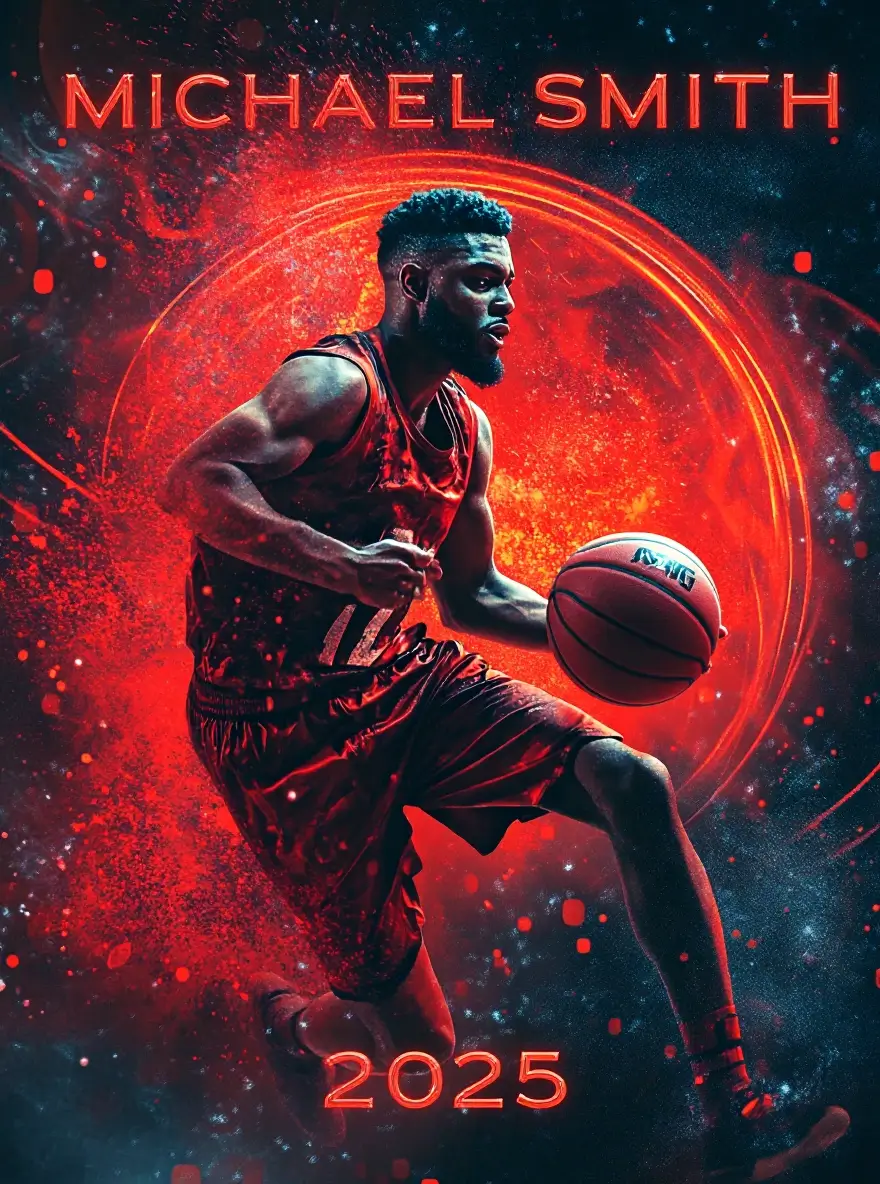

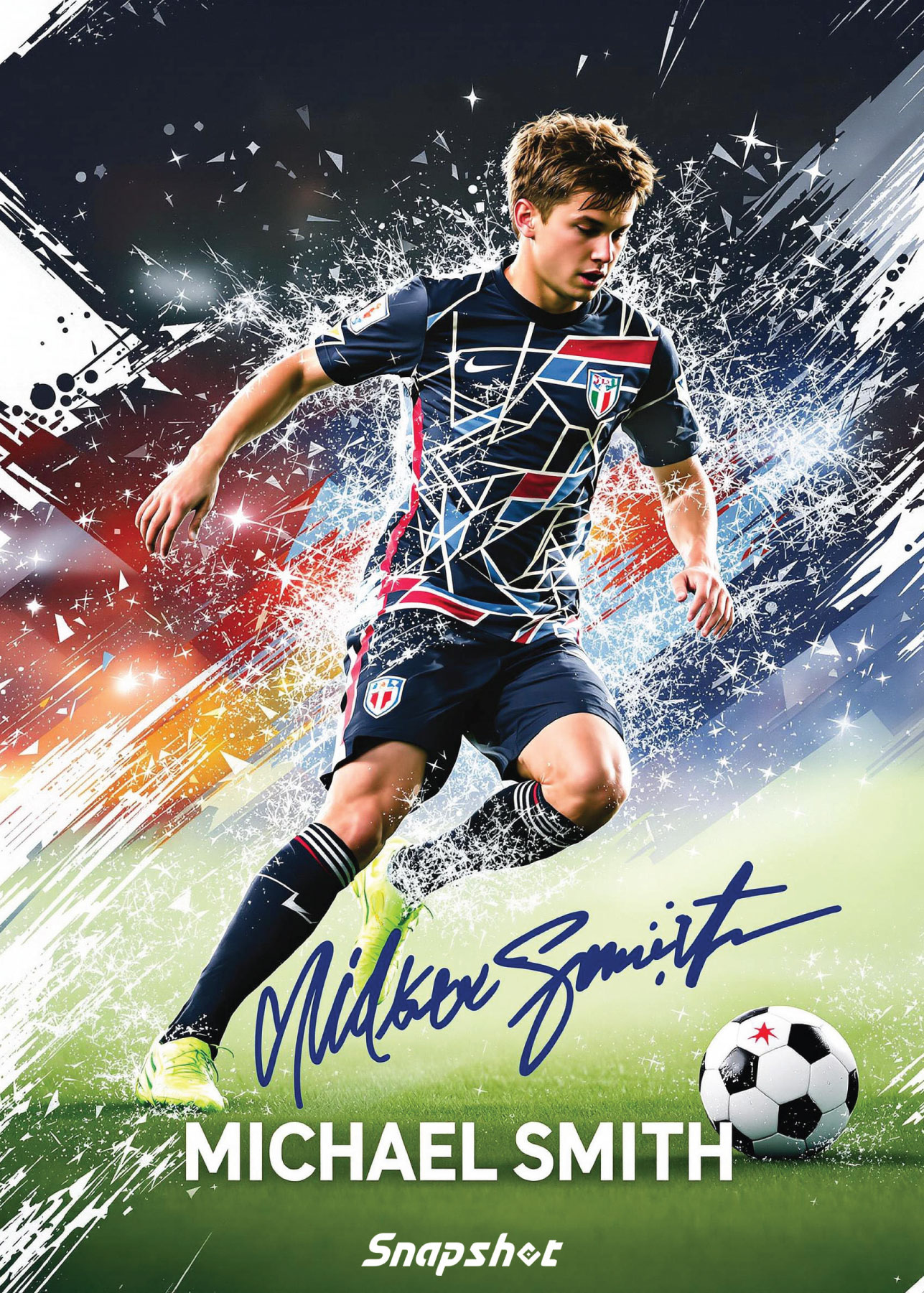
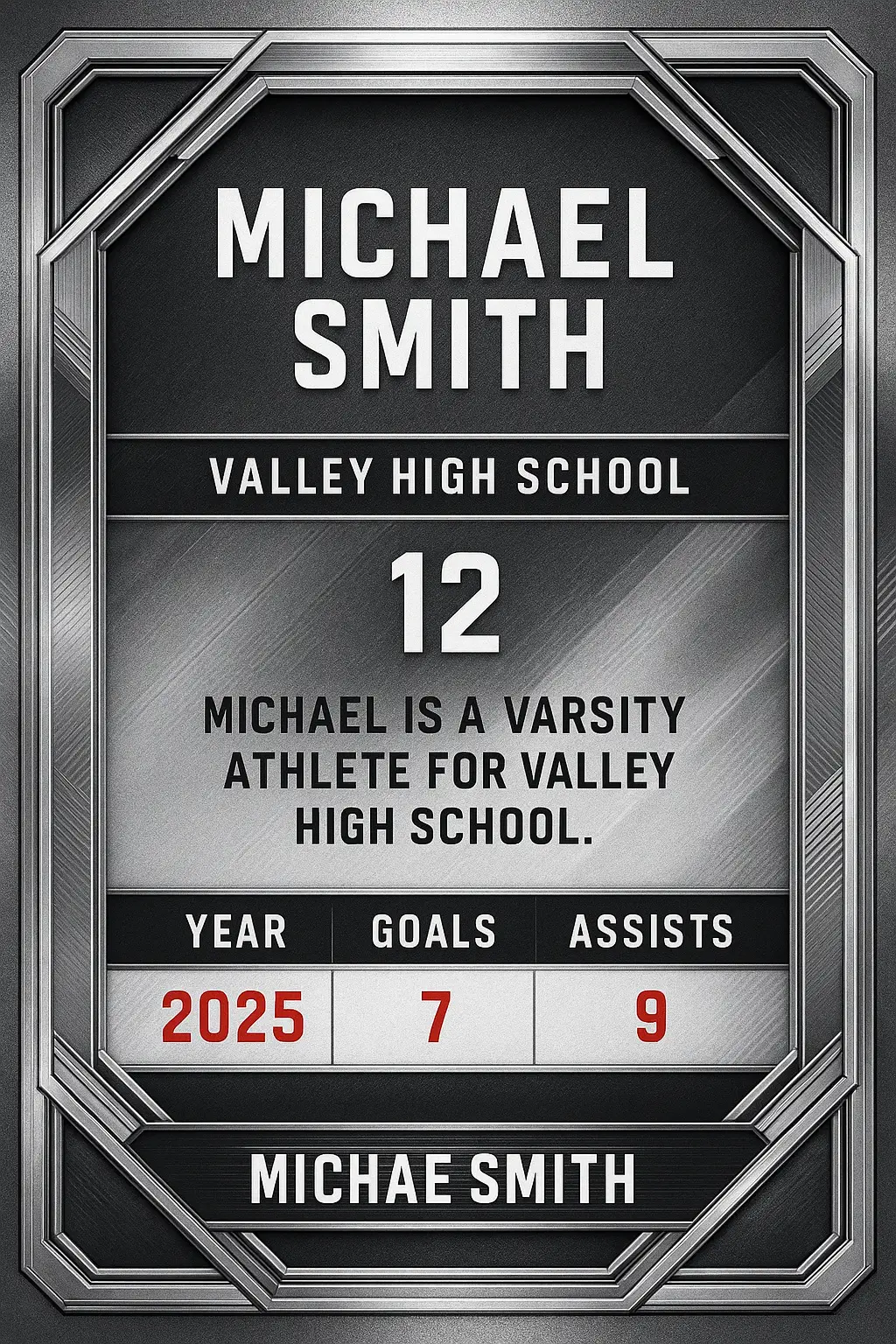

Which Athletes Benefit Most from Optimized Canon Settings
The best settings for sports photography Canon users need shift slightly by sport and environment. Here's how context changes your approach.
Youth and Recreational Athletes
Youth games often happen in poorly lit gyms with mixed fluorescent and LED sources. Crank ISO to 3200-6400, maintain 1/800s minimum shutter, and use a fast 50mm f/1.8 if a telephoto isn't available. These shots — a kid's first layup, a youth soccer goal — carry enormous sentimental value. Getting them sharp makes them worth printing into cards the whole family keeps.
High School and College Sports
Stadium and field lighting at this level is more predictable. You can often drop ISO to 800-1600 outdoors during day games. Use burst mode — Canon's high-speed continuous shooting — to capture a 6-8 frame sequence through a critical play, then select the peak frame. Senior night cards and team photo cards are popular gifts built from exactly these kinds of images.
Adult Rec Leagues and Special Events
Adult leagues, charity tournaments, and corporate sports events all produce moments people genuinely want to memorialize. The settings approach is the same, but the post-game opportunity differs — these crowds tend to want single-player cards or small packs as event souvenirs. A clean action shot from a well-configured Canon delivers exactly what's needed for a professional-looking finished card.
Why Sports Photographers and Parents Trust Snapshot
Snapshot ships custom sports cards to customers in all 50 states every week, from parents capturing youth league memories to coaches ordering team packs for end-of-season banquets. Every order is printed in Des Moines, Iowa on premium card stock and ships with a free magnetic case — because a great photo deserves better than a paper sleeve. Customers consistently return for additional orders once they see how well a sharp sports photo translates into a finished card.
Snapshot Pricing: What Does a Custom Sports Card Cost?
Simple, transparent pricing — no subscriptions, no minimums beyond a single card.
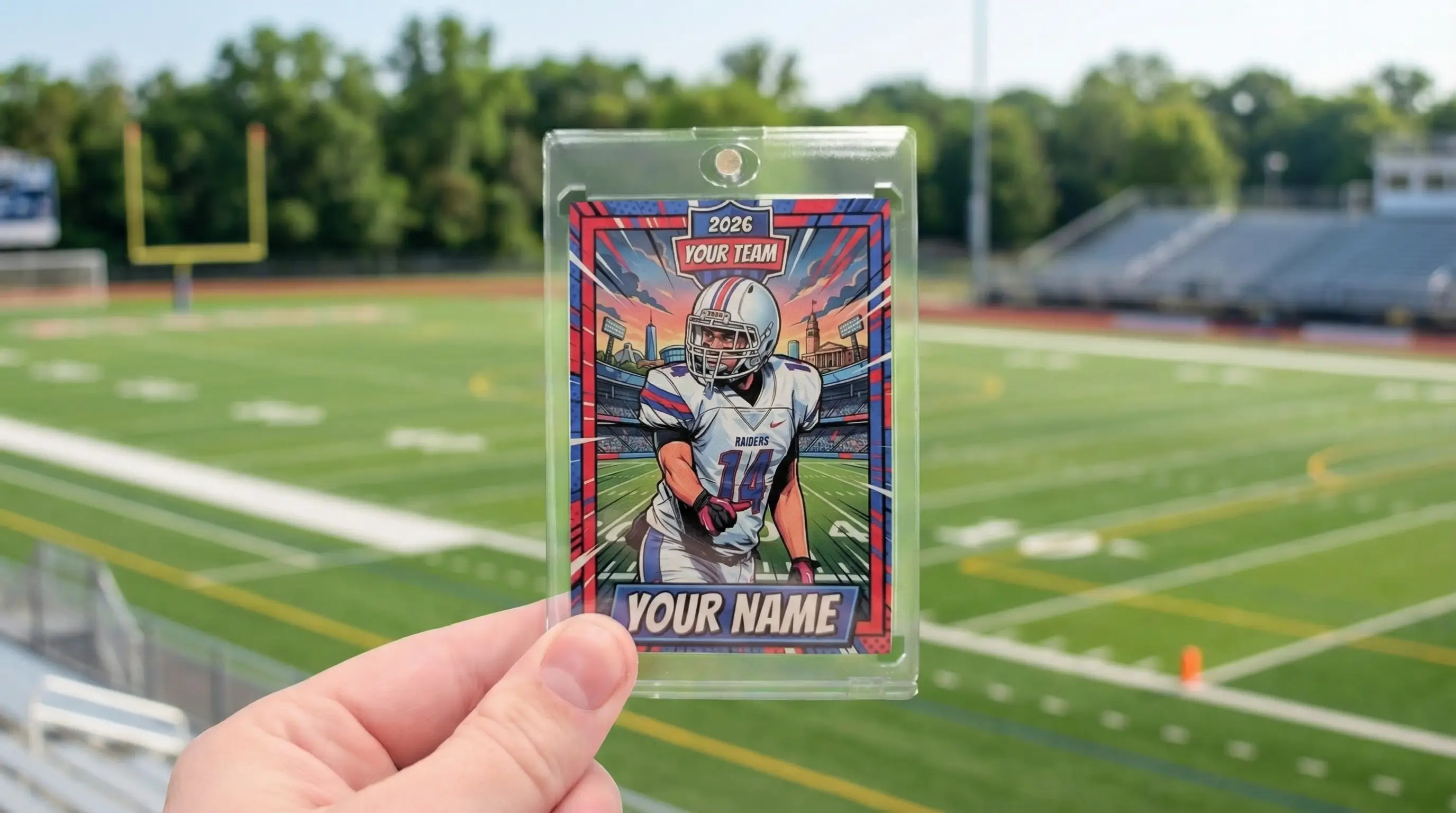
The Rookie Box
Perfect for those unforgettable moments
$17.99 - $49.99
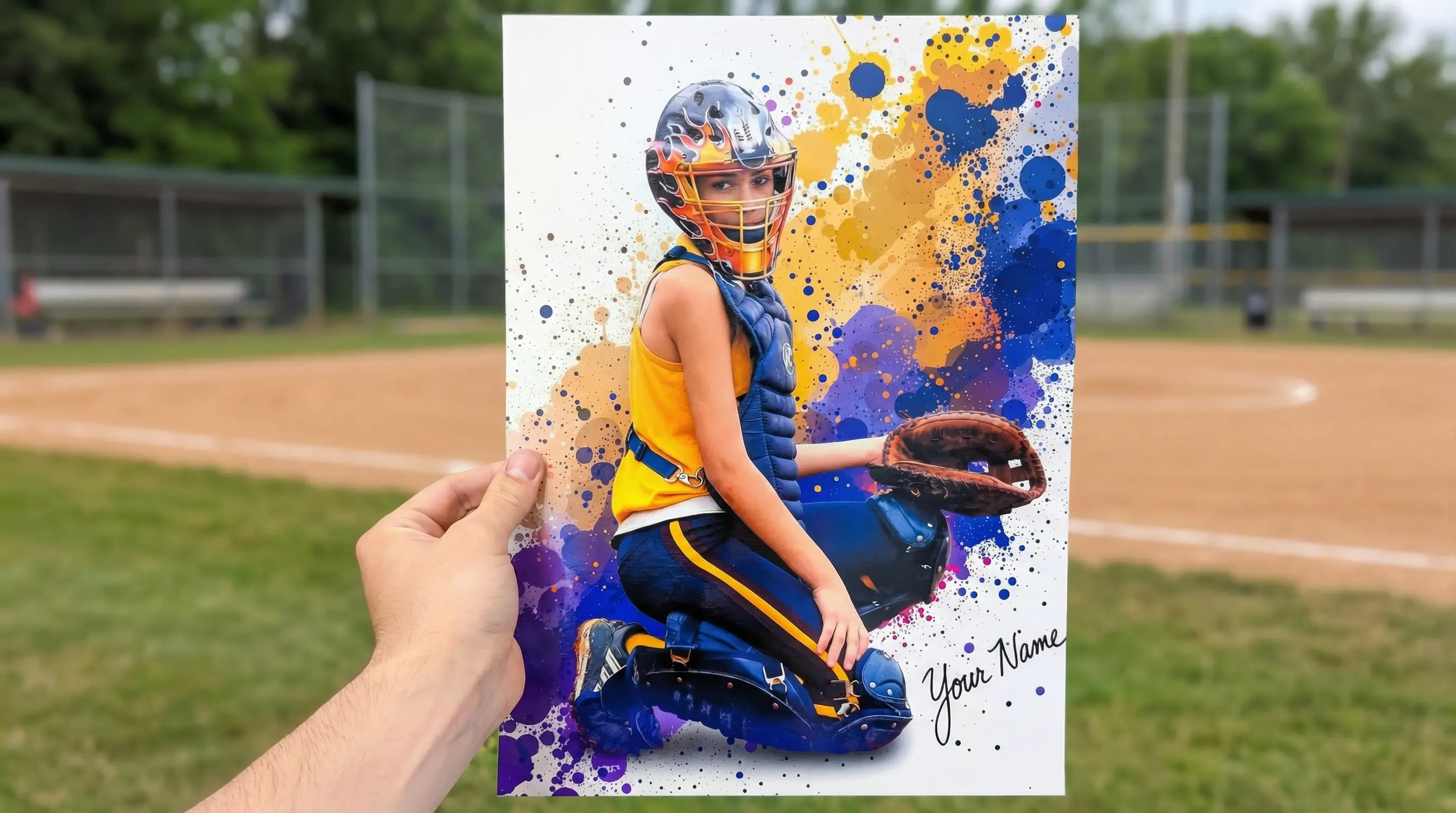
MEGA Card
Their moment, bigger than ever
$49.99
Create for free • Ships in 2-3 days • Made in Des Moines, IA, USA
Frequently Asked Questions
Everything you need to know about best settings for sports photography canon
What is the single most important Canon setting for sports photography?
Shutter speed. Every other setting can be adjusted around it, but nothing compensates for a shutter that's too slow. For most sports — running, jumping, throwing — set a minimum of 1/1000s. For faster actions like a tennis serve or a lacrosse shot, push to 1/1600s or 1/2000s. If your photos are still blurring, increase shutter speed before touching anything else. Once motion is frozen, then optimize aperture and ISO for the exposure and depth of field you want.
What autofocus mode should I use on my Canon for sports?
AI Servo AF is the correct mode for any moving subject. Unlike One-Shot AF, which locks focus at the moment you half-press the shutter, AI Servo continuously tracks and recalculates focus while you hold the button down. This is critical for sports where athletes move toward or away from you rapidly. Pair it with Zone AF or Canon's subject-tracking feature on newer mirrorless bodies for the best hit rate across a burst sequence.
Should I shoot RAW or JPEG for sports photography on Canon?
RAW gives you far more flexibility in post-processing — you can recover blown highlights, fix white balance, and sharpen selectively without degrading image quality. The tradeoff is larger file sizes and slower burst buffer clearance on some Canon bodies. If you're shooting a Canon R-series or the 7D Mark II, the buffer handles RAW bursts well. If buffer speed is a concern, RAW+JPEG gives you both options. For printing custom cards, the resolution advantage of RAW is worth the workflow.
What's a myth about Canon autofocus in sports photography?
The myth is that more AF points always means better tracking. In reality, using too many active AF points in a cluttered scene — like a court full of players — often causes the camera to lock onto the wrong subject or the background. A more controlled Zone AF selection, or a single large tracking zone centered on your intended subject, produces more reliable results than relying on the full 45- or 65-point spread. Fewer active zones, intentionally placed, beats maximum points used passively.
Does aperture matter much for sports photography?
Aperture matters for two reasons: light intake and background separation. Shooting at f/2.8 or f/4 lets in significantly more light than f/8, which helps maintain fast shutter speeds in lower-light conditions without pushing ISO too high. It also creates a shallow depth of field that blurs busy backgrounds behind your subject — bleachers, fencing, other players — which makes the athlete stand out clearly. That separation is visually important, especially if you're planning to use the photo for a printed trading card.
What Canon lens is best for sideline sports photography?
A 70-200mm f/2.8 is the workhorse choice — versatile enough to shoot mid-range action and tight enough to fill the frame from the sideline. For smaller venues or budget shooters, the 70-200mm f/4 is lighter and still sharp. If you're shooting at larger fields where athletes are farther away, the 100-400mm f/4.5-5.6 adds reach with solid image stabilization. Prime lenses like the 300mm f/4 offer exceptional sharpness for fixed-distance sports like track, swimming, or baseball outfield plays.
How does image stabilization interact with sports photography settings?
Image stabilization compensates for camera shake — movement from your hands holding the camera. At fast shutter speeds like 1/1000s or higher, camera shake isn't your problem anyway; subject motion is. So IS matters most when you're shooting below 1/500s, or when you're handholding a long telephoto lens that amplifies any small movement. On Canon lenses with Sport IS mode, that setting is optimized for panning shots where you're tracking a moving subject. Standard IS mode can actually fight you when panning, so switch it off or to Sport mode.
Can I use Canon's burst mode for every sports situation?
Burst mode is a tool, not a strategy. It's genuinely useful for peak-action moments — a jump shot, a tackle, a finish-line crossing — where the decisive frame is one of 6-10 images shot in quick succession. But spraying burst mode throughout an entire game fills your card fast, slows your workflow, and doesn't replace anticipating the moment. Use burst mode as a bracket around moments you've already anticipated, not as a substitute for reading the sport and positioning yourself correctly.
What white balance setting works best for sports in different lighting?
Auto White Balance works reasonably well for outdoor daylight sports and will get you close. For indoor arenas with mixed lighting — common in gyms and recreation centers — AWB can drift and produce color casts between shots. If you're shooting JPEG and printing directly from those files, set a custom white balance by measuring a gray card under the venue's lights. If you're shooting RAW, AWB is acceptable because you'll correct color accurately in post before uploading your best shots for card printing.
How do I turn a great sports photo into a custom trading card with Snapshot?
Once you've captured a sharp action shot using optimized Canon settings, upload it directly to Snapshot's website. Choose from professionally designed sports card templates, position your photo within the layout, and add any text you want — name, team, stats, year. Snapshot prints on premium card stock and ships your finished card with a free magnetic case in 2-3 days anywhere in the USA. Single cards start at $17.99, packs go up to $49.99, and the MEGA 11×15 poster card is available for standout moments that deserve a bigger canvas.
Used the Best Settings for Sports Photography Canon Style? Now Make a Card.
You've put in the work to capture a great action shot. Don't let it sit on a hard drive. Upload your photo to Snapshot, pick a pro template, and get a premium custom sports card printed and shipped to your door — free shipping, 2-3 day delivery, free magnetic case included.
No credit card required | Instant preview | Pro-quality designs
Explore More Card Options
Discover more custom trading card options for every sport and occasion
Order Sports Photography Settings Canon
Create custom cards →
Order Best Settings For Sports Photography
Create custom cards →
Order Canon Sports Photography Settings
Create custom cards →
Order Canon Rebel T7 Sports Photography Settings
Create custom cards →
Order Night Sports Photography Settings Canon
Create custom cards →
Order Best Camera Settings For Sports Photography
Create custom cards →