
Why Do Some Sports Only Allow Younger Athletes Olympics Rules Exist
Gymnastics has age floors. Marathon swimming doesn't. There's a reason, and it's not random.
Upload any photo — your kid, your pet, your whole team — pick a pro template, and we print and ship a real, holdable card the next business day.
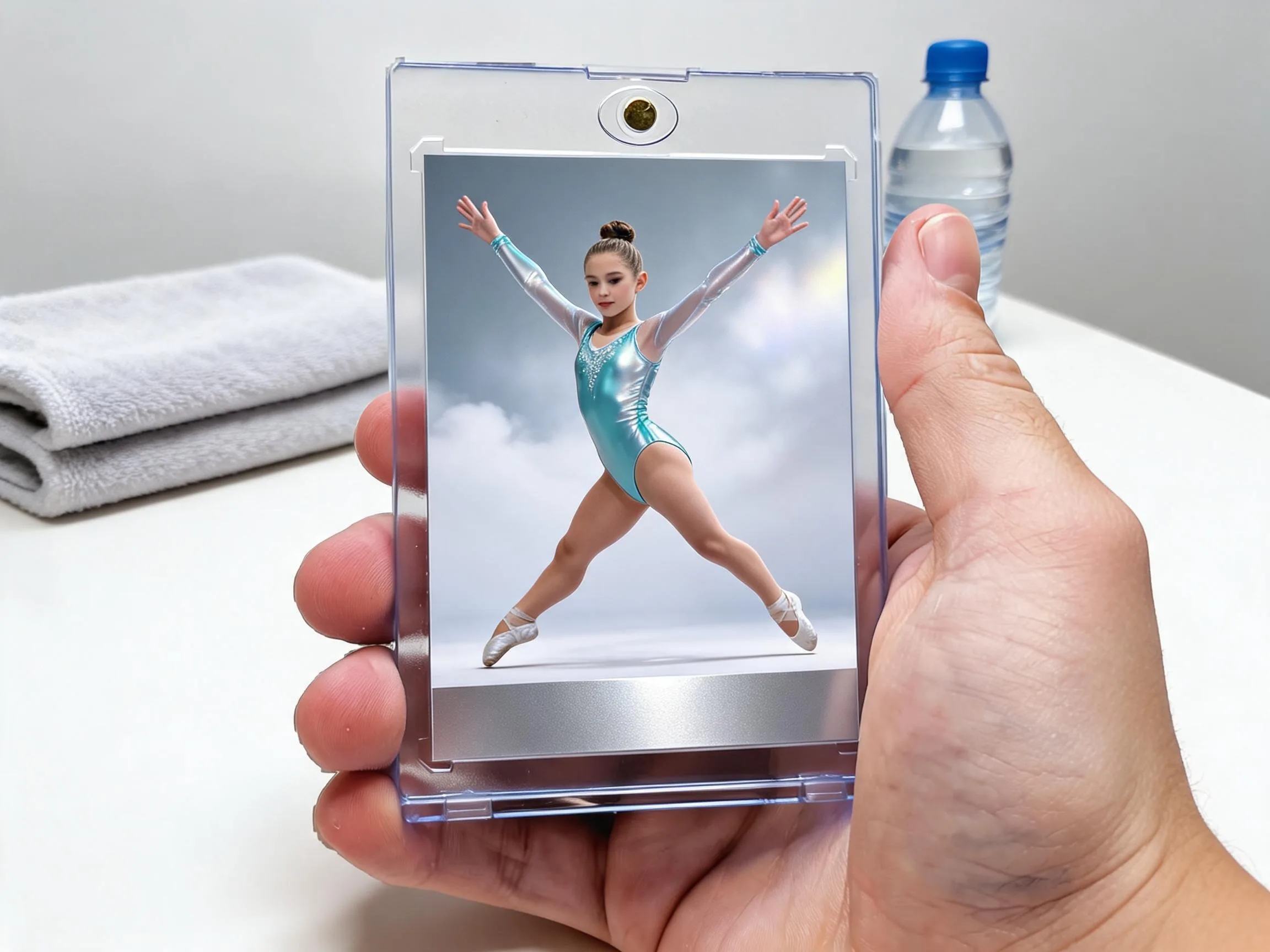
Parents watching the Olympics with their kids always ask the same question: why do some sports only allow younger athletes Olympics events while others let competitors stay in the game into their 40s? It looks inconsistent from the couch. One sport bans 14-year-olds, another practically requires teenage bodies to compete at the top level. The rules aren't arbitrary — they're built around safety, body development, and how each sport's governing body defines fairness and risk. But if you're not steeped in international sports policy, the logic isn't obvious at all.
The short version: age rules track injury risk, physical maturation curves, and each federation's own governance decisions — not one universal Olympic law. Gymnastics, figure skating, and boxing set minimums to protect developing bodies and reduce exploitation risk. Sports like shooting, equestrian, and sailing skew older because they reward experience over raw physical peak. Once you see the pattern sport by sport, the whole thing stops feeling random and starts feeling like a playbook.
Here's how the actual rules break down, sport by sport, and what it means for young athletes chasing that dream.
We ship custom cards to youth teams and families in all 50 states every week, including plenty tied to milestone seasons like these.
Free to design, instant preview. Ships the next business day.
What Families Actually Gain From Understanding These Age Rules
Knowing why these limits exist changes how parents plan a young athlete's path toward Olympic-level competition.
Realistic timeline planning
If your kid's sport has a minimum age, you know exactly when eligibility opens and can plan training intensity around it instead of guessing or overtraining too early.
Injury-prevention perspective
Understanding that age floors exist because of real injury data helps parents push back on coaches or programs pressuring young athletes past safe training loads.
Better conversations with young athletes
Kids ask why they can't compete yet. Having the real answer — body development, not unfairness — helps them stay motivated instead of discouraged.
Appreciation for the whole journey
Once you understand the rules, every meet, qualifier, and season leading up to Olympic eligibility becomes a milestone worth marking and remembering.

Where This Question Comes Up Most for Youth Athletes
This isn't just Olympic trivia — it shapes real decisions for youth sports families across the country.
Youth gymnastics and figure skating families
Parents of competitive young gymnasts and skaters track these age rules closely because eligibility windows directly affect training plans, competition entries, and whether a child aims for one Olympic cycle or the next. Coaches build multi-year plans around these exact rules.
Youth swim and track programs
These sports have no Olympic minimum age, so families sometimes see prodigies as young as 12 or 13 make waves nationally. That creates a different conversation about readiness, one this article's logic directly informs.
End-of-season celebrations
Whether a young athlete just hit a new age-eligible category or wrapped a breakout season, teams and families look for a way to mark the moment — something more lasting than a trophy that ends up in a closet.
Why Youth Teams Nationwide Trust Snapshot for These Moments
Snapshot ships custom cards to youth teams and families in all 50 states, printed on premium card stock and shipped in 2-3 days. Coaches and parents use them to mark exactly the kind of milestone this article covers — a new age bracket, a first qualifying meet, a breakout season.

Frequently Asked Questions
What is the minimum age for Olympic gymnastics right now?
Gymnasts must turn 16 within the calendar year of the Olympics to compete at the senior level, a rule the International Gymnastics Federation raised from 14 several years back. The change followed growing evidence that elite training loads at younger ages were causing stress fractures, growth-plate damage, and long-term joint issues that didn't show up until years later. It also addressed concerns about very young athletes being pushed into extreme training regimens before their bodies or minds were ready for that level of pressure. This doesn't mean younger gymnasts can't compete nationally or internationally in junior competitions — they absolutely can, and many do at very high levels. It just means the Olympic senior stage specifically requires that age threshold. Coaches and families planning a gymnast's path toward the Olympics build entire multi-year training arcs around this exact number, timing peak competition years to align with eligibility. It's one of the clearest, most well-documented examples of an age rule built directly from injury data rather than tradition or convenience.
Are there Olympic sports with no age limit at all?
Yes, quite a few. Equestrian, sailing, shooting, and even some equestrian-adjacent disciplines have no age ceiling and often no real minimum beyond basic child-safety thresholds. These sports reward experience, precision, and judgment over raw physical explosiveness, so age doesn't work against a competitor the way it might in sprinting or gymnastics. It's actually common to see equestrian athletes competing in their 50s and 60s at the Olympic level, sometimes outperforming competitors decades younger. Shooting sports work similarly — steady hands and mental focus don't decline the same way sprint speed does. This is part of why the answer to why some sports only allow younger athletes Olympics rules isn't one-size-fits-all; it's sport-specific logic based on what actually determines performance and risk in that discipline. If a sport doesn't punish the body physically and doesn't reward youthful reflexes above all else, there's usually no reason for a federation to restrict participation by age in either direction.
Why did figure skating raise its age minimum recently?
The International Skating Union raised the senior-level minimum age from 15 to 17, phased in gradually, specifically to protect young skaters from the physical and psychological toll of elite competition at very young ages. This followed years of criticism after several high-profile cases where teenage skaters, some barely into their teens, competed at the senior Olympic level under intense international pressure. Medical experts had raised concerns for years about how repetitive jumping and rotation impact still-developing hips and spines in very young competitors. There were also broader concerns about the emotional and psychological weight of Olympic-level scrutiny landing on young teenagers rather than young adults. The rule change was controversial in skating circles because it meant some athletes who would have qualified under old rules had to wait additional years, restructuring entire training plans. But the federation ultimately decided the long-term health and well-being of skaters mattered more than allowing the youngest possible talent onto the biggest stage. It's one of the more recent and well-documented age rule changes in Olympic sport.
Does the IOC set one universal minimum age for the Olympics?
No, and this is where most confusion starts. The IOC provides overall Olympic Charter guidance but leaves specific age eligibility rules to each sport's international federation, which knows the injury risks and competitive demands of that discipline far better than a general oversight body would. That's why gymnastics has a strict 16-year minimum while track and field has essentially no minimum age at the international level, provided an athlete qualifies through normal channels. It's also why you'll occasionally see a 13 or 14-year-old swimmer or skateboarder at the Olympics while a gymnast of the same age would be barred outright. This decentralized approach means age rules can and do change over time as federations update their thinking based on new medical research or changing attitudes toward athlete welfare. It's not a flaw in the system so much as a deliberate choice to let subject-matter experts in each sport make decisions suited to that sport's specific physical and psychological demands rather than forcing one blanket rule across wildly different disciplines.
Can a 14-year-old compete in the Olympics in any sport?
Yes, in several sports, though it's become less common as more federations tighten age minimums over recent Olympic cycles. Swimming, diving, and skateboarding have all seen competitors around 13 or 14 years old at recent Games, since those federations don't impose the same age floors gymnastics or figure skating do. Table tennis and some winter sports have also seen very young Olympic competitors historically. That said, qualifying for the Olympics at that age requires an extraordinary level of talent and training, since the competition pool includes athletes decades older with more experience and often more resources. It's worth noting that even in sports without formal age minimums, coaches and national federations often use their own internal judgment about whether a very young athlete is ready for that level of exposure and pressure. So while the rules might technically allow it, plenty of informal gatekeeping still happens before a 14-year-old actually reaches the starting line at an Olympic Games.
Why does boxing have age restrictions at the Olympics?
Olympic boxing sets age minimums largely around medical and safety concerns tied to head injury research, since repeated blows to a still-developing brain carry serious long-term risk that's better understood now than it was decades ago. The International Boxing Association and Olympic boxing governance require athletes to meet specific age thresholds along with medical clearance before competing at the senior international level. This is different from professional boxing, which sometimes allows younger fighters into lower-tier competitions under different oversight. The Olympic setting specifically prioritizes athlete safety given the global visibility and pressure involved, and medical panels are typically part of the clearance process beyond just checking a birth certificate. Age minimums in combat sports tend to be taken especially seriously because the injury risk isn't hypothetical — it's well-documented in decades of sports medicine literature on concussion and long-term neurological effects. So when people ask why some sports only allow younger athletes Olympics rules seem stricter in some areas, boxing is actually an example of the opposite: a sport where age minimums protect against risks concentrated in youth, not eliminated by it.
Free to design, instant preview. Ships the next business day.






Mark the Season Before the Next Age Bracket Arrives
Now that you know why do some sports only allow younger athletes Olympics rules exist, celebrate wherever your young athlete stands right now. Upload a photo, pick a pro-style template, and get a premium custom card shipped in 2-3 days.
Create Your Card NowNo credit card required | Instant preview | Pro-quality designs
Explore More Card Options
Discover more custom trading card options for every sport and occasion
Order Young Athletes Special Olympics
View card options →
Order Sports Nutrition For Young Athletes
View card options →
Order Special Olympics Young Athletes
View card options →
Order Sports Nutrition For Young Athletes Pdf
View card options →
Order Young Athletes
View card options →
Order Young La Athletes
View card options →