
Size of Trading Card 101: Every Standard, Checked and Compared
Grab any pack from any decade — the size of trading card standards hasn't budged much, and that's exactly why it matters.
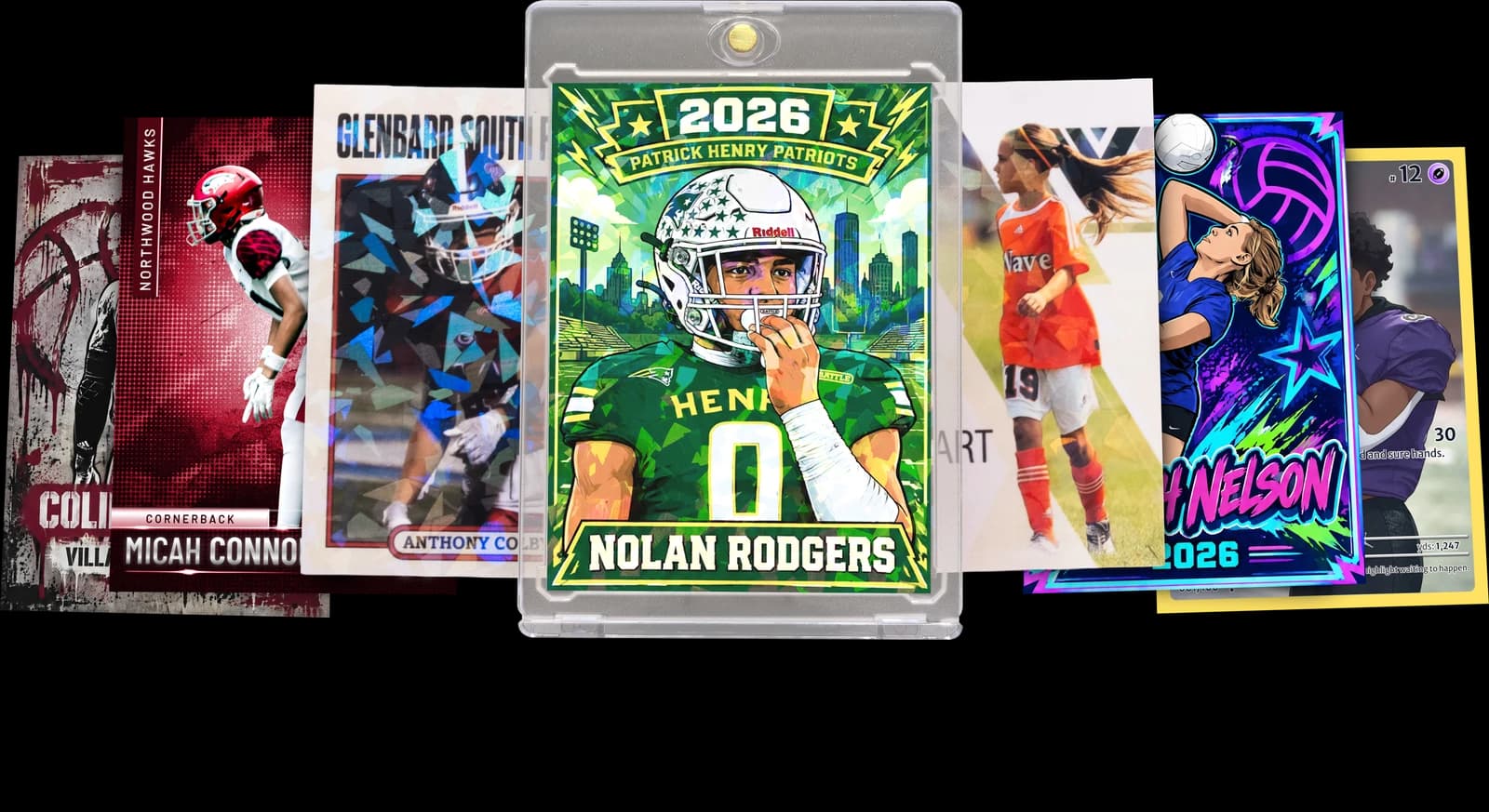
Upload a photo of your player, pet or team, choose an available template, and preview your design before ordering a printed card.
Here's where people get stuck: they search the size of trading card online and get five different answers, half of them wrong. Some sites confuse tobacco-era dimensions with modern standard sizes. Others mix up postcard-size oddballs with the 2.5 x 3.5 inch format that's dominated shelves since the 1950s. If you're building a custom card, sizing it wrong means it won't fit in a standard sleeve, a toploader, or a nine-pocket page. That's a real problem when you're trying to protect something you made yourself.
We print custom cards every week and we've sized more photos than we can count, so let's settle it plainly. The standard size of trading card sits at 2.5 inches by 3.5 inches — that's the size baseball, basketball, football, and just about every modern set uses. Snapshot builds every card to that exact spec, on premium card stock, so it drops straight into any standard case or sleeve without trimming or guessing.
Let's walk through the standard, the outliers, and how to turn your own photo into a card that fits everything you already own.
We ship custom cards to collectors and gift-givers in all 50 states every week, and standard sizing questions are the ones we field most often.
What Customers Notice First When Their Cards Arrive
The first thing people mention isn't the design — it's that the card slides right into the sleeve they already had waiting. Orders ship out of Des Moines fast enough that most customers are surprised the 2-3 day window actually holds, even during busy seasons.
Who Actually Needs the Correct Size of Trading Card?
Almost anyone making a personal keepsake card benefits from getting the size right the first time — here's where it shows up most.
Marking a personal milestone
Finished a marathon, hit a personal best in a rec softball league, landed your first hole-in-one — a standard-size custom card turns that one photo into something you can actually hold, sleeve, and keep on a shelf instead of buried in a camera roll.
Gifting something nobody else thought of
A correctly-sized custom card fits right into a gift alongside a real toploader or a small display stand, which makes it feel like a genuine collectible instead of a printed photo. That's the difference standard sizing makes.
Building a personal collection from scratch
Hobbyists creating their own sets — family sports nights, fantasy league champions, weekend tournament brackets — need every card in the batch to match standard dimensions so the whole collection stores and displays as one clean unit.
Free to design, instant preview. Free US standard shipping on orders $30+. Review delivery options at checkout.
How Do You Get the Size of Trading Card Standard Right, Every Time?
You lock the size in three steps, and none of them require a ruler on your end.
Upload your photo
Drop in any photo — a phone shot from the rec league game, a scanned print from 1998, a screenshot from your kid's swim meet. Snapshot's system reads the image and preps it for the standard 2.5 x 3.5 inch canvas automatically, so you're not stuck cropping pixels by hand or guessing at aspect ratios.
Pick a pro-style template
Choose from templates built to mirror pro sports-card layouts — stat boxes, team colors, foil-style accents, rookie banners. Every single template is pre-set to the correct size of trading card dimensions, so the design never overflows the edge or gets awkwardly cropped when it prints.
Print, package, ship
Your card gets printed on premium card stock sized to exact standard specs, then packed with a free magnetic case. Production takes one business day; shipping time is quoted at checkout for your address.
Three steps, zero guesswork, and a card that fits every case on the market.
Why Standard Sizing Actually Matters for Your Cards
Size isn't just a spec sheet detail — it decides whether your card gets displayed or shoved in a drawer.
Fits every sleeve and toploader on the market
Because Snapshot sticks to the true standard size of trading card format, your finished piece slides into any 2.5 x 3.5 sleeve, toploader, or nine-pocket page you buy at any hobby shop, no exceptions.
Stacks clean in binders and boxes
Standard size means your custom card sits flush next to licensed cards from any brand. No warped pages, no bulging pockets, no card that sticks out and gets bent at the corner.
Display-ready straight out of the box
The included free magnetic case is built for standard dimensions, so there's no fumbling with adapters or foam inserts. Open it, look at it, done.
Built to last on real card stock
Printed on premium card stock designed to hold color and resist wear, your card survives handling, shipping, and years in a binder without fading or curling at the edges.
What Does It Cost to Get the Right Size of Trading Card Made?
Pricing stays simple whether you're ordering one card or building out a full set.
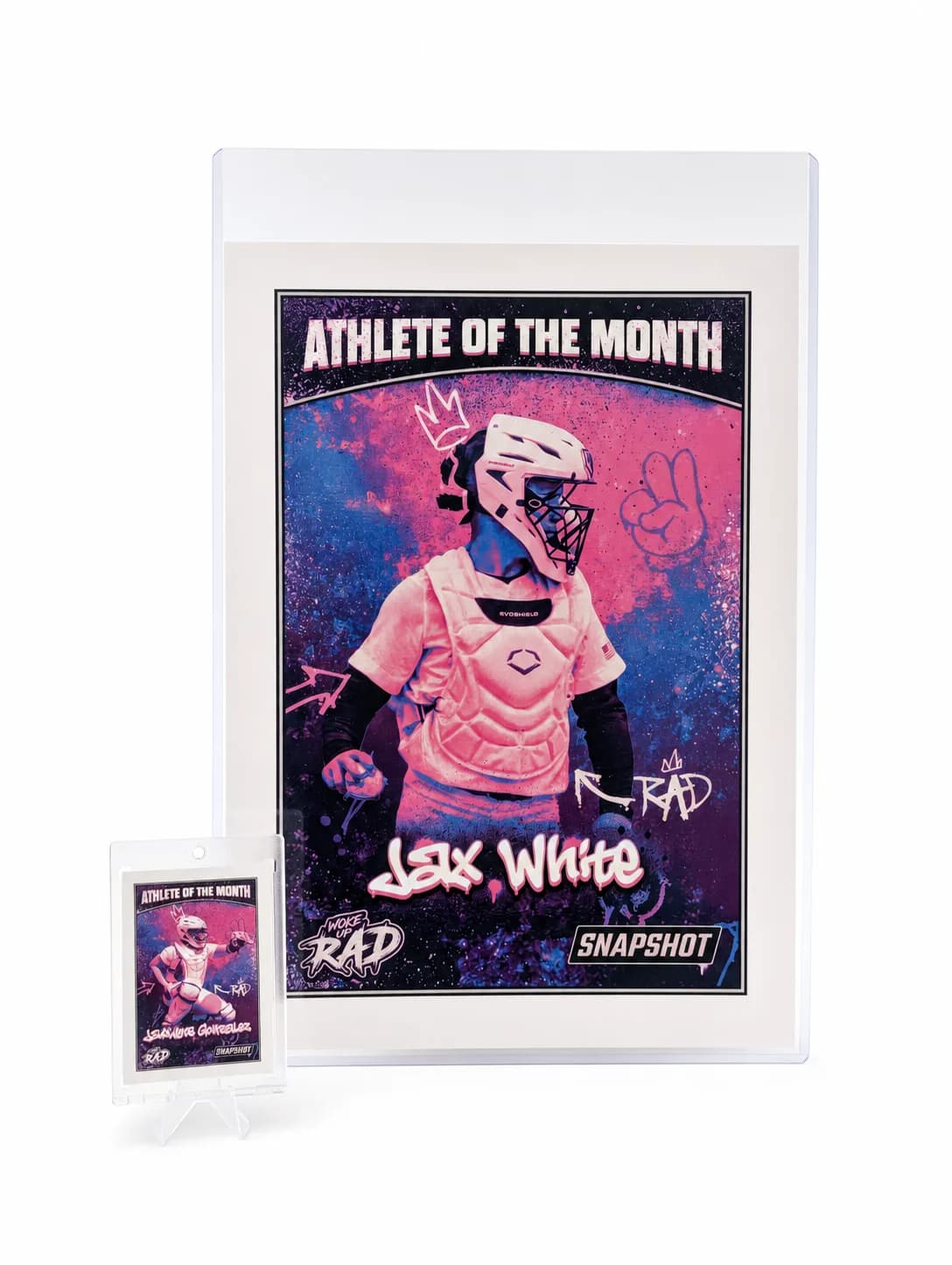
Single custom card: $17.99. Packs: up to $49.99. MEGA 11 x 15 inch poster card: $49.99. Free shipping over $30 across the USA, every order.
One flat price gets you standard-size accuracy, premium card stock, a free magnetic case, and shipping — no add-ons required to get it right.
Box Options
Simple, collectible pricing. No subscriptions, no hidden fees.
The Rookie Box
Perfect for those unforgettable moments
$17.99 - $49.99
MEGA Card
Their moment, bigger than ever
$49.99
Create for free • Ships the next business day • Made in Des Moines, IA, USA
Frequently Asked Questions
How thick is a standard trading card compared to regular paper?
A standard trading card is noticeably thicker and stiffer than regular printer paper or photo paper, which is what gives it that satisfying snap when you flip through a stack. Snapshot prints on premium card stock chosen specifically to match that familiar hobby feel — sturdy enough to survive shuffling, sleeving, and shipping without bending. Regular paper folds and creases easily, and photo paper tends to be glossy but flimsy, neither of which holds up in a toploader long-term. Card stock strikes a middle ground: rigid enough to protect the print, but not so thick that it won't fit standard-size cases. That's an important distinction if you're building something meant to last years in a binder rather than a one-time printout you'll toss after a few months. The goal is a card that feels like it belongs next to the real thing, and thickness plays a bigger role in that impression than most people expect going in.
Can I get a custom card in a size other than standard?
Snapshot does offer the MEGA option, an 11 x 15 inch poster card for people who want a big statement piece instead of a pocket-size collectible. It's priced at $49.99, the same as our largest packs, and it's popular for milestone moments people want to frame or display prominently rather than store in a binder. Outside of that oversized option, our core product line sticks to the true standard 2.5 x 3.5 inch trading card size, because that's what fits existing collector supplies and what most customers actually want. If your goal is something you can sleeve, stack, and trade alongside other cards, standard size is the way to go. If you want something that hangs on a wall or sits on a desk as a centerpiece, the MEGA card fills that gap nicely. Think about where the card will actually live before you decide — a drawer full of standard cards behaves very differently than one big poster card leaning against a shelf.
Why do some old trading cards look smaller than new ones?
Older cards, especially those from the tobacco era in the early 1900s through some sets in the 1930s and 1940s, were often printed smaller than today's standard, sometimes closer to 1.5 x 2.5 inches or other odd dimensions entirely. Manufacturing standards weren't unified yet, so different companies ran different sizes depending on what fit their printing equipment at the time. It wasn't until the postwar boom in the 1950s that the 2.5 x 3.5 inch size started becoming the industry norm, largely because it fit standard printing sheets efficiently and worked well with the packaging of the era. By the 1980s, virtually every major manufacturer had settled on that size, and it's stayed locked in ever since. So if you've ever compared a card from your grandfather's collection to one from last year's set, the size difference you're noticing isn't your imagination — it's decades of industry standardization finally catching up to a consistent format everyone recognizes today.
Does Snapshot print cards on both sides?
Yes, Snapshot cards print front and back, which lets you include a photo on one side and details like a name, stats, date, or a short message on the reverse, similar to how a real trading card is laid out. That two-sided format is part of what makes the final product feel authentic rather than like a single printed photo. Many customers use the back for a fun stat line, a personal note, or even a joke between friends, depending on who the card is for. Both sides are printed on the same premium card stock, so there's no difference in durability or feel between front and back. This also matters for display purposes — cards in magnetic cases or top-loaders often get flipped or displayed back-out at times, so having a clean, intentional design on both sides means the card looks finished no matter which way it's facing. It's a small detail, but it's one that separates a real custom card from a basic printout.
How fast will my custom card ship?
Production takes one business day; shipping time is quoted at checkout for your address. That turnaround covers everything from the moment your design is finalized to the moment it leaves our facility, so you're not waiting weeks like you might with some print-on-demand services. We've built our process specifically around speed because a lot of orders are tied to time-sensitive moments — birthdays, tournament wins, holiday gifts — where a slow shipment defeats the purpose entirely. If you're ordering for something like a holiday or a birthday, we'd suggest placing the order at least a week ahead just to build in a buffer. Most customers tell us the turnaround was faster than they expected going in.
What's the difference between a single card, a pack, and the MEGA card?
A single custom card runs $17.99 and gets you one standard 2.5 x 3.5 inch card in a free magnetic case, which covers most one-off gifts or personal keepsakes. Packs go up to $49.99 and let you order multiple cards at once, which makes sense if you're building a small personal collection, making cards for a group of teammates, or want a few design variations of the same photo. The MEGA card, also $49.99, ditches the standard size entirely in favor of an 11 x 15 inch poster format meant for display rather than storage in a binder. Choosing between them really comes down to what you're trying to do with the final product. If you want something collectible and sleeve-compatible, go standard, single or pack. If you want a statement piece for a wall or desk, the MEGA card is built for that instead. Both options use the same premium card stock and same fast shipping window, so quality doesn't change based on which you pick.
Can I use an old, low-quality photo for my custom card?
You can, though results depend heavily on the original photo's resolution and lighting. A photo taken in good light with a decent phone camera will print cleanly at standard trading card size without much visible quality loss, since the print area is relatively small compared to something like a poster. Older scanned photos or heavily zoomed-in shots can look softer once printed, simply because there's less detail to work with at that scale. We'd recommend using the highest-resolution version of a photo you have access to, even if it means digging through an old phone backup or asking a family member for the original file. If the photo is meaningful enough to want it as a card, it's usually worth the extra few minutes to track down a better copy. That said, plenty of customers use imperfect, nostalgic photos anyway because the sentimental value outweighs minor quality tradeoffs, and honestly, that's often what makes the card feel personal in the first place.
Free to design, instant preview. Free US standard shipping on orders $30+. Review delivery options at checkout.



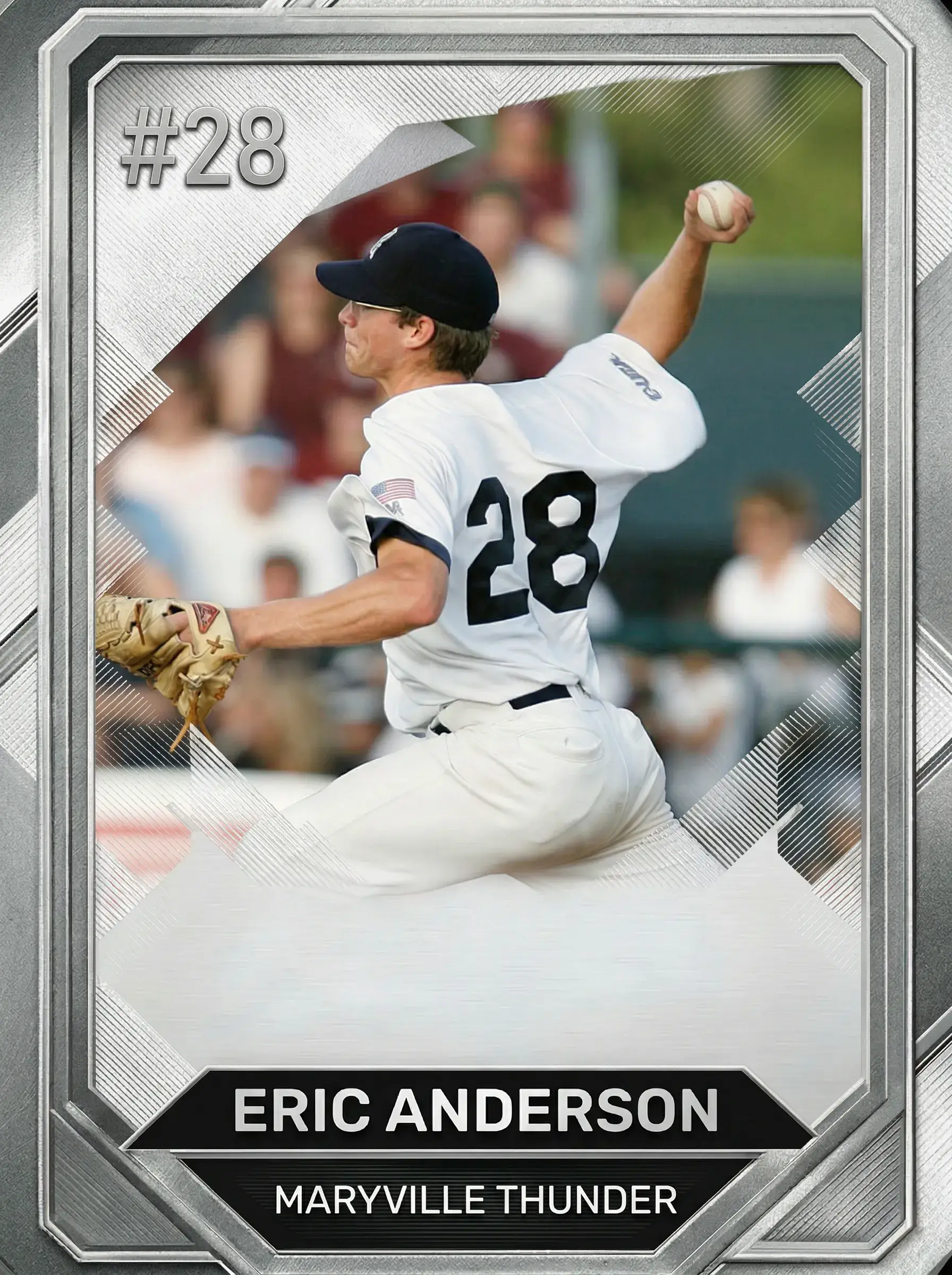
Get Your Photo Printed at the Perfect Size of Trading Card, Fast
Upload a photo, pick a template, and let Snapshot handle the rest. Every card prints at true standard size, on premium card stock, with a free magnetic case and shipping included nationwide.
Create Your Card NowNo credit card required | Instant preview | Pro-quality designs
Explore More Card Options
Discover more custom trading card options for every sport and occasion